




Over the past two years, the buy now, pay later (BNPL) market in India has gone from being a fast-growing fintech trend to a more structured and regulated part of the financial system.
When BNPL first boomed, many fintech platforms and digital players leveraged it to allow consumers to make a purchase instantly and defer payment for a short period, often without interest if repaid on time. This helped bridge the financing gap for users who lacked traditional credit cards, and was embedded in e-commerce and mobile app checkouts as a convenient credit alternative to boost sales and conversion rates.
But as adoption accelerated, regulatory scrutiny intensified. In May 2025, the Reserve Bank of India (RBI) released digital lending directions, consolidating earlier guidelines to create a more accountable and secure framework. The rules strengthen oversight of relationships between regulated entities and lending service providers, enhance borrower protections, and impose stricter standards for data handling, technology use, and digital lending app governance.
One of notable developments in the BNPL landscape in 2025 was the RBI’s action against Simpl, a prominent BNPL fintech company in India. In September 2025, the central bank ordered Simpl to halt all activities involving payment, clearing, and settlement functions, citing lack of authorization under the Payment and Settlement Systems (PSS) Act, 2007. This intervention paused the company’s BNPL business and led to significant operational disruptions, including layoffs and restructuring.

Alongside these enforcement actions, other BNPL players and broader digital lenders adjusted their business models, pivoting towards more regulated credit formates, such as structured equated monthly installments (EMI) plans linked to banks or non-banking financial company (NBFC) partners. The sector also saw exits and product discontinuations for offerings that couldn’t easily fit into the stricter compliance environment. For example, MobiKwik’s BNPL offering was discontinued during 2025 challenging economics and tighter rules.
Given these shifts, we are revisiting our previous 2021 and 2024 lists of the Top BNPL Players in India to present an updated overview of the leading BNPL brands and companies in the Indian market for 2026.
Top 5 BNPL Solutions in India
LazyPay
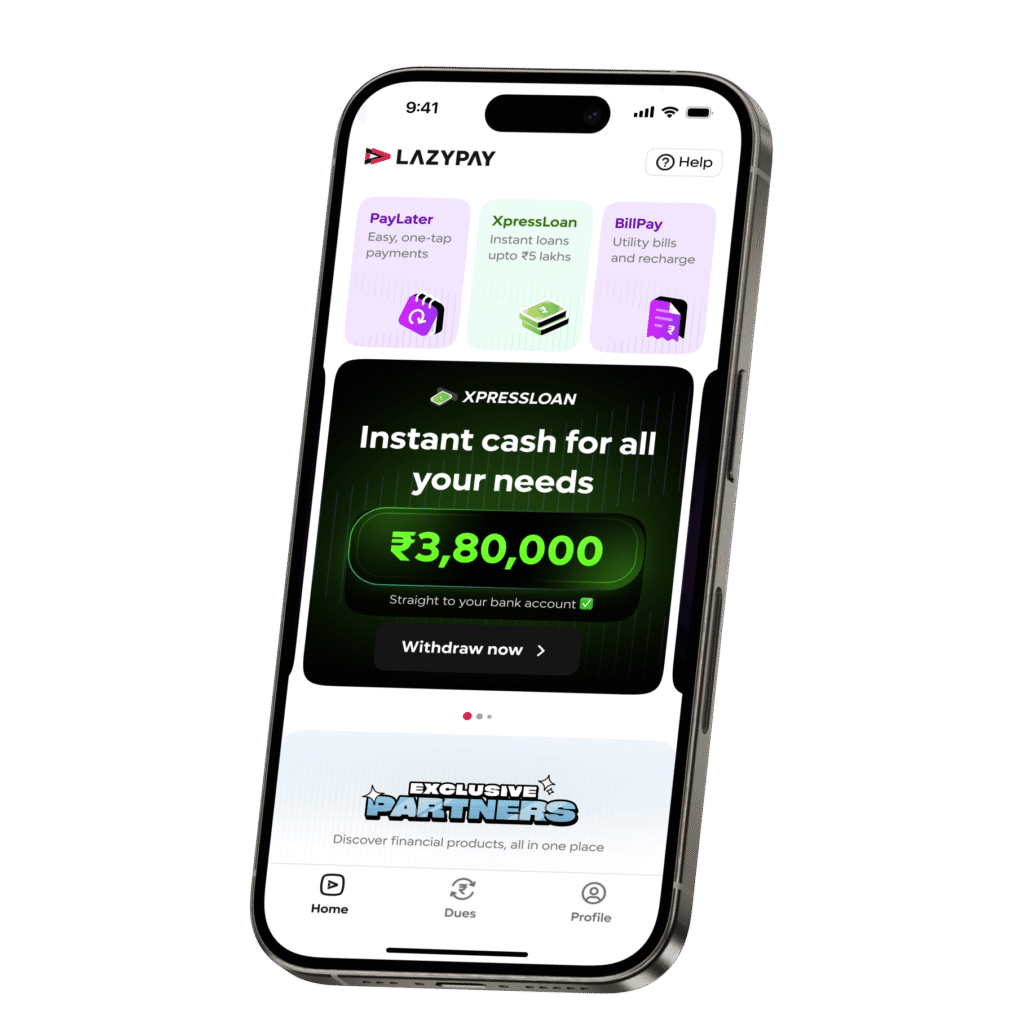
LazyPay is a digital credit service launched by PayU in 2017. With 6 million consumers in India, LazyPay is one of the most popular checkout options across an expansive network of more than 60,000 merchants.
LazyPay’s core offering is a “pay‑later” product that provides users with a free credit limit of up to INR 10,000 (US$109), which can be used for purchases across a wide range of merchants, including food‑delivery services, fashion retailers, and quick‑commerce platforms, and repaid in a single bill every 15 or 30 days without interest or hidden fees.
Users who complete a quick know-your-customer (KYC) can increase their limit to as much as INR 500,000 (US$5,500) and enjoy a longer 30‑day repayment window. Those who need additional flexibility may convert the balance into EMI plans.
Beyond BNPL arrangements, LazyPay includes several ancillary services, including the BillPay feature which lets users settle utility bills, mobile recharges, and other recurring payments using the same credit line, the Auto360 module, which serves as an all-in-one vehicle management hub, and the XpressLoan product, which offers instant personal loans ranging from INR 3,000 (US$33) to INR 500,000 (US$5,500) with an annual repayment period from three to 60 months.
LazyPay’s owner PayU is a non-banking financial company that aims to create a full-stack digital financial services platform to serve all tapped and untapped financial needs of merchants, banks, and consumers through technology. The company offers over 100 local digital payment methods, value-added data insight solutions, and affordability solutions across offline and online channels, empowering more than 450,000 merchants in India and processing payments for nearly 60% of e-commerce businesses in the country.
PayU’s recent expansions have broadened LazyPay’s merchant network to encompass major quick commerce platforms such as Zepto, Flipkart, Instamart, and BigBasket, as well as travel, education, health, and insurance providers.
ZestMoney
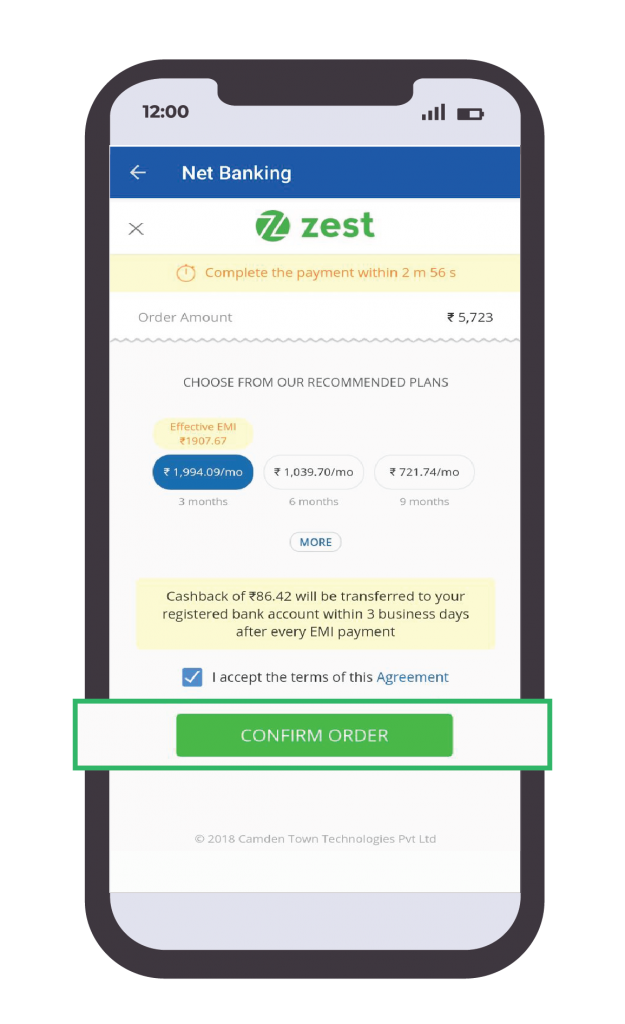
Established in 2015, ZestMoney positions itself as the country’s first online EMI provider. The company’s mission is to bring affordable digital finance to the estimated 300 million Indian households that lack access to credit cards or formal financing due to thin credit histories, leveraging mobile technology, digital banking, and artificial intelligence (AI) to match consumers with lending partners and manage repayments on their behalf.
ZestMoney’s BNPL solution allows customers to split purchases into installments of three, six, nine, or twelve months without needing a traditional credit card. The platform analyzes spending patterns, financial status, and other behavioral data, to deliver real‑time credit decisions, aiming to provide “short‑term transactional credit” at checkout.
With availability in cloud and a 24/7 presence, it leverages APIs that connect with e-commerce websites and APIs that connects directly with banks and lenders. It also provides credit on popular wallets including Paytm and Mobikwik wallet.
ZestMoney claims its credit facilities are accepted at more than 10,000 online merchants and 75,000 physical retail locations. Users benefit from a three‑step approval process that requires no paperwork or joining fees, and the platform advertises personalized credit limits up to INR 200,000 (US$2,200).
The company claims more than 17 million registered users, making it one of India’s most prominent BNPL and online EMI provider.
Paytm Postpaid

Paytm Postpaid is a short‑term credit line launched in September 2025 in partnership with Suryodaya Small Finance Bank. The offering, which operates on the UPI platform, provides users with an interest‑free credit limit of up to INR 60,000 (US$654) for a maximum of 30 days.
Users activate the line by selecting the credit source in the Paytm app, scanning a merchant’s QR code, entering the amount, and confirming with their UPI PIN. Repayment occurs at the end of the billing cycle, and timely payments can help build the borrower’s credit profile.
Paytm Postpaid is being rolled out selectively to customers deemed likely to use the credit, with broader expansion planned. It marks the reintroduction of the company’s BNPL product, which was halted in 2024 because of a broader decline in asset quality across the industry. At the time, Paytm said it would not resume the business until the credit cycle played out.
The recasting of the product also comes at a time when Paytm has turned profitable. Founded in 2010, Paytm is an Indian fintech company that provides digital payments and financial services, including mobile payments, UPI transfers, and bill payments. It runs one of the country’s biggest financial services platforms, with more than 300 million users.
Amazon Pay Later
Amazon Pay Later is a BNPL and personal loan service that operates within the Amazon ecosystem in India. It offers consumers the ability to split purchases into interest‑free “buy now, pay next month” installments or into EMI plans of three, six, nine, or 12 months. When a shopper selects Amazon Pay Later at checkout, the applicable tenure, minimum and maximum purchase amounts, and any interest charges (if EMI is chosen) are displayed on the payment page.
Two lending partners supply the credit: Axio and IDFC First Bank. Under Axio, a one‑month “buy now, pay next month” option is available with no minimum purchase amount, while three‑month EMI starts at INR 1,500 (US$16), six‑month at INR 3,000 (US$33), nine‑month at INR 6,000 (US$65), and 12‑month at INR 9,000 (US$98), with the upper limit varying per customer.
IDFC First Bank offers similar EMI tenures, beginning at INR 3,000 (US$33) for three months and scaling upward, with caps of INR 30,000 (US$327) for three‑month, INR 60,000 (US$654) for six‑month, and no upper limit for nine‑ and 12‑month plans.
Amazon acquired Bengaluru‑based non‑bank lender Axio in 2025 in a deal valued at a reported US$200 million. This acquisition built upon an over six-year partnership during which Axio powered BNPL services for Amazon Pay, serving more than 10 million customers in India.
Founded in 2013, Axio is an Indian consumer finance company that offers BNPL, credit, personal finance management services. It claims more than 15 million customers served, and over 3,000 merchants part of its network.
ePayLater
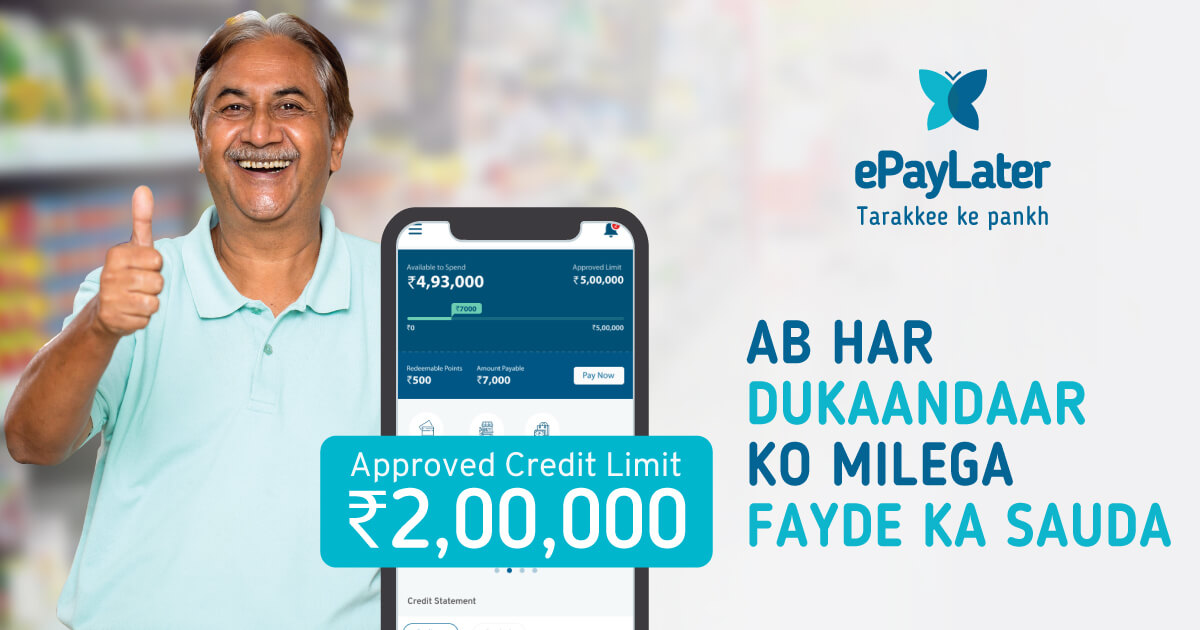
Founded in December 2015 and based in Mumbai, ePayLater is a zero cost credit solution for micro, small and medium-sized enterprises (MSMEs) for purchasing their supplies. The platform allows retailers to obtain instant credit limits ranging from INR 25,000 (US$273) to INR 2.5 million (US$27,000), enabling them to purchase inventory across a wide array of product categories without the usual constraints of traditional financing.
The service operates through a simple, user‑friendly mobile app. After downloading the app and submitting the required details, users receive an immediate credit approval. They can then draw on their approved limit to pay partner merchants anywhere in India, either for everyday stock purchases or for larger invoice‑financing needs. Credit is offered at 0% interest for a period of 14 to 30 days, with no processing fees, and the limit is replenished once the repayment is made.
Beyond its credit facility, ePayLater offers additional products such as purchase finance, equated daily installments (EDI), and revenue‑based financing, each designed to address specific cashflow challenges faced by MSMEs. The platform integrates with partner merchants’ enterprise resource planning (ERP) systems and provides dashboards for NBFCs and anchor partners, delivering real‑time approvals, credit‑limit management, and customer engagement tools.
ePayLater’s network is supported by several registered NBFCs. The company reports a substantial impact on its anchor partners, claiming a 2.7‑fold increase in purchases from MSMEs.
ePayLater’s reach extends across India, with integration points that include popular payment ecosystems such as Google Pay and Pine Labs. Although exact user numbers are not officially disclosed, the ePayLater app has amassed over one million downloads on Google Play, positioning it as a leading BNPL provider in the Indian embedded‑finance landscape.
Featured image: Edited by Fintech News Singapore, based on image by kkhaosai via Freepik
