




“Travel is the only thing you buy that makes you richer.”
The phrase has been repeated so often it borders on cliché, yet in Singapore it still rings true.
For a country where hopping on a plane to Bangkok, Tokyo, or Sydney is as routine as a long weekend, travel is not just a luxury, it is part of life. That explains why the miles credit card market here has become one of the most competitive arenas in banking.
In 2025, the fight for your wallet has grown sharper. Banks are no longer content with offering the standard 1.2 miles per dollar (mpd) on local spend and 2 miles on overseas transactions.
Today, you see accelerated earn rates of up to 4 mpd for online shopping, dining, or even a simple tap at the checkout.

You also see cards pushing beyond the familiar comfort of Singapore Airlines KrisFlyer. The HSBC TravelOne, for instance, has swung the door wide open to more than 20 airline and hotel partners, giving cardholders the kind of choice once unthinkable in this market.
Add to that the dizzying welcome offers of luggage sets, cash rewards, or tens of thousands of bonus miles for spending a few hundred dollars, and you have a market where the real challenge is not finding a good deal, but deciding which one actually works for you.
So which cards have risen above the noise? This year, five stand out.
Each speaks to a different kind of traveller, from the jet-setting executive who spends heavily across Southeast Asia, to the everyday flyer who wants a simple, reliable way to earn without worrying about miles expiry.
The Top 5 Singapore Miles Cards in 2025
The “best” miles card is not always the one with the highest miles-per-dollar rate. So, choosing the right card depends on a mix of factors. You need to consider everything from annual fees and lounge perks to whether points expire and how flexible the transfer partners are.
Most importantly, it depends on your own travel habits and spending patterns. A card that works brilliantly for a frequent Singapore Airlines flyer may not suit someone who values flexibility across multiple airlines, and vice versa.
The key is to pick a card that aligns with how you actually spend and travel, not just the headline earn rate. Hence, below are the top 5 Miles Credit Cards that we think are the best in Singapore for 2025, for almost everyone.
Last updated: 04 September 2025

UOB PRVI Miles Card – The High-Rate General Spender
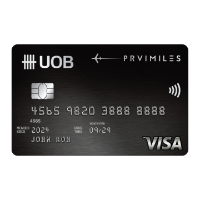
The UOB PRVI Miles Card has long been a heavyweight, and in 2025, it remains a card for those who spend big and travel often.
It leads the pack with 1.4 mpd on local spend, the highest base earn rate in Singapore, and 2.4 mpd overseas. Frequent travellers in the region will appreciate its 3 mpd rate for Malaysia, Indonesia, Thailand, and Vietnam.
For those who plan through Agoda or Expedia, promotional earn rates can soar to 8 mpd.
New applicants have the chance to walk away with as much as 46,000 miles, provided they spend at least S$1,000 a month for the first two months and pay the annual fee.
The MileLion notes that this is a limited-time deal, since UOB doesn’t really shout about welcome bonuses on its site, preferring instead to reward long-time customers with loyalty perks.
The trade-offs are also quite clear. The annual fee is on the higher end at S$261.60, and more importantly, points expire after two years. That forces cardholders into a rhythm of earning and redeeming quickly.
For those comfortable within that ecosystem, the PRVI is unmatched. But if you want flexibility, there are better options.
HSBC TravelOne Credit Card – The Flexibility Champion

Now comes the new disruptor in town, well, at least from my point of view, the HSBC TravelOne.
Where most cards are married to KrisFlyer, this one has gone wide, connecting to more than 20 partners. That includes Oneworld, SkyTeam, and Star Alliance airlines, as well as hotel giants like Marriott, Accor, and IHG.
On the earning front, it offers up to 1.2 mpd locally and up to 2.4 mpd overseas. Well, not exactly groundbreaking, but respectable, I would say.
HSBC also makes its pitch simple. Spend S$1,000 in the first month and pay the S$196.20 annual fee (including GST), which is waived if you spend S$25,000 a year, and you could unlock up to 36,000 miles. It’s a straightforward offer listed right on the bank’s website.
Its only drawback is that not all transfers are equal. KrisFlyer miles, for example, convert at less generous ratios, which makes the card less appealing if you are loyal to Singapore Airlines.
But for anyone who values choice and knows how to sniff out redemption “sweet spots,” the TravelOne is a game-changer.
Citi PremierMiles Card – The Reliable All-Rounder
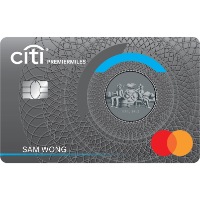
If the PRVI is for the sprinter, the Citi PremierMiles is for the marathon runner.
Its biggest strength is peace of mind. Miles never expire, and that makes it the card for those who prefer steady accumulation without pressure.
The earnings rates are quite steady, too. 1.2 mpd locally, 2.2 overseas, with generous boosts when booking through partners like Kaligo, which can go up to 10 mpd (but this offer ends by the end of 2025).
At S$196.20 a year, the fee is in line with peers, but Citi softens the blow by offering 10,000 renewal miles annually.
Citi’s new customers can pick up offers up to 30,000 bonus miles plus a S$100 Trip.com voucher, provided you meet the S$800 spend in the first two months and pay the fee.
The transfer partner network is wide enough to cover all three major airline alliances, and the conversion ratio is straightforward. Lounge access is limited to two visits per year, which feels modest compared to others, but the card has endured precisely because it does not try to be flashy.
For travellers who want reliability over gimmicks, this is a solid workhorse.
DBS Altitude Card – The Accessible Entry-Point
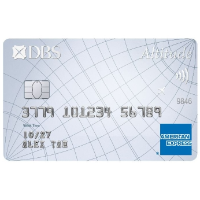
Every game has a starter card, and in 2025, that remains the DBS Altitude. With a relatively low income requirement, a first-year fee waiver, and points that never expire, it is a safe entry into the world of miles.
The earn rates are not stellar but respectable at up to 1.3 mpd locally and up to 2.2 overseas. The annual fee sits at S$196.20, waived with S$25,000 annual spend, and you still get 10,000 miles if you choose to pay it.
DBS keeps things direct, as newcomers could earn up to 38,000 bonus miles. No frills, just a straight incentive to get new cardmembers on board.
The transfer network is also more limited than Citi’s or HSBC’s, focusing mainly on KrisFlyer, Asia Miles, Qantas, and AirAsia. But that simplicity is exactly what makes it attractive to beginners.
It is not the card for strategists who want to squeeze every cent out of every mile, but it is a dependable choice for someone just starting out.
KrisFlyer UOB Credit Card – The SIA Group Specialist
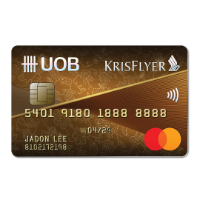
The KrisFlyer UOB is unapologetically niche. It exists for one type of user. The diehard Singapore Airlines and Scoot flyer.
It gives 3 mpd on SIA Group spend and 2.4 mpd on dining, online shopping, and transport, but that only applies if you spend at least S$1,000 on Singapore Airlines or Scoot annually. Otherwise, the rates collapse back to the base 1.2 mpd.
What sets it apart are the co-brand perks. Miles are credited directly into your KrisFlyer account, skipping the usual transfer process.
You also get a fast-track to KrisFlyer Elite Silver with S$5,000 in annual SIA Group spend, plus small Scoot extras like baggage upgrades.
For those eyeing the KrisFlyer UOB, the bank has been greeting new applicants with an easy starter perk. Simply make a single purchase of at least S$5, and you’ll pocket 5,000 KrisFlyer miles.
Yes, it’s small, but it is more of an instant win for new cardholders stepping into the program.
On the flip side, there is no statement regarding lounge access, which you need to take note of.
Making Sense of the Choices
Comparing the five cards side by side shows just how different the strategies can be. The PRVI is for the heavy spender who wants the highest uncapped earn rates.
TravelOne is for the strategist who knows how to play different loyalty programs. The PremierMiles and Altitude are for steady, long-term earners who dislike the idea of expiring points. And the KrisFlyer UOB is really for one audience only: those who live and breathe SIA.
If there is a single truth in the collection, it is that there is no “best” card for everyone.
The best card is the one that fits your habits. Someone who eats out, shops online, and plans short trips around Southeast Asia will see far more value in the PRVI than in the KrisFlyer UOB. A frequent flyer who juggles multiple alliances will unlock more with TravelOne than with Citi or DBS.
Ultimately, these cards are tools, not trophies.
Used wisely, they can transform everyday spending into unforgettable journeys. Used poorly, they are just another piece of plastic with an annual fee.
As with travel itself, the art lies not in the destination, but in the way you choose to get there.
Frequently Asked Questions (FAQs)
1. Are miles credit cards in Singapore worth the annual fee?
Most miles cards in Singapore charge between S$196 and S$262 a year. Many waive the first year’s fee, and some add sweeteners when you renew.
For instance, Citi PremierMiles, DBS Altitude, and KrisFlyer UOB all offer a 10,000-mile bonus when you pay the fee in subsequent years. If you fly even once a year, those renewal miles usually offset the cost.
2. Do miles really expire?
It depends on the card. Citi PremierMiles and DBS Altitude have non-expiring points, which gives peace of mind to slow accumulators.
UOB PRVI Miles points expire after two years, forcing a faster earn-and-burn approach. With the KrisFlyer UOB, miles go straight into your KrisFlyer account and are subject to KrisFlyer’s standard three-year expiry policy.
3. Why do banks keep talking about ‘transfer partners’?
Transfer partners determine how useful your miles are once you’ve earned them. The more partners you have, the more redemption options you get.
HSBC TravelOne leads the pack here, with over 20 airline and hotel partners across Star Alliance, Oneworld, and SkyTeam. UOB PRVI, on the other hand, keeps things narrow, mainly working with KrisFlyer and Asia Miles.
4. Is it really better to spend overseas to earn more miles?
Cards like UOB PRVI and HSBC TravelOne give 2.4 mpd overseas compared to 1.2–1.4 locally. But remember the catch: nearly all cards charge a foreign transaction fee of around 3.25%.
For many people, that fee wipes out the value of the extra miles unless they were going to pay it anyway.
5. What perks do these cards give besides miles?
Most premium miles cards throw in travel perks. UOB PRVI and HSBC TravelOne offer four complimentary airport lounge visits a year, while Citi PremierMiles and DBS Altitude include two.
Travel insurance is also standard when you charge your airfare to the card. The KrisFlyer UOB also give SIA-specific perks such as a fast-track to KrisFlyer Elite Silver and Scoot baggage upgrades.
6. Which card is best if I only fly Singapore Airlines?
That’s where the KrisFlyer UOB shines. It gives 3 mpd on SIA and Scoot spend and credits the miles directly into your KrisFlyer account, skipping transfer fees.
It also offers KrisFlyer Elite Silver status after S$5,000 in annual SIA spend. For anyone wedded to SIA, no other card comes close.
7. What’s the fastest way to rack up a big stash of miles?
Not through daily spending, but through welcome offers. Many banks dangle tens of thousands of bonus miles if you meet minimum spend thresholds in the first couple of months.
This practice, known as “churning,” is the fastest accelerator, though it requires careful management of fees and application timing.
Featured image: Edited by Fintech News Singapore based on images by UOB PRVI Miles Card, HSBC Travel One Credit Card, Citi PremierMiles Card, DBS Altitude Card, KrisFlyer UOB Credit Card and ahmadzada via Freepik.
