Inside the Platform, Majority of the World’s Biggest Banks Rely On Every Single Day
With payment fraud hitting 79% of organisations, Scott Manson explains why majority of the world’s top banks rely on 180-year-old data to secure the global financial system.
This means nearly four in five companies suffered some form of financial loss due to increasingly sophisticated scams. The figure is rather jarring, considering the expectations around payments continue to rise.
Customers now want their money to move instantly, and, at the same time, the systems moving those very same funds must stay secure at all times.
Yet with criminals now trying new avenues to steal your money, staying secure isn’t as easy as it used to be.
These very crooks now have the ability to operate with AI-generated deepfakes, hyper-accurate impersonations and advanced social engineering tactics that exploit legacy infrastructure that is, sadly speaking, not designed for today’s threats.
That is why our conversation with Scott Manson, Senior Director and Global Head of Payments Product at LexisNexis Risk Solutions, felt particularly timely.
In a world that demands speed but punishes mistakes harshly, what keeps the global payments ecosystem functioning safely?
Scott placed the answer squarely on clarity.
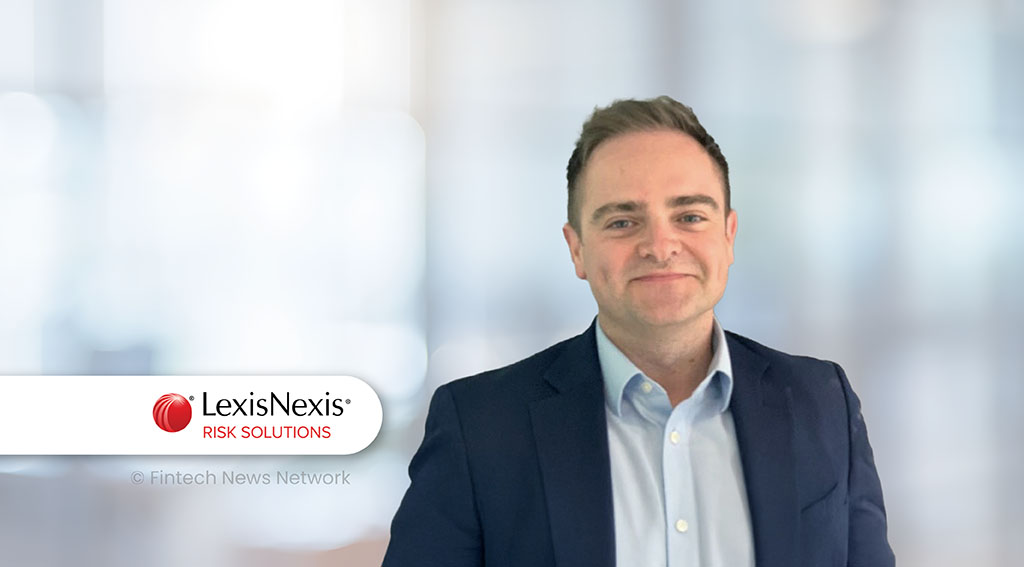
Scott Manson
“At its core, Bankers Almanac gives financial institutions confidence in who they are dealing with,” he told us. “We deliver that certainty with verified counterpart intelligence, routing and identity so banks can move money globally with lower risk and more confidence.”
It is a simple idea, but in a system where banks often cannot see the counterpart on the other end of a transaction, confidence becomes a form of infrastructure.
Rather than reinventing the system, the organisation has quietly ensured global payments remain safe for nearly two centuries.
A Legacy That Evolves With the Industry
Bankers Almanac has come a long way since the days of the iconic “Orange Book”.
Today, the platform powers global payments through APIs, interoperable data layers and AI-enriched tools. Yet Scott emphasised that longevity alone is not what keeps them relevant.
“We are obsessively reliable,” he said.
He explained that their long history and breadth of coverage have made Bankers Almanac one of the leading sources of verified financial data in the market, giving their AI models a strong foundation to work from.
He explained that banks do not look to them or even trust them merely because LexisNexis Risk Solutions provides the data and information.
“They trust us because we provide answers, and we provide certainty where there is uncertainty,” Scott enlightened us.
In an industry where a single missing detail can have regulatory consequences, data quality becomes a critical form of risk mitigation.
De-Risking Is Not a Strategy but a Symptom
We then asked Scott about one of the most pressing issues in global finance. Around the world, banks have been withdrawing from higher-risk regions because the compliance burden feels overwhelming.
Even global bodies such as the FATF have warned that unchecked de-risking can push legitimate financial activity underground.
Scott offered a clear explanation of why this happens.
“De-risking happens because banks are not confident in who their counterparty is,” he said. “Our role is to replace that uncertainty with certainty.”
He added that the solution is precision, not withdrawal. You see, when banks have high-quality data, they can make surgical and complex decisions in a much more accurate manner.
What this means is that instead of cutting off entire regions, banks can differentiate between legitimate partners and genuine risks.
Better data can become a path to financial inclusion.
Operating at the Edge of Sanctions
To understand how this works in practice, we discussed the case of Bank of Jinzhou, an institution operating in close proximity to North Korea.
The level of scrutiny for banks in such areas is intense, and even minor errors can trigger severe compliance ramifications.
Scott summarised the situation succinctly.
“Banks near sanctioned countries face higher regulatory scrutiny, and there is a high tariff to wrong decisions.”
He then explained how Bankers Almanac supports institutions in these high-stakes environments.
“We give clarity on three points. Who exactly is the entity, are they owned or influenced by anyone they should not be, and is their behaviour consistent with a clean correspondent bank?”
Such a level of visibility allows banks to make informed decisions even in the most complex environments.
Untangling the UBO Problem
We also discussed the increasingly difficult task of uncovering the ultimate beneficial owner (UBO) of an entity, which has become one of the most time-consuming areas of compliance.
Ownership trails often run through shell companies, offshore jurisdictions and deeply layered corporate structures.
Scott shared an unexpected claim about their capabilities.
“We go down to 0.01%, which is 99.9% accuracy on ultimate beneficial ownership, across eight layers of ownership.”
That level of precision is not accidental. It stems from years of investment in multi-jurisdictional registry data and painstaking ownership mapping that newer entrants would struggle to replicate.
LexisNexis Risk Solutions built this depth so that institutions no longer need to spend days unravelling complex structures.
Their approach gives banks a way to complete UBO checks at a speed and level of certainty that would be nearly impossible through manual investigation alone.
Payments Have Become Faster, but So Has Fraud
Scott also noted that the industry’s rapid shift toward instant payments has introduced a new set of challenges.
Speed delivers clear benefits for liquidity and customer experience, but it also leaves far less room to catch suspicious activity.
“We have spent years talking about faster, faster, faster, but the problem is that with faster, there is less opportunity to stop fraudulent transactions.”
He emphasised that banks cannot simply chase speed without considering the consequences. They must find a way to accelerate payments while maintaining sufficient time for meaningful checks.
As Scott put it, institutions need to balance efficiency with the discipline of proper AML and fraud screening.
The industry’s ability to strike that balance will heavily influence how future payments infrastructure develops.
Preventing Failed Payments at the Source
Failed payments are not just an operational annoyance. They slow down transactions, increase back-office workload and gradually erode customer confidence.
Some studies place the cost of each failure at roughly US$12, which adds up quickly for large institutions.
Scott explained how Bankers Almanac tackles this issue directly.
He noted that LexisNexis Risk Solution offers Validate, the company’s pre-payment verification tool that checks and enriches account and routing information across more than 200 countries.
“Validate uses our data to make sure payments have the right information before they leave, so they do not fail.”
He pointed out that LexisNexis Risk Solution supports this process with one of the most extensive datasets in the market.
The company maintains roughly a third of the world’s routing data, which allows it to signal to a bank whether a transaction is correctly configured or needs correction before going out the door.
With stronger verification at the point of initiation, banks are able to improve straight-through processing rates and significantly reduce avoidable rework.
The Human Cost of APP Fraud
We then moved to the surge in authorised push payment fraud, where victims are deceived into sending money themselves. This category of fraud has become one of the most damaging forms of financial crime globally.
Scott has worked on this issue since the early days of the UK’s approach to Confirmation of Payee.
“Confirmation of Pay is a tremendous tool in the fight against global fraud, particularly APP scams,” he said. “Before the payment leaves, you can be assured the owner of that account is the person they say they are.”
The results have been encouraging. Scott mentioned that it has significantly reduced APP fraud in countries like the United Kingdom.
It comes as no surprise, he said as now, more and more countries are exploring similar systems to protect both consumers and banks.
AI Works Only When the Underlying Data Works
We mentioned earlier that criminals are known to begin to use AI to sharpen their scams. Thus, we asked Scott how LexisNexis Risk Solutions approaches the same technology from a defensive standpoint.
He explained that AI’s effectiveness depends entirely on the quality of the data beneath it.
If the foundation is weak, the insights will be too. LexisNexis Risk Solution considers its advantage to be the sheer depth of its historical datasets, which span decades of cross-border payment patterns and correspondent banking relationships.
This gives the company a level of context and training material that most newer players cannot replicate.
Scott also pointed out that the organisation does not rush to apply AI for the sake of innovation.
They approach it deliberately, evaluating where automation genuinely supports better decisions rather than introducing unnecessary risk.
It is a disciplined stance shaped by the realities of compliance, where even a small error can escalate into regulatory consequences.
What Comes Next for Correspondent Banking
To close the conversation, we asked Scott how he envisions the future of correspondent banking.
He expects the industry to move steadily toward deeper automation and more intelligent systems that take on the heavy operational lifting.
In his view, technology will increasingly handle the routine work, while people concentrate on higher-value tasks that rely on judgment rather than repetition.
“We want to help customers use our data more effectively by building applications that go further into the value chain,” he said.
He explained that the goal is not to replace human decision-making but to ensure that experts are spending their time on meaningful analysis instead of administrative checks.
Scott also highlighted that Bankers Almanac is preparing for the next generation of payment ecosystems, particularly those involving digital currencies and stablecoins, where new forms of risk and compliance will emerge.
Our discussion made it clear that Bankers Almanac is far more than a 180-year-old institution preserving its legacy. It is an organisation that has adapted repeatedly to meet the demands of modern banking.
In an environment where speed and security must advance in tandem, and where fraudsters increasingly wield advanced technologies, the ability to deliver clarity may be one of the most valuable capabilities in global finance.
For many of the world’s largest banks, that clarity still comes from Bankers Almanac.
Featured image: Edited by Fintech News Singapore based on images by watercolor_vect via Freepik and Scott Manson via LinkedIn.