




The Summit opened with a jolt when a convincing deepfake of Co-founder & Chief Strategy Officer Peter Sever took the stage, before the real Peter stepped in to shut it down.
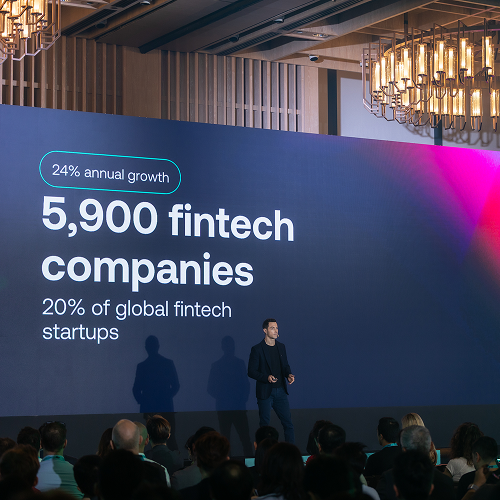
Peter and Co-founder & Chief Innovation Officer Jacob Sever outlined how APAC has become the epicentre of both digital transformation and digital crime, with 2.9 billion online users, thousands of fintechs, and an explosion in real-time payments.
Deepfake fraud is surging, major fraud networks operate in the region, and one in four people are targeted as potential money mules.
The founders noted the heavy human toll as inflexible verification standards currently lock 627 million individuals out of the digital economy.
Sumsub’s response—from flexible workflows to initiatives like Greenflag and Non-Doc Verification—are aimed at building smarter bridges instead of higher walls.
A Global “Fraudemic” and The Need For Coordinated Defence
In his keynote, T Raja Kumar, President of the Financial Action Task Force (FATF) for 2022-2024, described the world as being in a true “fraudemic era,” where cyber-enabled crime is scaling faster than defences can be implemented.
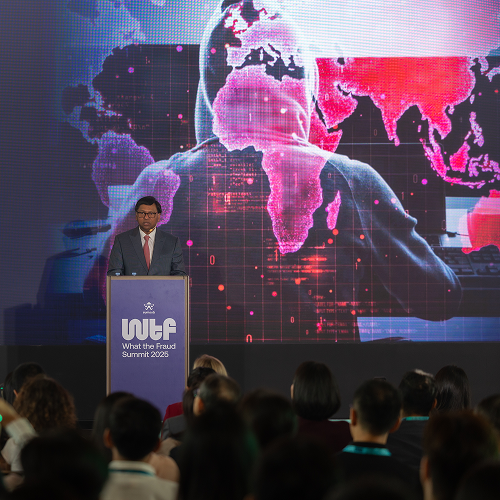
Fraud losses now exceed hundreds of billions of dollars annually, including heavy losses in Singapore and across East and Southeast Asia.
He spotlighted industrialised Fraud-as-a-Service, powered by AI-driven deception, money-mule networks, and cross-border scam syndicates.
He called for stronger legal frameworks, cross-border cooperation, and the rapid adoption of advanced analytics and AI.
Money In Motion, AI Agents, and Disappearing Funds
Fireside chats explored how real-time transfers, mobile wallets, embedded finance, and CBDCs are reshaping money movement, and whether digital wallets are becoming the new “primary bank account” for millions.
Panellists agreed that the future of payments will be defined by instant value, global reach, and trust.
Another discussion examined AI agents as both assistants and threats.
Criminals already use self-learning bots and AI-enabled spoofing to scale scams, but the same tools can power defence when paired with behavioural biometrics and adaptive ML.
The panel agreed that organisations need to rapidly secure AI agents since they are not inherently good or evil.
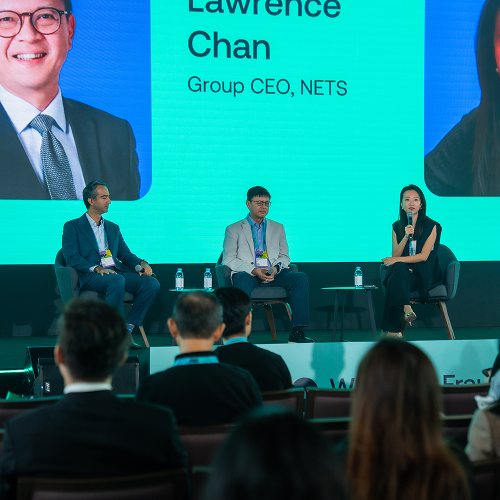
Hemanshu Parekh of Standard Chartered then walked the audience through two real investigations: a corporate fraud web using shell companies and international hubs, and a money-mule “hive” with a queen, leaders, and worker mules.
His formula for defeating these invisible networks relies on IMP, which stands for Investigations, smarter Models, and deep cross-sector Partnerships.
Breakouts: Crypto, AI, and The Future Of Compliance
Breakout panels brought together industry leaders to discuss how the sector is weaving crypto into banking, payments, and treasury.
The message was clear.
Mainstream adoption is no longer about “if” but “how fast and how safely,” with compliance, custody, and operational resilience as critical enablers.
A live-voting session explored AI’s dual role in financial services, examining bias, privacy risks, and automated fraud, as well as new opportunities in compliance and risk modelling.
Audience sentiment shifted as speakers stressed that the real challenge is not whether to adopt AI, but how to prevent misuse while accelerating responsible innovation.
A Major Research Milestone and A New Fan Favourite
The Summit also marked a major milestone: a Research Collaboration Agreement between Sumsub and Nanyang Technological University Singapore, the first APAC university partner under the Sumsub AI Academic Program.
The joint work focuses on human-imperceptible watermarks for personal images that prevent the global repurposing of likenesses into deepfakes and synthetic identities.
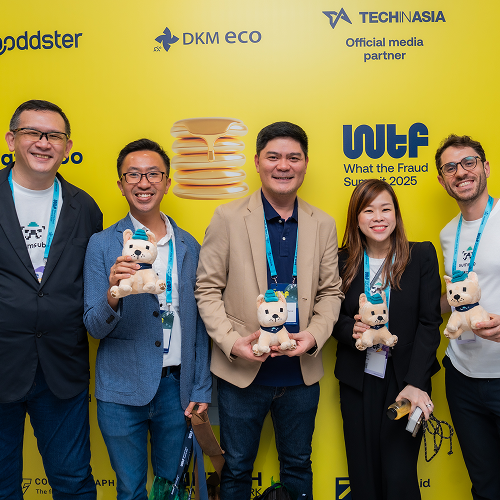
On a lighter note, Sumsub unveiled the plush version of its bulldog mascot, Summy, who quickly became the “crush of 2025–2026.”
The queue to win a Summy plush stretched even longer than the one for coffee.
Main-Stage Compliance Discussions: 2026 and Beyond
Across the main-stage panels, compliance leaders from fintechs and financial institutions shared how they scale fast while staying ahead of regulators.
Centralised teams to spot global fraud patterns early, empowered local teams for nuance, and strong global frameworks with local flexibility emerged as key success factors.
Panels on regulatory challenges and APAC’s compliance vision for 2026 emphasised the importance of early and ongoing engagement with regulators, as well as a shift from reactive to data-driven, design-led compliance.
With regulators sharpening their focus on crypto, VASPs, and real-time monitoring, the message from the stage was consistent: in an AI-accelerated landscape, firms that harness analytics and invest in trust will define the future of safe digital finance, where the only real threat you face is your twin.
Featured image by Sumsub.
