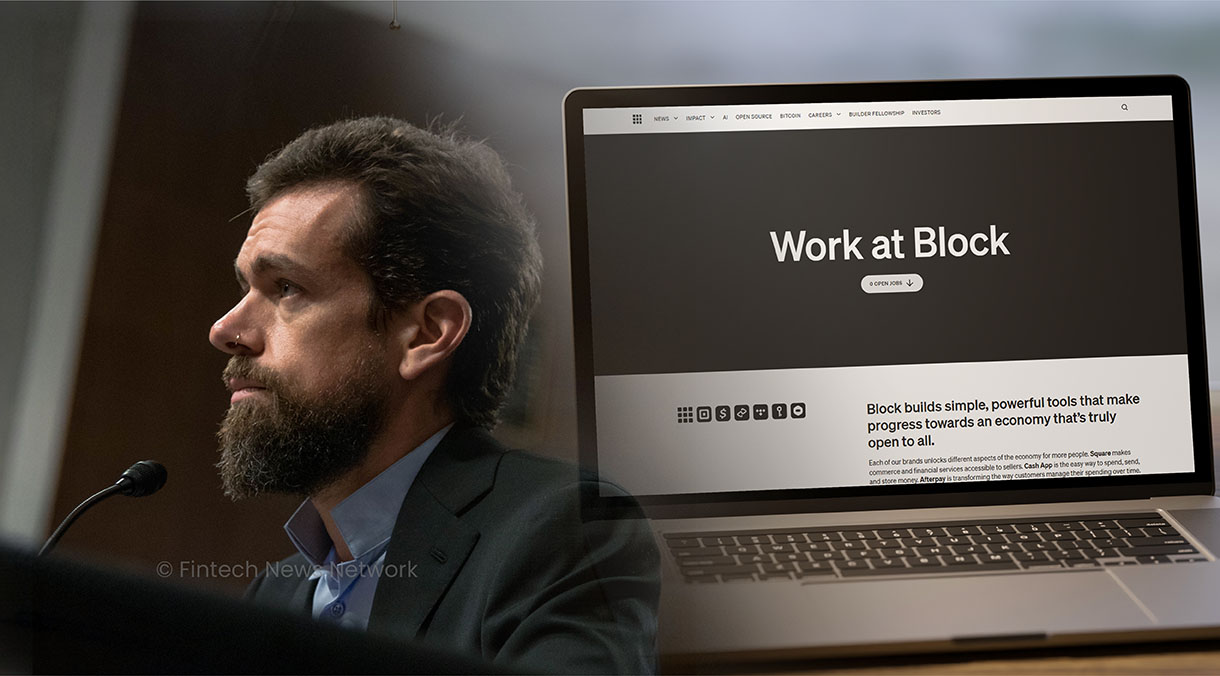
In his post, Jack pointed to rapid advances in artificial intelligence and the company’s push to “functionalise” its structure.
He said:
Jack Dorsey
“We’re already seeing that the intelligence tools we’re creating and using, paired with smaller and flatter teams, are enabling a new way of working which fundamentally changes what it means to build and run a company.”
Though the company’s stock appeared to have risen due to the unfortunate news, the public has made sure that the company knows what they’re feeling.
In shorter words, what he’s trying to say is that AI + Few People = Block moves faster.
But despite his explanation, outside the earnings call, the public was raising a more sceptical conversation.
Is it really about AI? Or are you just giving an excuse to downsize?
AI, Structure, and Hard Choices, According to Jack
To answer that, let’s take a look back at Jack’s post on X where his argument, rested on two pillars.
First, he mentioned that AI models have become significantly more capable and it has since, opened the door to automation across a wider swathe of the business.
Second, his company, Block, had effectively been operating as two companies, with Square and Cash App running parallel structures which, according to him, created duplication.
Thus, he believes that bringing the organisation under a single functional model, exposed those overlaps and created the confidence to make that decisive cut.
A 23% surge in share price suggest initial market satisfaction, but we’re not entirely sure about that.
Is It Really About AI or Is Just AI Washing?
The public, and myself included, remain unconvinced by a strategy we view as ‘narrative substitution’.
Block says smarter tools and a flatter organisation allow them to do more with fewer people. But that does seem like a reach.
The media has increasingly used the term ‘AI washing’ to describe what is actually happening at Block.
And it does not serve justice on Block’s case as the numbers give sceptics like me, something to point to.
The company’s headcount expanded sharply during the pandemic, which saw them rise from under 4,000 employees in 2019 to well above 10,000 within a few years.
Thus the scale of the cuts happening right now seems to confirm my hypothesis that this is far more about right-sizing a bloated organisation rather than just “harnessing intelligence tools”.
It looks more like a convenient scapegoat and pure corporate theatre for the ‘sins’ of unchecked expansion during the COVID boom years.
Feeling the Ripple Across Southeast Asia
Block’s layoffs are happening in the US, but the story echoes far beyond.
Around the world, companies are grappling with the same question. Are these cuts really about AI, or is AI just being used as a convenient story?
We could say that the pattern is mixed where some companies are trimming excess from an era of easy capital. Others are adjusting because certain tasks genuinely require fewer people than before.
But Block seems to sit somewhere in between. Part of the reset reflects expansion that went too far. Part of it reflects a push to operate with fewer layers and more automated support.
We for sure do not know whether every layoff is AI-washing, but companies will need to be honest about which is which.
The harder question now is how much of today’s cuts come from smarter systems, and how much is just cleaning up after yesterday’s growth sprees.
The Policy Response Is Already Taking Shape
Not only that, due to such issues, governments in the region are clearly watching the shift closely.
Speaking during the February Budget debate, Prime Minister Lawrence Wong moved to calm concerns, saying Singapore would avoid what he described as jobless growth even as AI becomes more deeply embedded in the economy.
The focus, he stressed, is on using AI to raise productivity while creating better jobs and wages.
Such reassurance matters because this anxiety is real and it is felt by almost everyone.
Featured image: Edited by Fintech News Singapore based on an images by Wikimedia Commons and thanyakij-12 via Freepik.