



Traditional Rails Still Do the Heavy Lifting
Despite growing adoption, stablecoins continue to rely heavily on existing payment infrastructure.
The four-party model (connecting customer, merchant, acquirer, and issuer) remains central to the global payment scale.
Card networks still provide capabilities that blockchain systems have not yet matched, particularly in acceptance, trust, and regulatory coverage.
Decades of expansion have created near-universal merchant acceptance, while established systems continue to embed fraud controls, dispute resolution, and compliance frameworks such as KYC and AML.

These safeguards remain difficult to replicate at scale in decentralised environments.
Access to fiat currency also remains essential. Card-linked infrastructure continues to provide a reliable bridge between digital assets and local currencies within a familiar framework.
Together, these factors explain why stablecoins are being integrated into existing rails rather than displacing them.
The Layer Connecting Wallets to Card Networks
Between wallets and card networks sits a less visible but essential layer of infrastructure.
Issuer processors act as the connective tissue between digital wallets, blockchain systems, and card schemes.
They monitor balances in real time, enforce transaction rules, and ensure payments move smoothly through authorisation and settlement.
In stablecoin-based systems, this requires direct API connections to wallet providers alongside backend integration with on-chain settlement networks.
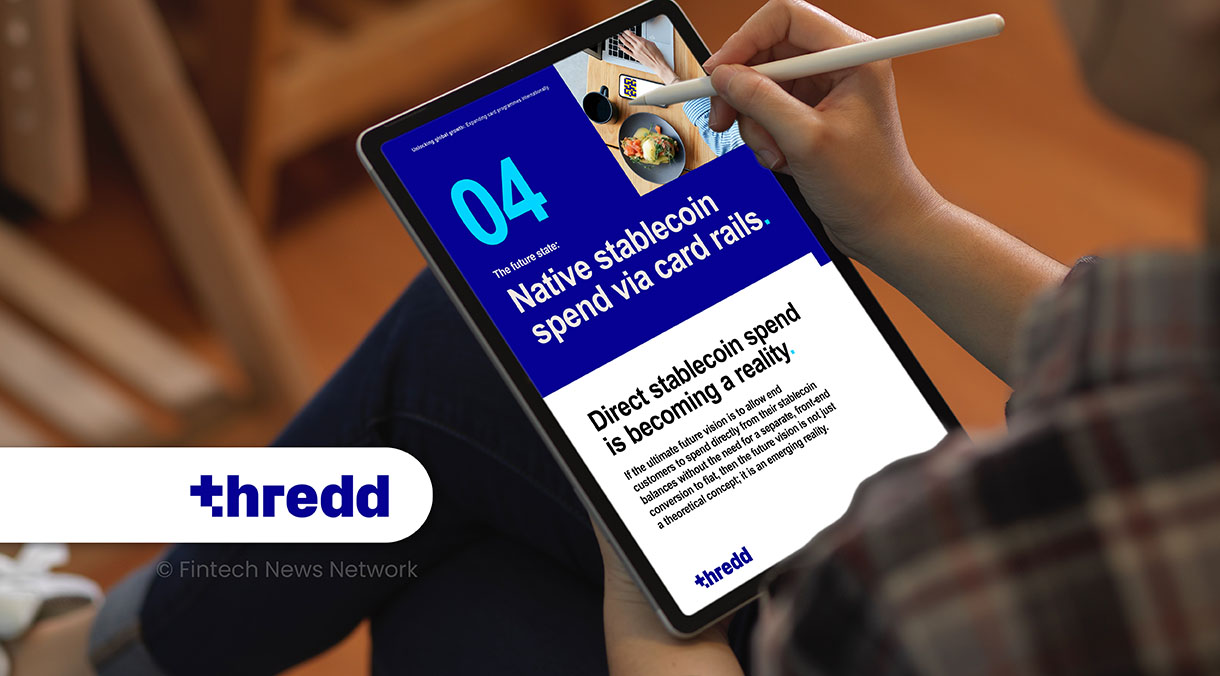
Firms such as Thredd, Reap, and Fireblocks are already enabling this model, helping fintechs link stablecoin balances to card-based spending.
The result is a blended architecture where blockchain handles value transfer while traditional infrastructure maintains access, compliance, and usability.
US$36 Billion in B2B Stablecoin Payments Shows Corporate Demand Is Surging
Although much of the early attention around stablecoins focused on retail use cases, business adoption is now gaining ground at a faster pace.
B2B stablecoin payments reached an annualised run rate of around US$36 billion by early 2025, reflecting growing interest from companies looking for more efficient ways to move money across borders.
Many of these firms are drawn to the practical advantages, particularly faster settlement and lower transaction costs compared to traditional correspondent banking systems.
Stablecoins are also being used to support treasury operations, especially when managing multi-currency exposure.
Holding and transacting in digital US dollars reduces the need for repeated foreign exchange conversions and simplifies internal fund flows.
Momentum in this segment is less about experimentation and more about solving operational challenges that existing systems struggle to address efficiently.
APAC Is Setting the Pace

While these developments are global in nature, the Asia-Pacific region is playing a leading role in shaping how stablecoins are being integrated into the financial system.
Regulators across the region have taken steps to provide clearer frameworks, giving businesses the confidence to invest in long-term infrastructure.
In Singapore, the Monetary Authority of Singapore has introduced a regulatory regime for single-currency stablecoins, requiring issuers to maintain full reserve backing and meet strict disclosure and capital standards.
Elsewhere, Japan has already put in place a legal framework for fiat-backed stablecoins, while Australia is also progressing its token mapping exercise to bring digital assets within existing regulatory structures.
Hong Kong has just recently issued its first stablecoin licences under the Stablecoins Ordinance, granting approvals to HSBC and StanChart-Led Anchorpoint Financial, effective 10 April 2026.
A mix of regulatory clarity, high digital adoption, and strong cross-border payment demand is creating an environment that supports both experimentation and real-world deployment.
As a result, APAC is not only participating in the shift but helping to define how it develops.
Less Visibility, More Utility
The report ultimately points to a shift defined by integration rather than disruption.
Stablecoins are gradually embedding into existing payment systems instead of operating outside them.
Users are unlikely to notice these changes in practice, as payments continue to flow through familiar cards, wallets, and embedded interfaces.
The difference lies in the infrastructure beneath, where digital assets increasingly function as a settlement layer within everyday transactions.
As this infrastructure matures, stablecoins are likely to be viewed less as crypto instruments and more as a functional component of global money movement.
Their long-term role will depend on how seamlessly they continue to integrate into the systems people and businesses already use.
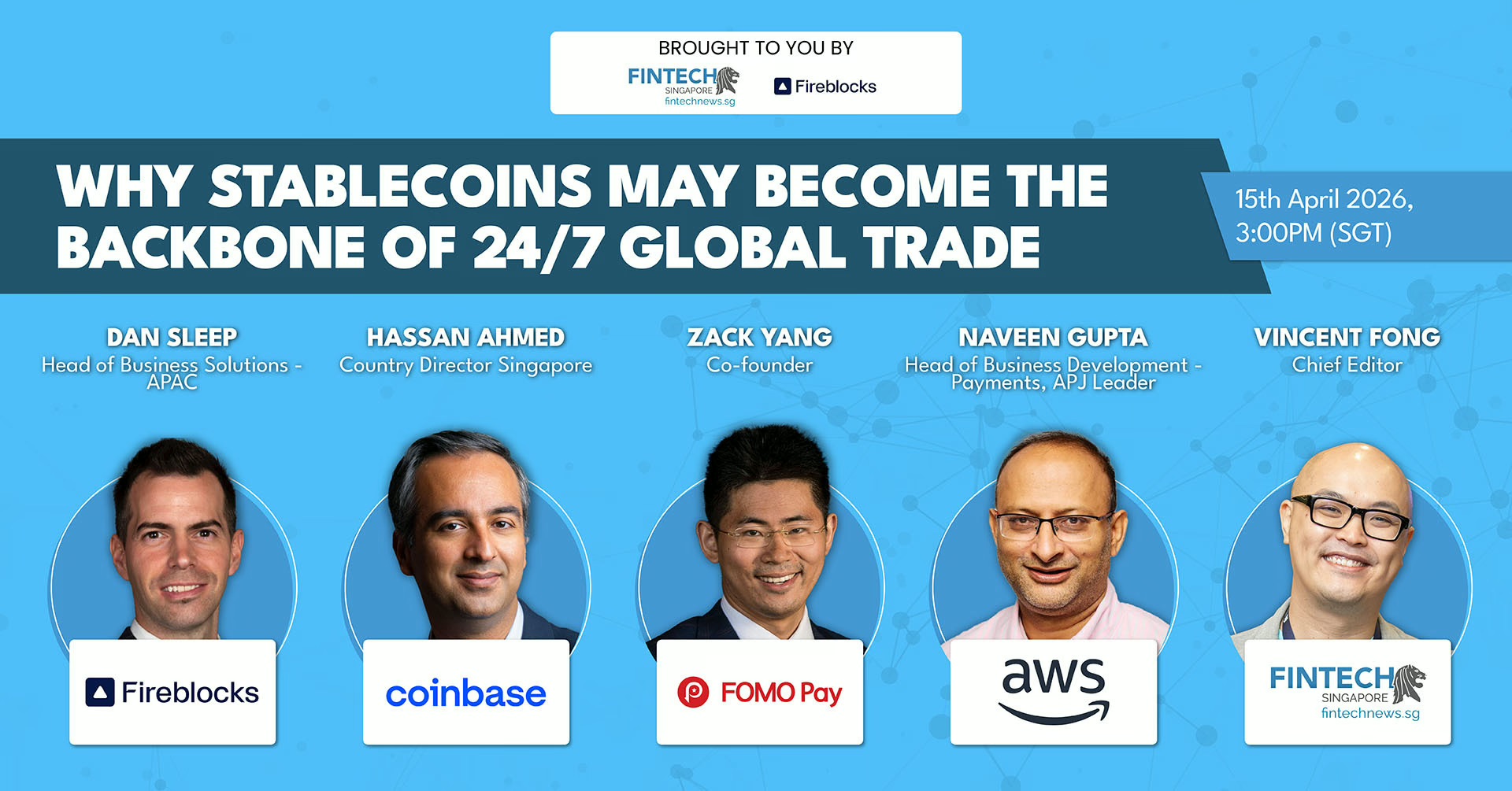
As stablecoins continue to integrate into existing financial systems, the upcoming webinar, “Why Stablecoins May Become The Backbone of 24/7 Global Trade,” scheduled for 15 April 2026, will explore these developments in greater detail.
Register here.
Featured image: Edited by Fintech News Singapore based on an image by thanyakij-12 via Freepik.
