



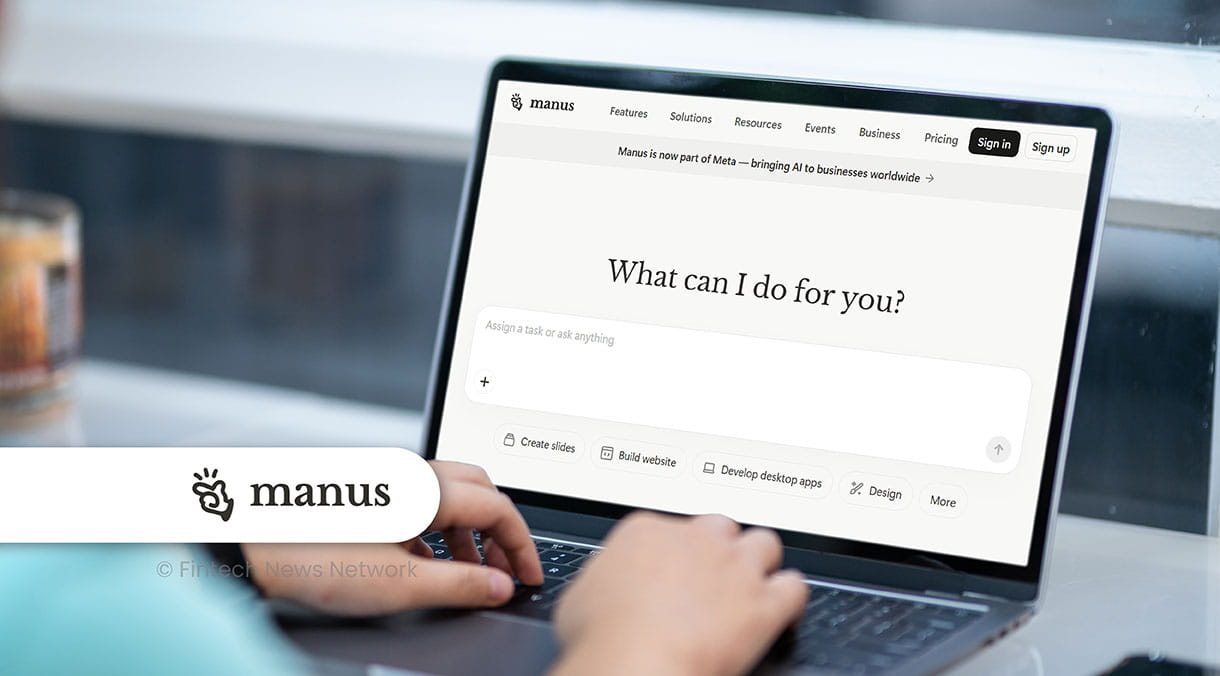
China’s National Development and Reform Commission (NDRC) has ordered Meta Platforms to unwind its US$2 billion acquisition of Singapore-based AI startup Manus, according to a Bloomberg report, in one of Beijing’s most far-reaching interventions into a completed cross-border tech deal involving a US company.
The directive was issued on Monday (27 April), four months after the transaction closed in December 2025, and requires all parties to withdraw from the agreement.
The ruling also prohibits foreign investment in Manus, escalating regulatory scrutiny over Chinese-founded AI firms operating abroad.
From Beijing to Singapore
Manus had redomiciled to Singapore in mid-2025, relocating its headquarters and key staff from Beijing as part of a broader trend of Chinese AI startups shifting to the city-state to access global capital and markets while operating outside China’s domestic regulatory perimeter.

By March 2026, around 100 employees had already moved into Meta’s Singapore offices, with the startup’s leadership integrated into Meta’s AI division.
The company was founded in 2022 by Xiao Hong, Ji Yichao and Tao Zhang under Beijing Butterfly Effect Technology.
It was previously backed by investors including Tencent Holdings and HongShan Capital Group, and had reached an annualised revenue run rate of more than US$125 million prior to the acquisition, according to the Wall Street Journal.
Meta’s purchase of Manus was part of its broader push into agentic AI systems, designed to autonomously perform complex multi-step tasks such as research, planning and analysis, as it competes with rivals including Google, OpenAI and Anthropic.
What the ruling means for Singapore-based AI firms
The NDRC’s intervention is particularly notable because Meta has minimal commercial presence in China, making this a rare case in which Beijing is exercising regulatory authority over a deal between a US technology firm and a Singapore-incorporated company with no active China operations.
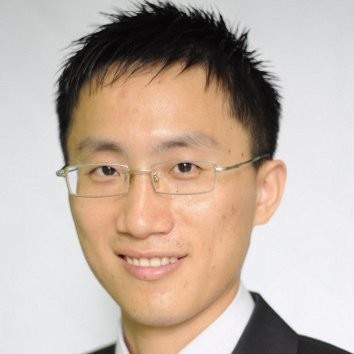
“The Manus block is a clarifying moment,”
Ke Yan, a technology analyst at DZT Research in Singapore told Bloomberg.
“Manus was Singapore-incorporated with founders based here, and it still got pulled back. Beijing’s signal is that what matters isn’t where the legal entity sits.”
The ruling also underscores a broader tightening of controls on capital flows and technology transfers in the AI sector.
Chinese regulators have reportedly instructed firms including Moonshot AI and Stepfun to avoid US-origin funding unless explicitly approved, while ByteDance faces similar scrutiny.
In parallel, Manus co-founders were reportedly subject to exit restrictions following meetings with Chinese authorities earlier this year.
Alfredo Montufar-Helu, managing director at Ankura China Advisors, said to Bloomberg that the move reflects the strategic importance Beijing places on AI in its competition with the US.

“In the same way that the US has tried to prevent China’s access to advanced semiconductors, China is now moving to constrain American access to AI tech,”
he said.
Meta said the transaction “complied fully with applicable law” and that it expects an “appropriate resolution” to the matter, without providing further details.
Singapore’s position as a neutral ground is now in question
For Singapore, the decision carries wider implications beyond the fate of a single deal.
The city-state has positioned itself as a neutral hub for global AI talent and capital, particularly for Chinese-founded firms seeking international expansion.
The NDRC’s willingness to intervene in a transaction involving a Singapore-incorporated company raises questions over how much regulatory insulation redomiciliation actually provides.
The ruling also introduces new uncertainty for investors and acquirers in the region.
Deals involving Chinese-founded technology companies may now face heightened risk of review by Beijing, regardless of where firms are incorporated or operationally based.
The decision comes just weeks before a scheduled summit between US President Donald Trump and Chinese President Xi Jinping, where technology competition, investment flows and AI governance are expected to feature prominently.
Featured image credit: Edited by Fintech News Singapore, based on image by user6393596 via Freepik
