



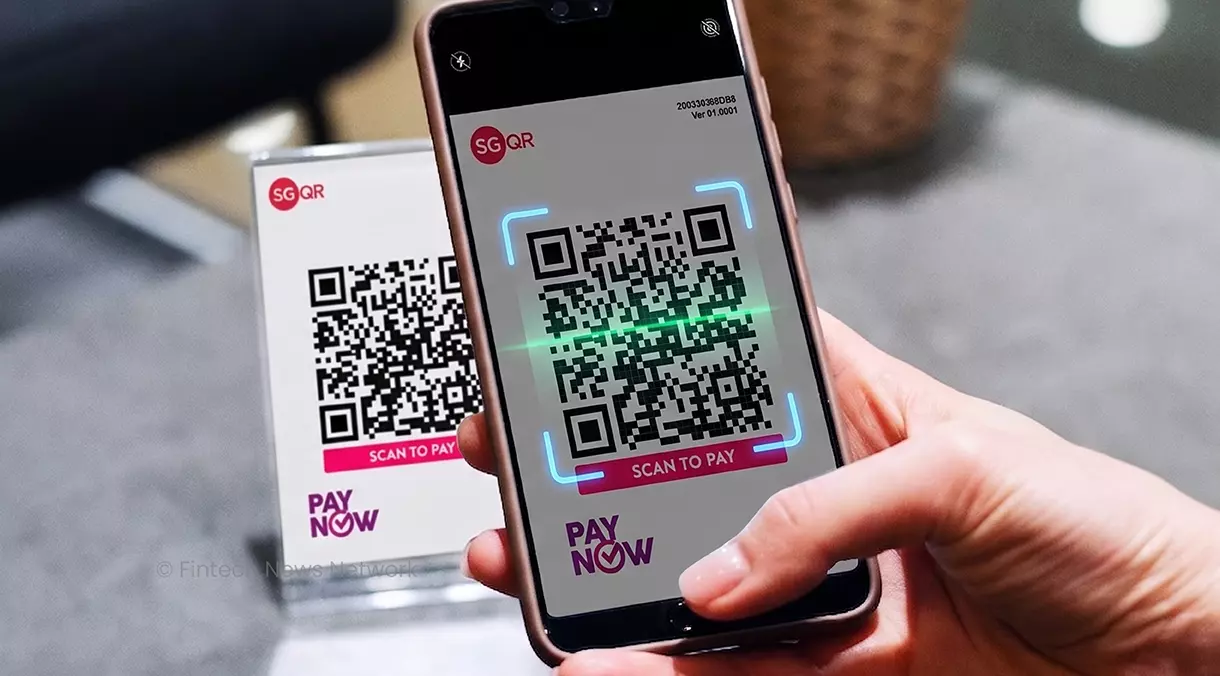
PayNow already leads Singapore’s card-based peers on digital payment adoption, yet the Monetary Authority of Singapore and the Association of Banks in Singapore are still studying how to redesign it.
Digital wallets and account-to-account payments now hold 48% of Singapore’s retail consumer-to-business wallet share, compared with a 37% average across other card-led markets such as Australia and the United Kingdom, according to the PayNow Generation 2 Phase 1 report.
Strong adoption usually gives a payment scheme room to slow down, but PayNow is taking the opposite route.
MAS and ABS launched the two-phase PayNow Generation 2 study to work out what Singapore’s instant payment scheme needs after broad consumer adoption has already been achieved.
Published on 25 June 2026, the Phase 1 report sets out four upgrade areas and places them against changes already reshaping payment schemes elsewhere.
Payments are becoming less tolerant of friction, while business users are asking for more context around each transaction rather than just faster settlement.
Agentic commerce sits further out in that discussion, but its inclusion shows how far MAS and ABS are thinking beyond today’s PayNow use cases.
The Scale That Raises the Stakes
PayNow enters that review with scale most payment schemes would envy.
It had around 11 million proxy registrations as of December 2025, covering more than 90% of Singapore’s adult population and roughly 350,000 business entities.
Payment value is already large enough to make PayNow more than a consumer convenience tool.
It processed about S$154 billion in consumer payment value and S$147 billion in business payment value in 2025, alongside S$371 million across live cross-border links to India’s UPI, Malaysia’s DuitNow and Thailand’s PromptPay.
Those figures confirm PayNow has already cleared the adoption bar. What Gen2 is chasing now is everything adoption numbers don’t fix on their own.
The study is looking at where PayNow still feels too manual or too scheme-bound, particularly in merchant payments, online checkout, public-sector collections and business reconciliation.
A QR Fix Arriving Within Months
PayNow’s nearest-term change targets QR acceptance in Singapore.
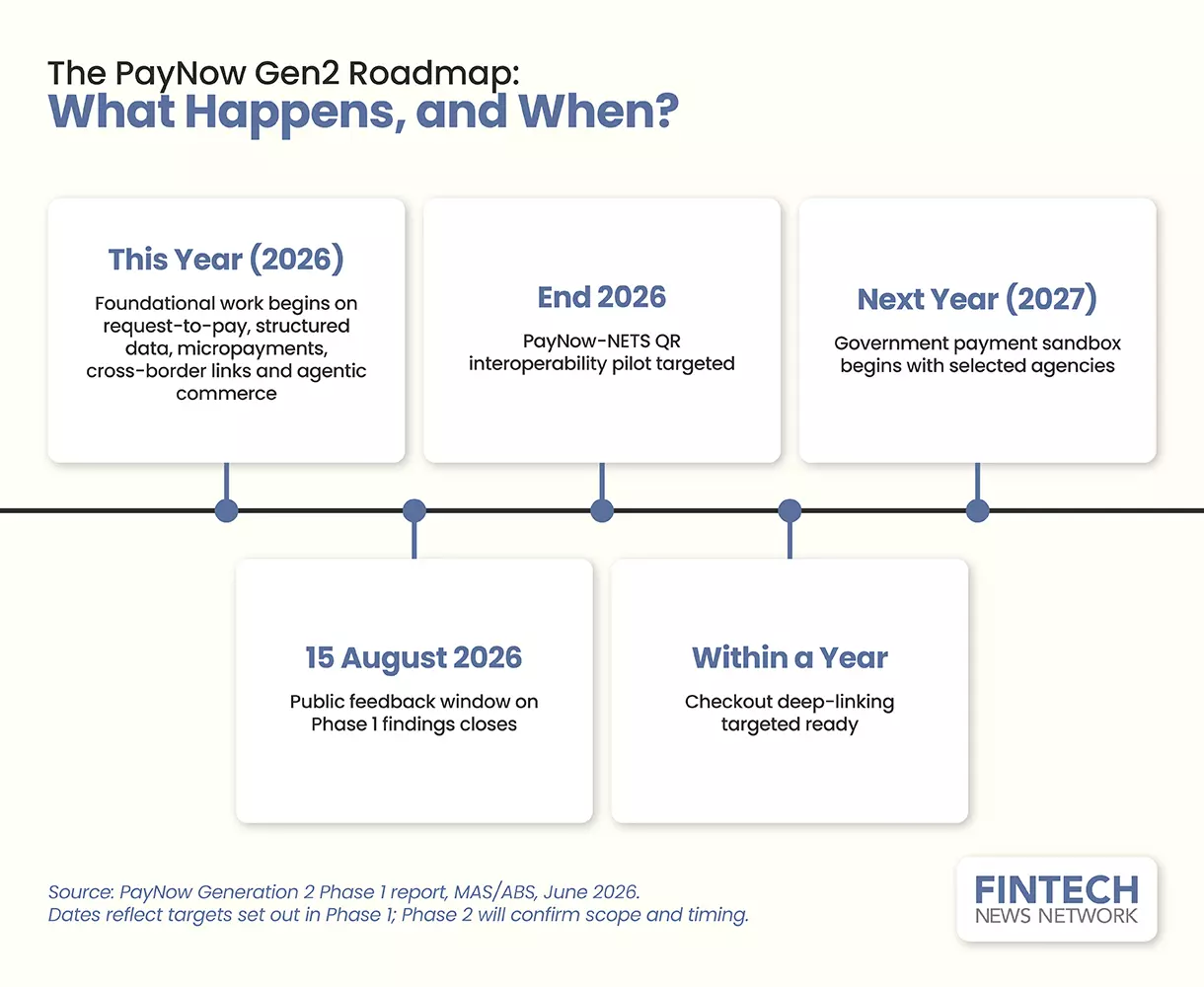
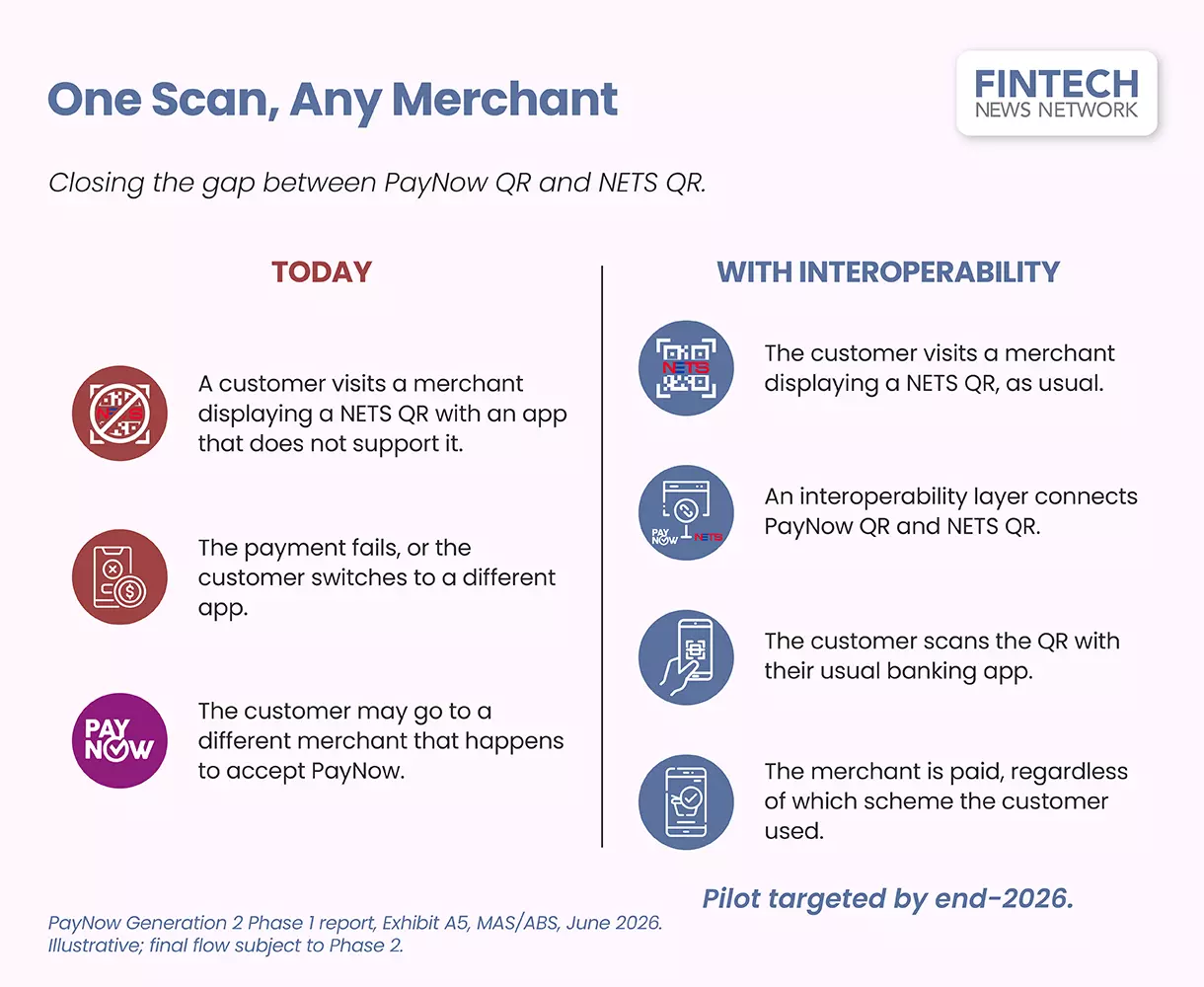
MAS and ABS want to pilot interoperability between PayNow and NETS QR by the end of 2026, allowing a consumer to scan and pay at any merchant regardless of which scheme the merchant uses.
Singapore’s SGQR standard already gives QR codes a common display format.
Scheme interoperability is a different problem, as a neat QR label at the counter does not guarantee that the customer’s app and the merchant’s payment scheme can route the transaction between them.
PayNow–NETS QR interoperability is meant to deal with that routing gap.
Malaysia offers a useful comparison because DuitNow QR has already moved the market away from fragmented acceptance towards a shared national QR standard.
Bank Negara Malaysia has since pushed further through the Interoperable Fund Transfer Framework, with proprietary QR networks to be phased out by 30 June 2028.
Singapore’s problem is smaller because PayNow already has near-universal reach. Even so, the direction is similar.
Mature QR acceptance means the customer no longer has to care which scheme sits behind the code.
Checkout Gets the Deep-Linking Treatment
Online checkout is the next consumer-facing problem.
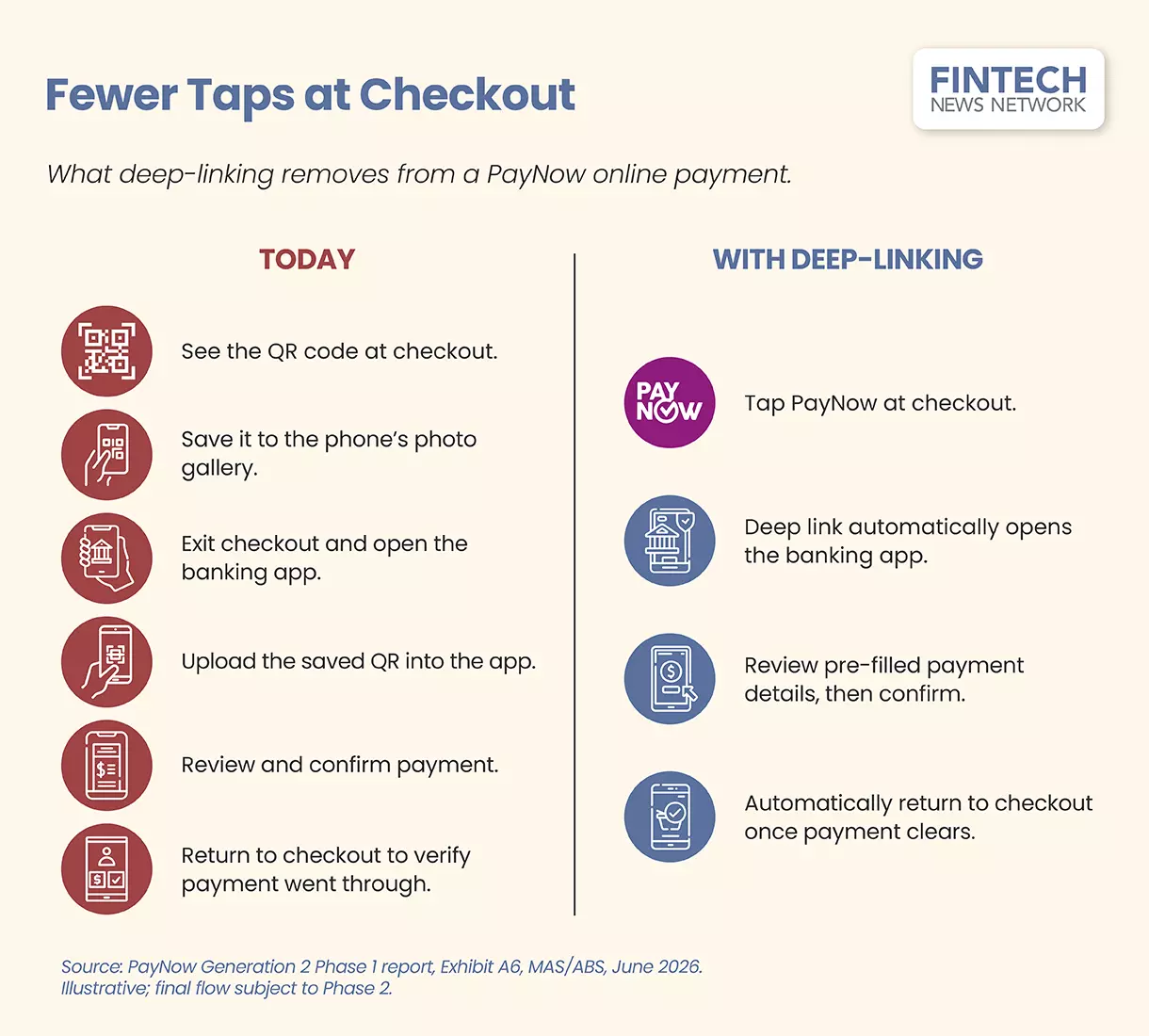
PayNow QR already appears in some e-commerce journeys, but the process can still feel like a bank transfer inserted into a shopping flow.
A customer may need to save or scan a code, move between the merchant page and a banking app, approve the payment, then return to check whether the order has gone through.
Deep-linking would shorten that sequence. A shopper taps PayNow at checkout, lands inside a banking or wallet app with the payment details already filled in, approves the transaction, and returns after payment clears.
MAS and ABS want the functionality ready within a year.
Merchant economics explain part of the interest. Among the 37 organisations MAS and ABS consulted, 65% saw PayNow as having a clear cost advantage over card-based schemes, while 90% expected it to be important to their future payment acceptance strategy.
Cost, however, is only persuasive to the merchant because a lot of the time, shoppers often choose the checkout method that gives them the least work.
Cards still have habit on their side, and every extra PayNow QR step gives the customer another chance to abandon the purchase.
Deep-linking is where PayNow’s lower acceptance cost has to meet the user experience test.
Government Payments Get More Room
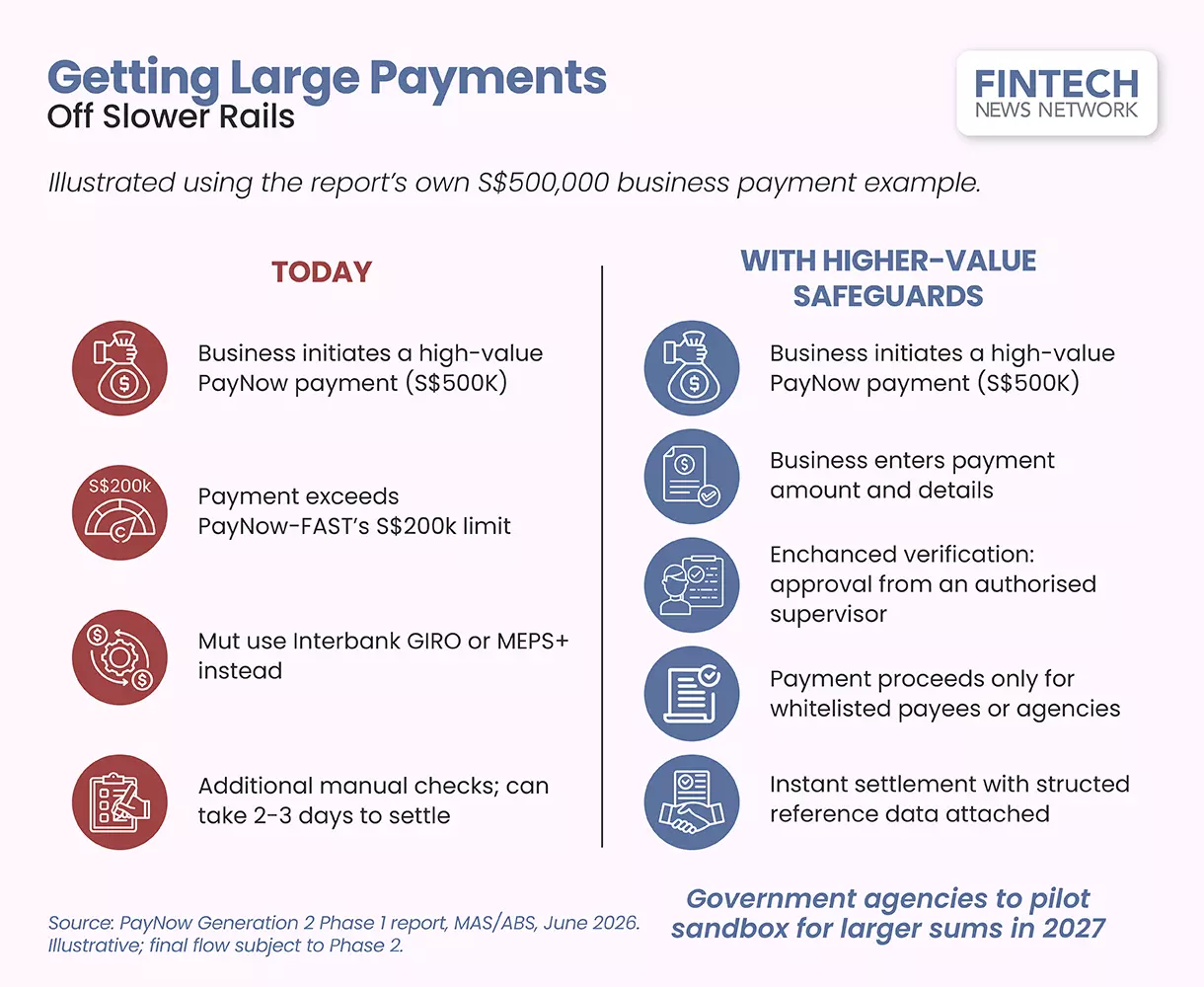
PayNow Gen2 also looks at whether the scheme can handle higher-value public-sector payments.
PayNow-FAST is currently capped at S$200,000, which means a larger transaction, such as the report’s S$500,000 business payment example, would need to go through Interbank GIRO or MEPS+ instead.
According to the report, those channels can take two to three days to settle because of additional manual checks.
MAS and ABS plan to sandbox selected higher-value PayNow transactions with government agencies next year.
Agencies could then collect property-related payments, taxes and duties instantly rather than through slower channels.
Raising the limit would only work if PayNow can also support stronger checks around who is being paid and who approved the transaction.
The report flags safeguards such as payee whitelisting and maker-checker approval as prerequisites, reflecting the different risk profile that comes with instant settlement at a much higher value.
Business Payments Need More Data
Structured data is the least consumer-friendly part of PayNow Gen2, although businesses may notice its impact most.
A PayNow payment can still leave finance teams matching amounts manually against invoices.
MAS and ABS want payments to carry invoice numbers, references and category codes automatically, reducing the back-office work that still sits around many account-to-account payments.
The study also covers request-to-pay, recurring payments, micropayments and expanded cross-border links.
Those are not flashy upgrades, but they matter if PayNow is to become more useful for billers, platforms and companies managing high transaction volumes.
One reference point in the report is the UK’s Faster Payments System, which supports a £1 million transaction limit and direct enterprise integration. MAS and ABS will begin foundational work on these capabilities this year.
But better payment data does not make for a louder headline than AI agents or QR pilots.
It does, however, address a real cost line for businesses that still spend time working out why money arrived.
Agentic Commerce Can Wait
Agentic commerce is the flashier part of the PayNow Gen2 report, mostly because AI agents paying on behalf of consumers are easier to sell than invoice references or payment data fields.
MAS and ABS are not treating it as an immediate consumer rollout.
The report groups agentic commerce with longer-term capabilities and says Singapore will take a proactive risk management stance before any such functions reach users, given unresolved questions around authorisation, control and liability.
Caution fits the nature of the problem.
AI-led payments may eventually become part of the scheme conversation, but PayNow would still need clear rules on who approved the transaction, what limits applied and who carries the loss if an agent makes the wrong call.
MAS and ABS are inviting feedback on the Phase 1 findings until 15 August 2026. Phase 2 will pilot the priority upgrades and set an implementation roadmap by the end of the year.
Featured image: Edited by Fintech News Singapore based on an image by freepik via Magnific.
