


Organizations worldwide are embracing artificial intelligence (AI) at a pace that exceeds their organizational readiness. A new survey by software company AvePoint reveals that more than eight out of ten companies experienced at least one AI-related security breach over the previous 12 months, reflecting how the adoption of AI is outpacing preparedness.
The study, which surveyed 750 respondents with direct responsibility for information management, data security, or AI programs across the world, found that 39.6% of respondents reported at least one prompt injection attack bypassing security guardrails for generative AI assistants, 20.4% detected non-corporate-approved generative AI (genAI) assistants within their organization’s environment, 18% experienced an AI assistant leaking or disclosing sensitive data it shouldn’t have, and 4.1% had an unauthorized party gaining access to their genAI tools.

Similarly, AI agents are prone to unintentionally exposing sensitive information through improper data handling, unauthorized access, and increased exploitation by attackers.
More than eight out of ten organizations reported at least one security breach due to AI agents over the past 12 months. Data leakage was the most common, cited by 50.1% of respondents, followed by manipulation of AI agents by malicious or untrusted input, cited by 49.6%.


These findings suggest that while organizations are moving quickly to deploy AI, many remain unprepared to govern it safely at scale.
Security as a top concern
These findings align with professionals’ stated worries. 76% of respondents cited ensuring data security and privacy as a key concern about implementing AI agents, ranking it as the top challenge. These security risks are also discouraging deployment, with 86% of organizations stating that have delayed the implementation of AI agents by an average of 5.92 months due to data security or data management risks.
This highlights how data security represents a prominent constraint on AI adoption, surpassing even technical limitations, or regulations.
Security concerns are followed by ethical issues and bias, cited by 71.7% of respondents as a concern about implementing AI agents, and ensuring sufficient human-in-the look controls for overseeing AI agents, identified by 70.3%.
Regulation compliance ranks as another significant challenge. 69.7% of respondents cited meeting regulatory compliance obligations as a concern about implementing Ai agents, ranking it fourth overall. This underscores the growing complexity of regulations as policymakers work to address risks introduced by AI technologies.

Mitigating strategies
The study reveals that organizations have taken steps to mitigate these risks. Over the past 12 months, 95.5% of respondents implemented at least one action to address these challenges. Adding human-in-the-loop controls for overseeing AI agents emerged as the most prevalent strategy, cited by 54.8% of respondents, followed by providing training for employees on how to safety use AI agents, cited by 51.6%, and deploying third-party governance tools that assess AI agents output, cited by 40.4%.
Looking ahead, organizations plan to increase investment to address shortcomings in their genAI deployments. Over the next 12 months, 60.8% of organizations intend to ramp up their investment in governance tools that audit AI output for accuracy and alignment with data governance policies, and 56.1% plan to increase investments in data security tools to protect AI models and systems.

Some organizations have taken more decisive actions. 37.9% of respondents indicated they cancelled rollout plans of AI agents entirely, and removed all such tools from their organizations.

Rising AI usage
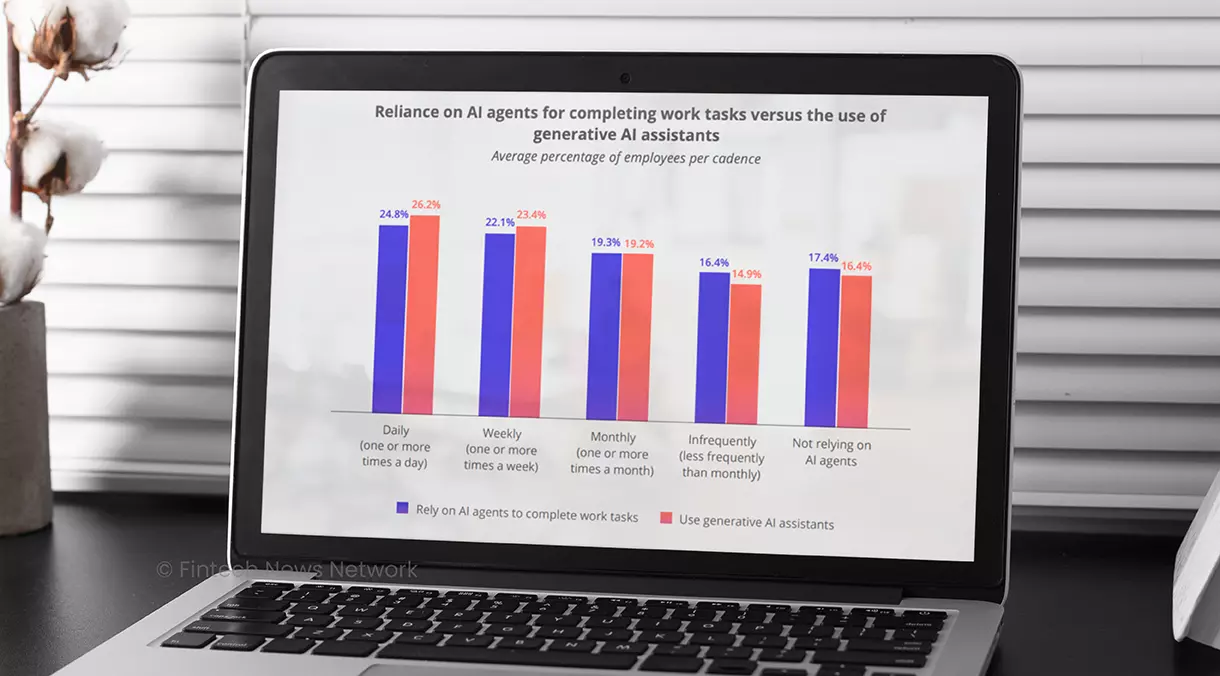
Significant security concerns persist despite enterprises adopting AI tools at a fast pace. 46.9% of employees now rely on AI agents daily or weekly to complete work tasks, such as autonomous customer servie interactions, cybersecurity posture assessments, or autonomous inventory modeling and replenishment. Additionally, 49.6% of employees use genAI assistant daily or weekly.

In Singapore, about 28.7% of firms have started adopting AI, according to a Q1 2026 survey by the Singapore Ministry of Manpower covering 2,560 private sector establishments. The figure places Singapore far behind world leaders including China, Denmark, and Hong Kong, which boast adoption rates ranging between 41% and 47.5%.

Despite this, regulators are accelerating efforts to address the risks posed by agentic AI. Just this week, the Monetary Authority of Singapore (MAS) proposed an industry-developed framework for AI agent use in financial services.
The Safeguards for Agentic Finance at Runtime (SAFR) framework, released on July 03, aims to ensure that autonomous AI agents used in the sector operate safely and within strict boundaries by enforcing controls at the moment of action. Specifically, the framework introduces a runtime safeguard layer that checks AI-initiated actions against policies, risk limits, and authorization rules before allowing execution, and which ensures full auditability and traceability of decisions.
Featured image: Edited by Fintech News Singapore, based on image by freepik via Magnific
