



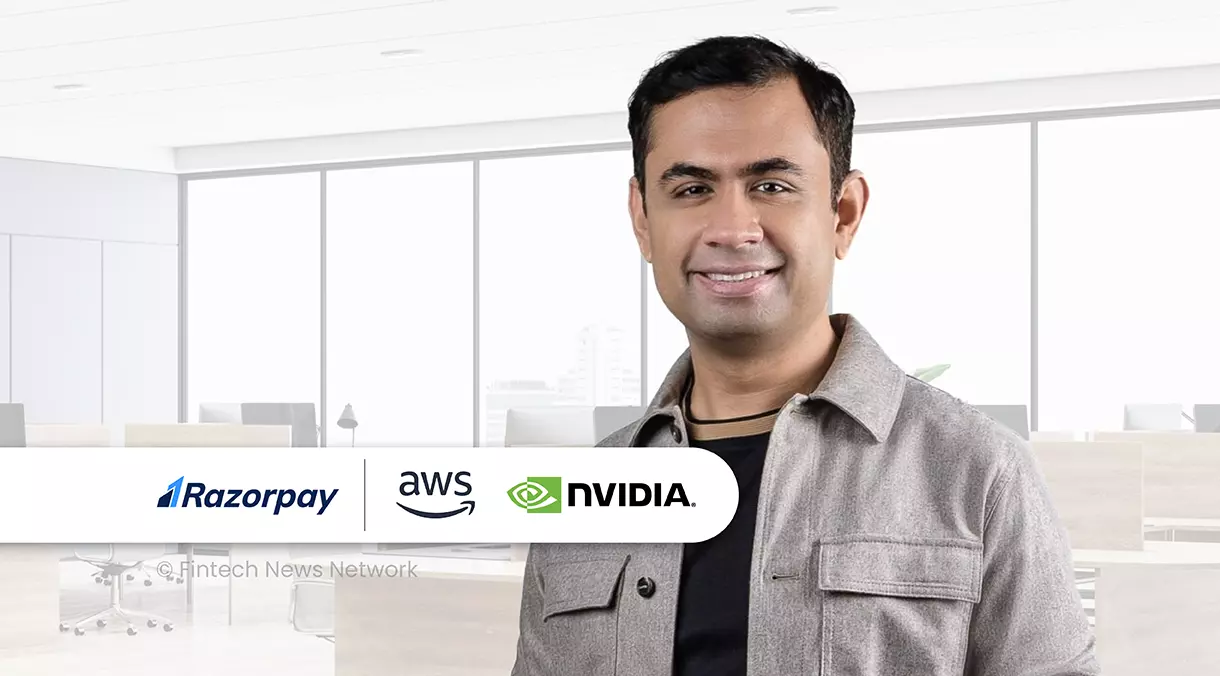
Razorpay has built an AI foundation model to reduce failed transactions and strengthen fraud detection across its payments network.
Vulcan was trained on nearly three trillion data points across four billion payments.
It analyses about 3,000 signals per transaction to support routing, fraud detection, risk assessment and checkout personalisation.
NVIDIA GPUs powered the model’s training and operation, while Amazon Web Services (AWS) supported its development and deployment through Amazon SageMaker.

Vulcan brings these functions under a shared intelligence layer instead of relying on separate machine learning models.
It can select the payment route most likely to succeed, detect fraud across merchants and assess return-to-origin risks for cash-on-delivery orders.

Harshil Mathur, CEO & Founder of Razorpay, said,
“An AI-led payments foundation model doesn’t just solve today’s problem and stop there. Every payment teaches the system something that makes the next payment better.
That’s what makes this feel less like a product launch, and more like the starting point for how payments in India keep getting better on their own, for years to come.”
Early components are already running on Razorpay’s network, with Blinkit, Bachatt and redBus among the customers using them in live payment environments.
The company reported an 8% to 10% improvement in payment success rates.
The system also detected and stopped eight times more international card fraud and identified five times more fraudulent or disputed transactions without increasing alerts.
Razorpay added that Magic Checkout showed 40% more shoppers their preferred UPI app, helping merchants complete between 100,000 and 200,000 additional purchases each month.
The company aims to eventually use Vulcan across authentication, routing, fraud detection and lending.
Featured image: Edited by Fintech News Singapore, based on image by Who is Danny via Magnific
