




Wealthy families are putting off succession planning as founders struggle to give up control, a DBS report has found.
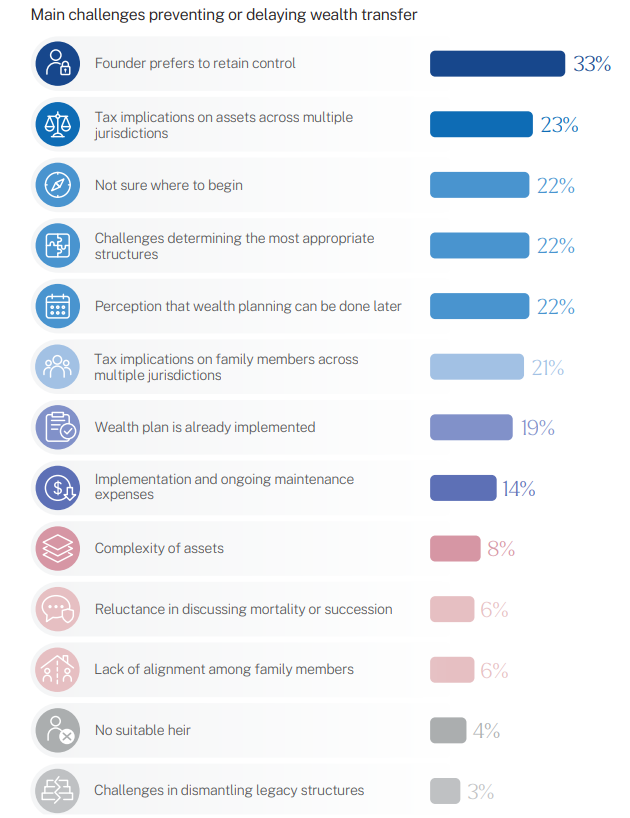
The DBS Asian Family Office Almanac 2026, released on 30 October, found that 33% of respondents cited founders’ reluctance to relinquish control as a reason for delaying wealth transfers.
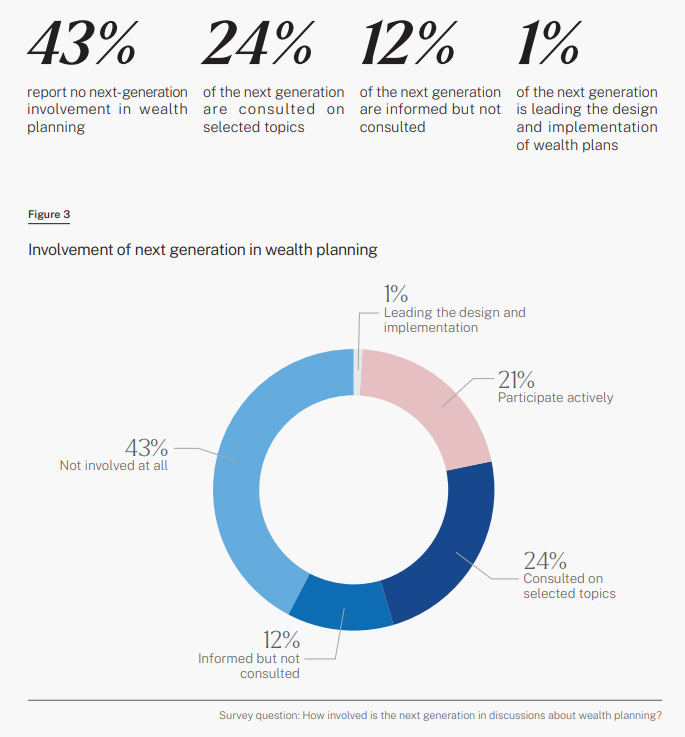
Nearly eight in 10 families (79%) want their wealth to last at least two generations, yet 43% have not involved the next generation in planning. Just 1% have the next generation leading the planning and implementation process.
Only 4% expect a significant wealth transfer within the next three years, while 29% believe it will take more than seven years.

Another 15% expect transfers to happen only after an event such as the founder’s death or a crisis.
The report draws on two surveys of more than 200 family offices across Asia, Europe and the Middle East conducted between January and May 2026.
Families Face Challenges in Structuring Wealth Transfers
The study also found gaps in how families structure their wealth. More than half (54%) hold key assets in their personal names, while 52% use personal investment companies.
Only 20% use professionally administered trusts, while 55% remain unsure which new ownership structures to adopt.
Cross-border tax considerations pose another challenge, with 23% citing tax implications on assets held across multiple jurisdictions as a barrier to wealth transfers.
Most Family Offices Lack Formal Continuity Plans
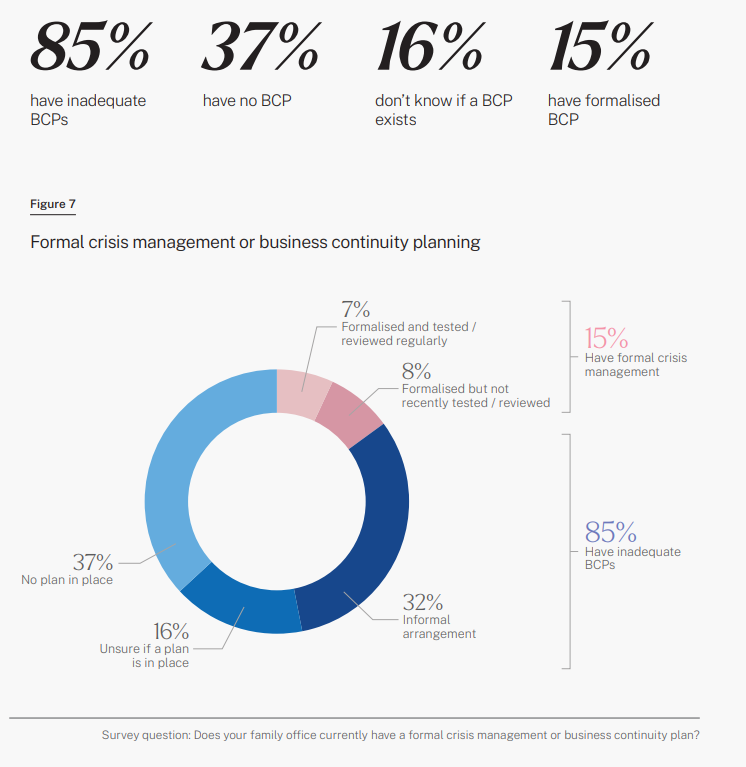
More than 85% of family offices lack a formal business continuity plan, rely on informal arrangements or are unsure whether one exists.
Only 15% have formal plans, including just 7% that regularly test or review them.
Cybersecurity and data privacy risks remain unaddressed by 38% of respondents, while just 3% have or plan to obtain cyber insurance.
More than half (56%) cited a lack of in-house risk management expertise as a barrier to addressing risks, followed by limited internal resources (48%).
AI Adoption Remains Limited Among Family Offices
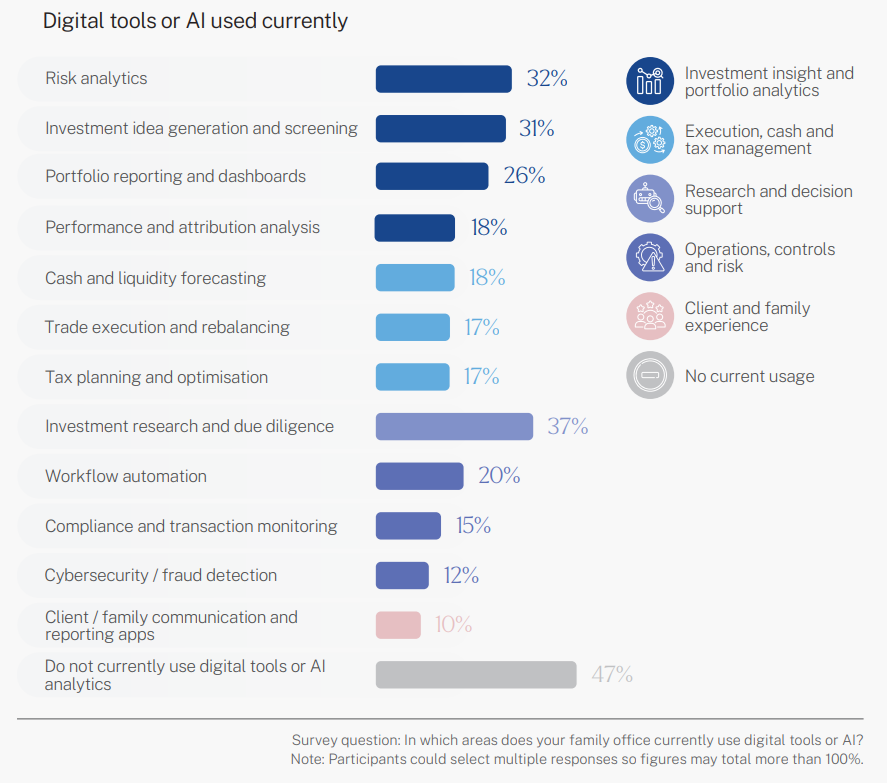
While 60% of respondents want to learn how to use artificial intelligence (AI) effectively, 47% have yet to use digital tools or AI analytics in their operations.
Among those adopting the technology, 37% use digital tools or AI for investment research and due diligence, while 20% use them for workflow automation.
A lack of internal expertise (49%) and data security concerns (46%) were the main barriers to wider adoption.

Lee Woon Shiu, Group Head of Wealth Planning, Family Office & Insurance Solutions, DBS Bank, said,
“Family offices need to look beyond immediate obligations and identify weaknesses in succession arrangements, risk oversight and technology before they become costly problems.
The families best placed to protect and grow their wealth will not necessarily be those with the most assets, but those who address these issues early, while they still have time and ample choices.”
Featured image: Edited by Fintech News Singapore, based on image by sekillerim05 via Magnific
