



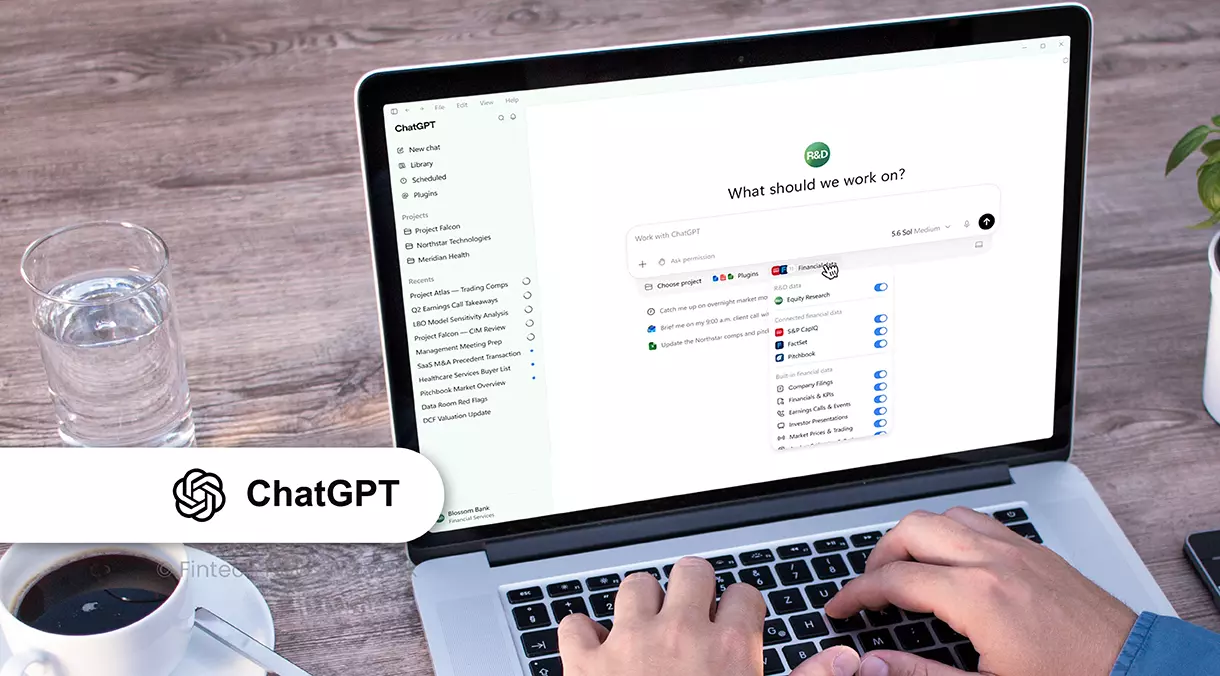
OpenAI has launched a finance-focused version of ChatGPT with built-in data for research, modelling and client materials.
ChatGPT for Financial Services combines GPT-6 Astra with datasets from Daloopa, PitchBook, LSEG News and Crunchbase.
These include earnings transcripts, financial statements, company fundamentals and private company data.
OpenAI developed the product with input from Morgan Stanley and Evercore. The initial focus is investment banking and equity research.

Reliable data access and the creation of financial materials emerged as key challenges for their teams.
Feedback from the two firms will also inform future product improvements and expansion into other parts of financial services.
Financial Data Built Into ChatGPT
OpenAI indexes and hosts the included datasets on its own infrastructure.
Financial teams can use the data without negotiating separate contracts or setting up connectors.
The platform also provides detailed citations that link figures and claims to specific tables and passages.
This allows users to review the underlying evidence while developing an analysis.
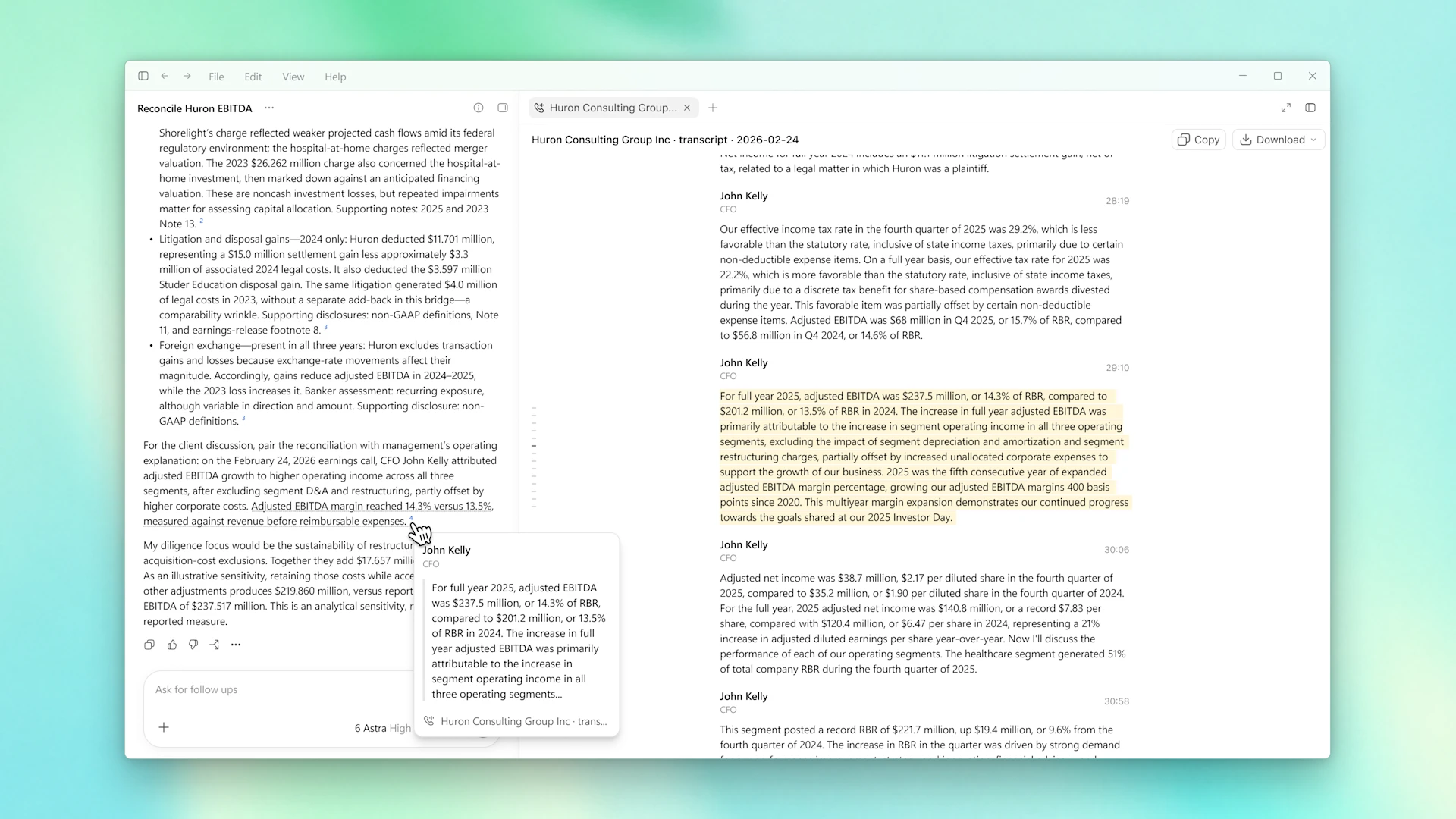
Firms with existing data subscriptions will also be able to connect them to ChatGPT.
OpenAI is working with S&P Capital IQ, LSEG, MSCI, Dow Jones Factiva and Moody’s on shared sign-in and entitlement integrations.
These integrations will allow providers to recognise users through their ChatGPT sign-in and automatically provide access to data covered by their existing subscriptions.
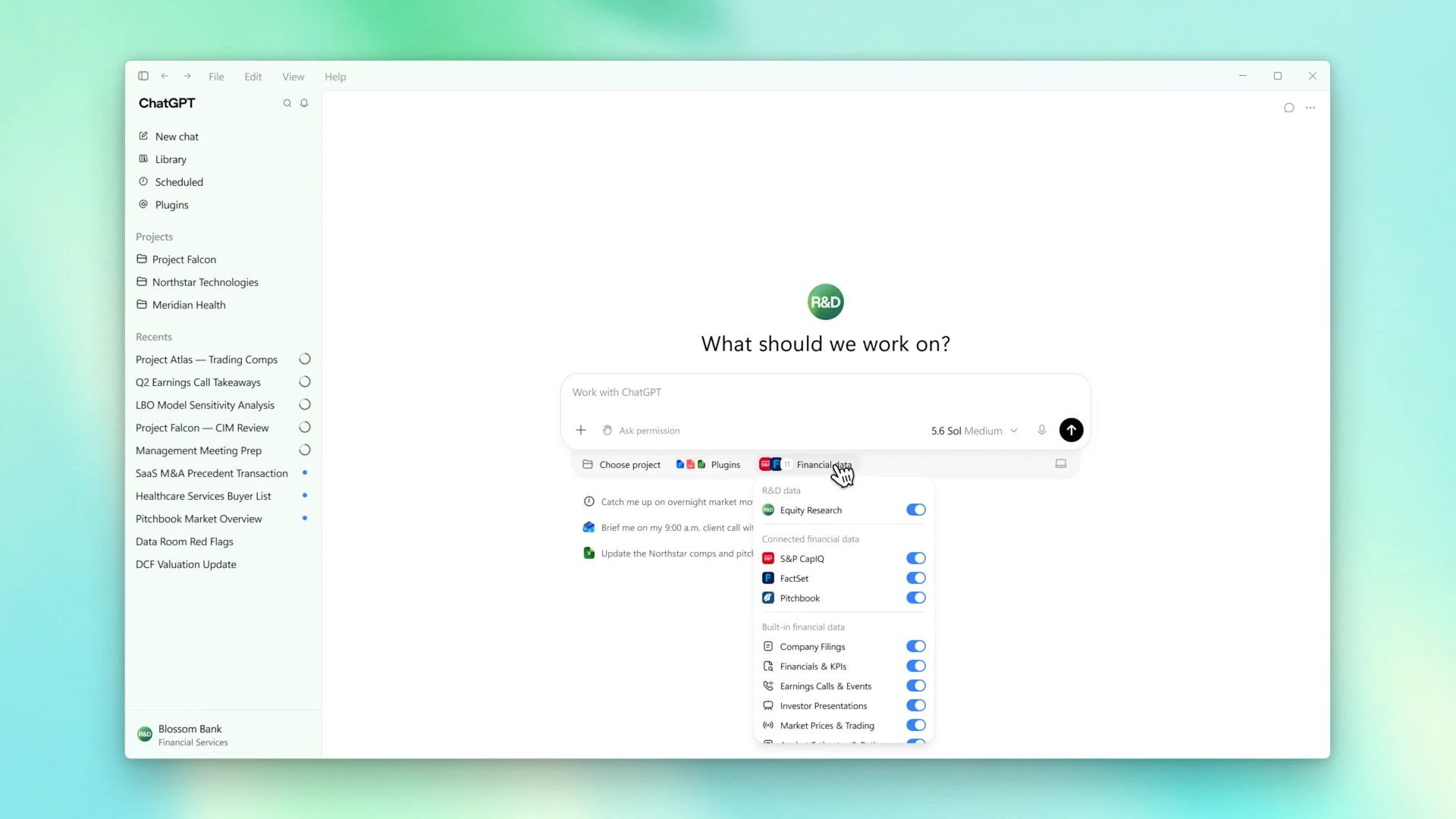
OpenAI’s broader ecosystem includes more than 50 connectors, including Datasite, Box, Preqin and Intapp.
GPT-6 Astra can analyse figures, tables and supporting notes within financial documents.
It can research information across several sources, compare figures from different periods and interpret annotations in public data.
Users can turn this analysis into documents, spreadsheets, presentations and interactive charts.
OpenAI said the model scored 69.9% on OfficeQA Pro, compared with 60.2% for GPT-5.6 Sol.
The benchmark tests whether AI systems can find and analyse information across complex tables, charts and supporting footnotes in US Treasury Bulletins.
OpenAI said newer models will also become available through the product as they are released.
Firms Control the Data and Outputs
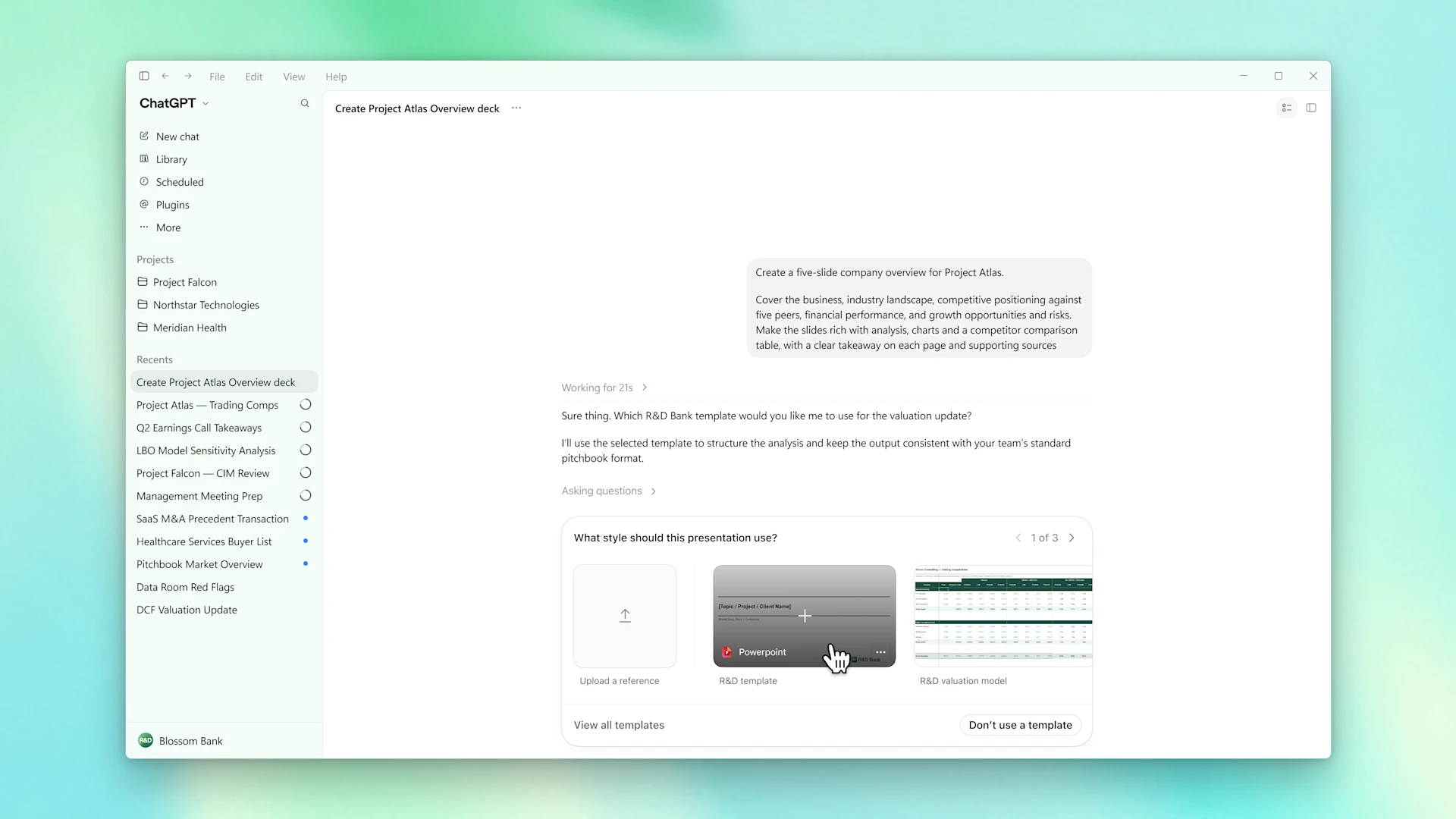
Administrators can publish approved Excel, Word and PowerPoint templates through a central page.
Teams can then use these templates to prepare valuation models, research notes and pitchbooks in their firm’s preferred format.
The product builds on ChatGPT Enterprise controls such as SAML single sign-on, SCIM provisioning and role-based access.
Firms can centrally manage access and data connections. They can also control access to skills and apps by role.
Administrators can enable or disable supported read and write actions for apps.
Multiple workspaces can also be used to maintain information barriers. Compliance teams can export supported workspace logs through the OpenAI Compliance Platform for audit and investigation purposes.
Business data is encrypted at rest and in transit. OpenAI does not use that data to train its models by default, while administrators can set workspace retention policies.
ChatGPT for Financial Services is available to eligible financial institutions.
OpenAI has not disclosed its pricing or detailed eligibility requirements.
Featured image: Edited by Fintech News Singapore, based on image by Akhtarpro via Magnific
