



Real-time payment (RTP) acceptance is growing rapidly, with 43% of merchants currently accepting it and adoption poised to increase in 2026.
At the same time, while cost minimization has become merchants’ top strategic priority, data and technology are actually their biggest hurdles and sources of frustrations. Encouragingly, fraud occurrences are still declining, suggesting improvements in prevention.
These are among the key findings from a new research by Visa Acceptance Solutions, the Merchant Risk Council (MRC), and Verifi. The report, based on a global survey conducted in Q4 2025 involving more than 1,200 merchant professionals engaged in e-commerce payment and fraud management across four major geographic regions, provides valuable insights into the e-commerce payment landscape. It explores payment acceptance practices, emerging trends, and fraud prevention strategies and challenges.
Real-time payments see strong uptake
Acceptance of RTP is growing rapidly worldwide. In this year’s survey, 43% of merchants accepted RTP, marking a 6% year-over-year (YoY) increase and making this the fifth most widely accepted method globally.

Data from the survey also suggest that RTP adoption will continue to grow rapidly in 2026. RTP-accepting merchants reported strong uptake among customers, with 83% seeing “a definite increase in the usage of real-time payments” over the past year, and 86% expecting this growth to persist over the next 12 months.

Among the 57% of merchants that did not accept RTP, 38% said it is likely they will begin doing so within the next 12 months, and another 49% of this group said there is at least a small or moderate chance of adding this acceptance method.

Globally, merchants currently accept four to five e-commerce payment methods on average, with cards, digital wallets, and bank transfers topping the list, each accepted by more than 60% of merchants worldwide.
In the past year, digital wallets, bank transfers, and mobile payments witnessed the highest adoption rates, with 34%, 22%, and 22%, of merchants, respectively, adding these payment methods. Buy now, pay later (BNPL) methods are also growing quickly, with 19% of merchants adopting this option over the past 12 months.

Merchants embrace agentic AI payments
As merchants increasingly incorporate RTP into e-commerce acceptance offerings, many are also looking to implement agentic artificial intelligence (AI) payments, which involve e-commerce payments initiated by AI assistants or applications on behalf of human consumers.
Currently, just 19% of merchants are set up to accept agentic AI payments, the study found. The majority, 63%, are still in the midst of planning and implementation, with 32% in the early implementation stage, and another 31% in more of the planning and exploration phase. Only 15% have no plans or solutions in place to accept agentic AI payments anytime soon.

In Asia-Pacific (APAC), agentic shopping is still in infancy, with around 29% of consumer businesses currently adopting AI agents, according to Deloitte’s State of the AI research. However, this figure is expected to surge to 76% within two years.
McKinsey research estimates that by 2030, agentic commerce could orchestrate US$3 trillion to US$5 trillion globally. This value will be driven by AI agents increasingly influencing discovery, decision-making, and transactions across varied product categories.
Cost concerns mount but data and technology are the top challenges
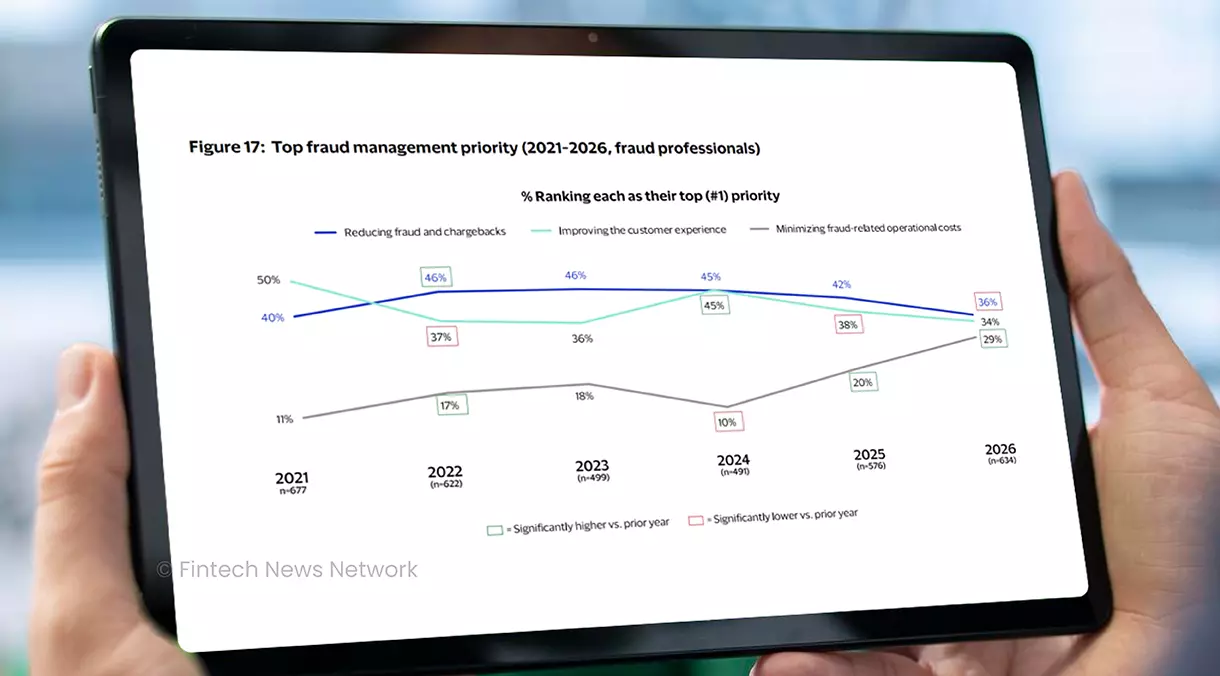
For the past several years, merchants prioritized reducing fraud and chargebacks, along with improving the customer experience. But since 2024, data are showing a steady, significant shift in strategic priorities, with more and more merchants citing cost minimization as their number one goal. In 2024, the share of merchants naming cost minimization as their primary imperative stood at 10%, a figure that rose to 29% in this year’s survey.

Merchants also cited “lack of internal resources” as one of their biggest challenges in fraud management this year, with 52% expecting spending on staff and talent in this area to stay flat or decrease over the next two years, and 45% anticipating the same for spending on fraud management tools and technologies.
These data points suggest that fraud management professionals are facing the challenge of effectively countering the diverse fraud threats they encounter while managing limited resources and striving for cost savings.
While cost constraints pose difficulties, the biggest frustrations for merchant fraud management professionals actually relate to data and technology. When presented with 15 different challenges, merchants in this year’s survey cited data and technology-related issues as four of the top six challenges impacting fraud management, overall.
These include effectively using data to manage fraud (31%), the accuracy of AI and machine learning (ML) fraud tools (31%), the availability and access to relevant data (29%), and fraud tool customization (26%). In total, 80% of respondents said they are struggling with at least one of the five data and tech-related issues in the survey.

Data and technology are now merchants’ primary focus area for improvements and investments, and many now prioritizing enhancing the accuracy of AI- and ML-powered fraud tools, better orchestrating them to work well together, as well as increasing automation of fraud prevention, over the next one to two years.

Fraud declines
Fraud remains a universal challenge for merchants, with 98% reporting at least one form of fraud attack over the past 12 months. But for the second consecutive year, Visa data show across-the-board declines in the share of merchants experiencing the 14 specific types of fraud covered in the survey, with the average number of different attacks experienced by merchants in this year’s survey declining significantly from 4.2 last year to 3.8.
Still the top five most common forms of fraud have remained the same over the past three years, with refund and policy abuse, real-time payment fraud, phishing, pharming, and whaling, first-party misuse, as well as card testing, impacting at least one third of merchants globally.

Featured image: Edited by Fintech News Singapore, based on image by DC Studio via Magnific
