



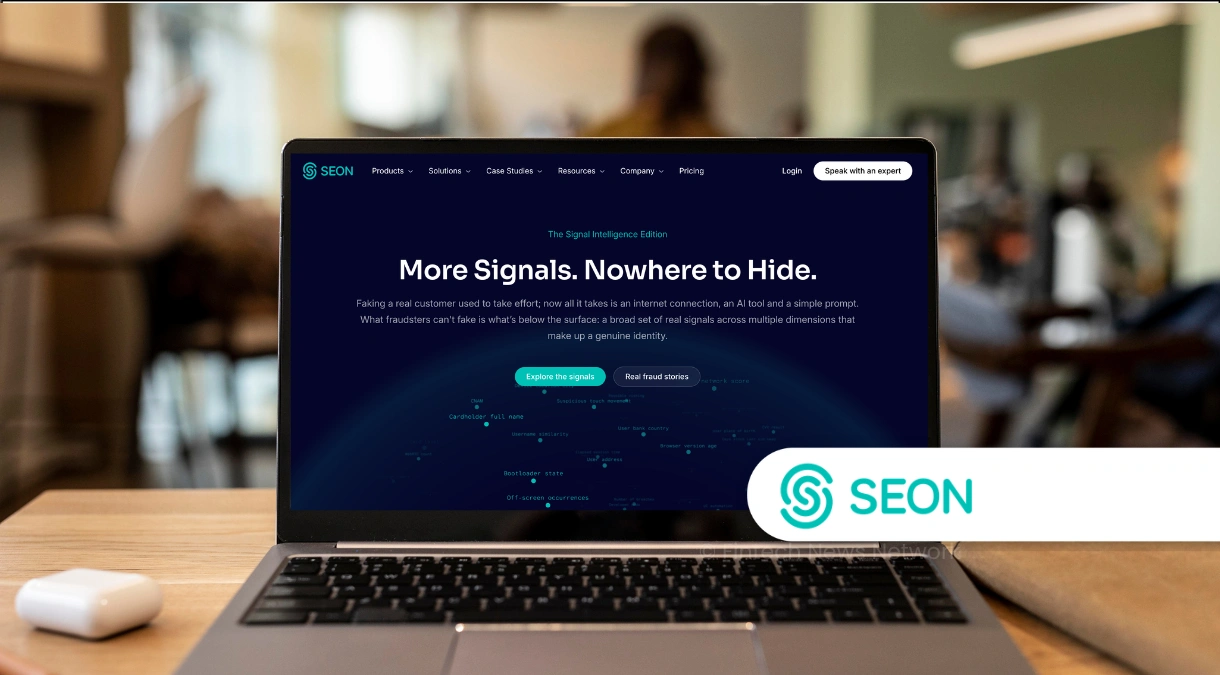
SEON has expanded its fraud detection platform to more than 1,100 data signals to help uncover fake identities and linked fraudulent accounts.
The Signal Intelligence update increases coverage from over 900 proprietary, directly sourced data points.
It adds address, phone and session data alongside more detailed digital footprint and device checks.
According to SEON, comparing these signals can reveal inconsistencies that individual checks miss without adding steps to the customer journey.

Digital footprint checks show where email addresses and phone numbers appear across online services.
Together with SIM-swap and number-porting history, they help teams assess whether an identity and phone number have an established history.

“AI has made a believable identity cheap to produce. What fraudsters cannot easily do at scale is build a consistent history for every account without reusing infrastructure.
That is where our signal foundation makes the difference. The more dimensions a fraud team can check simultaneously, the harder it is to hide an identity that does not add up.”
said Tamas Kadar, CEO and Co-Founder of SEON.
Address checks verify and standardise addresses across more than 240 countries, assigning identifiers to individual addresses and buildings.
These help flag seemingly unrelated accounts that use different unit numbers or address formats at the same location.
Expanded device checks can flag AI-agent activity, compromised iOS devices and Android eSIM mismatches.
They also identify discrepancies between network-country data and the location suggested by a VPN-masked IP address.
Session monitoring tracks behaviour during onboarding, login, account recovery, checkout and payment.
It can detect automation, remote access, off-screen activity and active calls to help teams intervene before a potential account takeover.
Risk teams can use the signals in rules, alerts, customer reviews and network investigations.
All signals in the expansion are also available to connected AI tools through SEON’s Model Context Protocol server.
The company also launched Hidden Risk Files, a series of investigations by its fraud consultants.
The first instalment examines how a screen-brightness reading linked thousands of accounts in a fraud ring using real Android devices.
Featured image: Edited by Fintech News Singapore, based on images by SEON and Magnific
