



Linking payment systems with digital identity systems among other services and facilities can help Asian economies expand digital trade and narrow the trade finance gap facing small and medium-sized enterprises (SMEs), according to a new paper by the Asian Development Bank Institute (ADBI).
In particular, pairing payment data with commercial, logistics, customs, and financial records, can not only allow SMEs to get paid more efficiently but also allow them to obtain the funding they need to produce, ship, and sell goods internationally.
SMEs bear disproportionate frictions in cross-border trade because many costs associated with payments, compliance, documentation, and credit assessment are fixed at the transaction or customer level. Verifying a new customer, screening a payment, examining trade documents, and conducting due diligence require substantial resources regardless of the size of the transaction, weighing heaviest on smaller firms.
In addition, SMEs often struggle to obtain trade finance as they often lack collateral, have short credit histories, incomplete financial statements, and less established relationships with financial institutions. Consequently, banks often find it difficult to assess their creditworthiness or verify underlying transactions, particularly when parties operate across different legal and regulatory systems.
At the same time, cross-border trade remains heavily fragmented and inefficient. A single transaction generates orders, contracts, invoices, transport documents, insurance records, customs declarations, delivery confirmations, payment instructions, and settlement records, often maintained separately by firms, banks, logistics providers, insurers, and authorities. This fragmentation forces repeated data entry, verification, and reconciliation.
Connecting digital payments to trade finance, verified invoices, digital identity, and logistics data may ease these issues, the report says. In particular, greater interoperability could allow verified commercial activity to generate a more usable digital transaction record. With appropriate authorization, a lender might confirm that an order was placed, goods were shipped, customs procedures were completed, and previous payments were made as agreed. Such information could complement conventional financial statements and collateral when assessing credit risk.
Programmable payments could further strengthen this connection by allowing payment to be released when specified conditions are satisfied, for example, when an authorized electronic document is presented or when trusted data confirms that goods have reached an agreed stage of the transaction.
Recommendations
The ADBI report outlines a framework for capturing these opportunities. First, it recommends that cross-border payment reform start with solid domestic groundwork instead of relying on a specific technology. Key priorities include dependable domestic payment systems, shared data and identity standards, legal acceptance of electronic trade documents, balanced compliance, clear payment and foreign exchange costs, and wide access for regulated financial institutions and payment providers.
The next step involves expanding proven cross-border arrangements where there is clear economic demand. QR merchant payments, fast payment system linkages, account-to-account transfers, improvements to correspondent banking, and local currency transaction arrangements can be developed progressively along important trade, tourism, and remittance corridors. Regional cooperation should support interoperability without requiring every economy to adopt a single payment model.
Payment connectivity should then be linked with electronic invoices and trade documents, customs and logistics data, foreign exchange services, and working capital and trade finance facilities. Tokenized deposits and wholesale CBDC platforms should be pursued selectively where they provide a clear advantage over existing arrangements and where legal certainty, governance, liquidity, operational resilience, and interoperability can be established.
Finally, progress should be evaluated through outcomes for users rather than technical performance alone. Relevant indicators include total transaction costs, foreign exchange spreads, predictability and speed of access to funds, rejected or delayed payments, access to trade finance, and participation by SMEs and smaller financial institutions. The objective is not to replace existing systems with a single new infrastructure, but to create a more interoperable, resilient, and inclusive cross-border payment architecture, the report says.
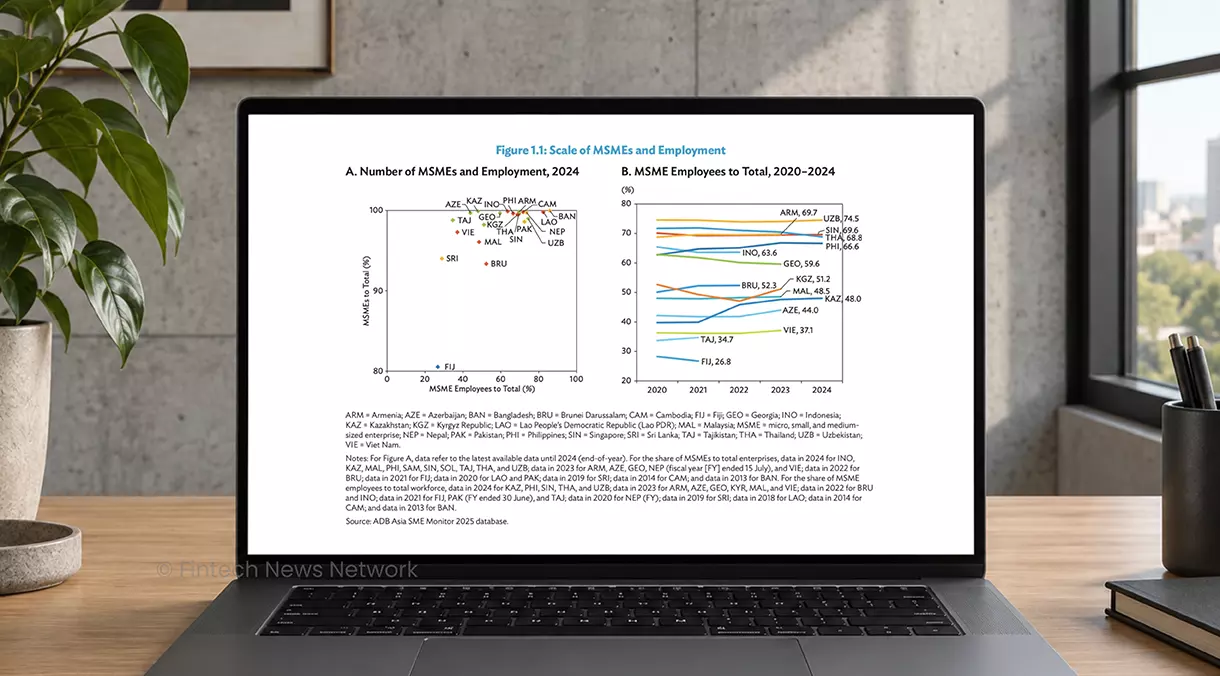
Micro, small and medium-sized enterprises (MSMEs) in developing APAC contribute meaningfully to the region’s economy. According to the Asian Development Bank (ADB), these organizations represent an average of 99.8% of all enterprises, 67.6% of the workforce, and 38.7% of national economic output.
The ADB estimates that the global unmet demand for trade finance totaled approximately US$2.5 trillion in 2025, equivalent to about 10% of global trade.

Across APAC, governments, development banks, and trade organizations are working to reduce the trade finance gap through credit guarantees, subsidized export loans, and digitalization efforts.
ADB’s Trade and Supply Chain Finance Program (TSCFP) offers guarantees and loans to fill market gaps, support cross-border trade, and reinforce key supply chains. The program collaborates with commercial banks, corporations, industry groups, governments, and development institutions, backing more than 104,000 transactions worth US$74 billion since 2009.
In Singapore, the Enterprise Financing Scheme – Trade Loan (EFS-TL) assists local firms in obtaining short-term trade and working capital with government risk sharing. It covers 50% of eligible default risk for lenders, increasing to 70% for young firms or those in difficult markets.
Separately, Singapore’s Infocomm Media Development Authority (IMDA) introduced TradeTrust in 2019, a framework that standardizes digital trade with improved security and legal certainty. It’s designed to cut inefficiencies and complexities in cross-border trade caused by traditional paper documents such as bills of lading.
Featured image: Edited by Fintech News Singapore, based on image by mygrafics via Magnific
