




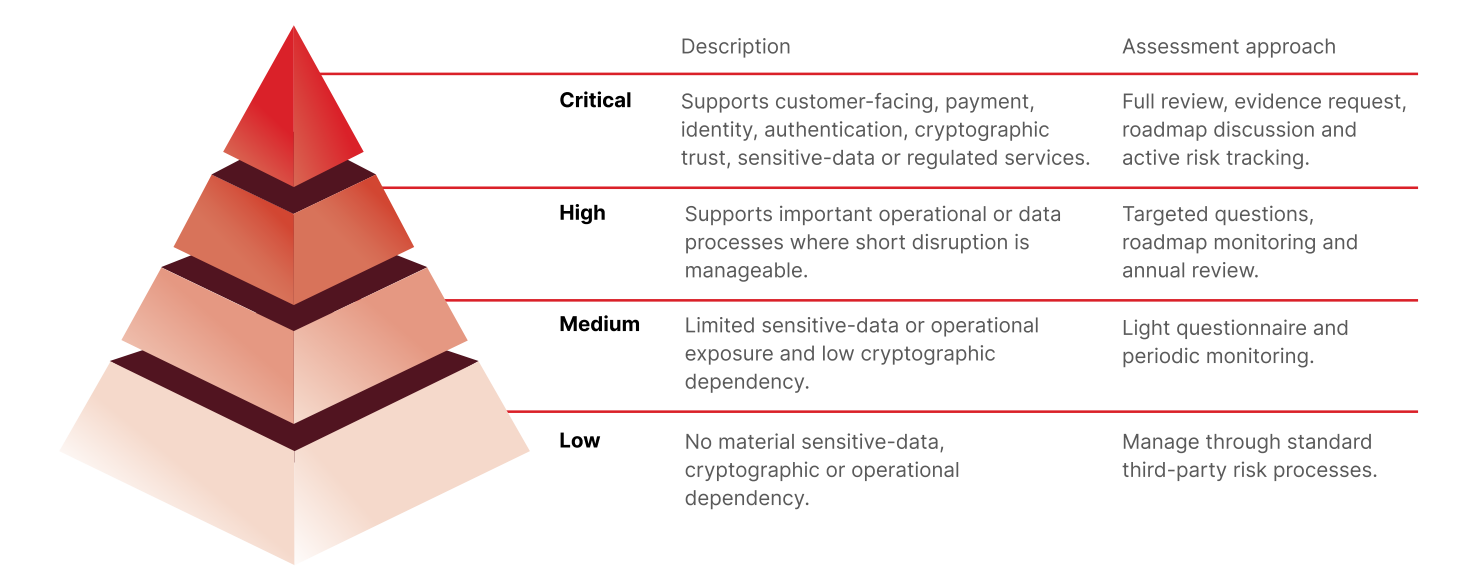
Banks could ask fintech suppliers how they plan to protect customer data and payments from future quantum threats before regulators set expectations for those suppliers directly.
The Singapore Fintech Association (SFA) flagged that possibility in a new report that sets out what fintechs can do in the first 12 months of preparing for quantum-safe migration.
No publicly known quantum computer can break the public-key cryptography that financial services rely on today.
Replacing it can take years because it is built into everything from payment systems to cloud services.

The report recommends prioritising records that need to stay private for years, such as customer identity details and financial histories.
Attackers could collect encrypted records now and decrypt them later if quantum computers become powerful enough.
Those advances could also let attackers forge digital signatures used to verify who authorised a payment or whether a software update is genuine.
What Fintechs Can Do Before They Upgrade
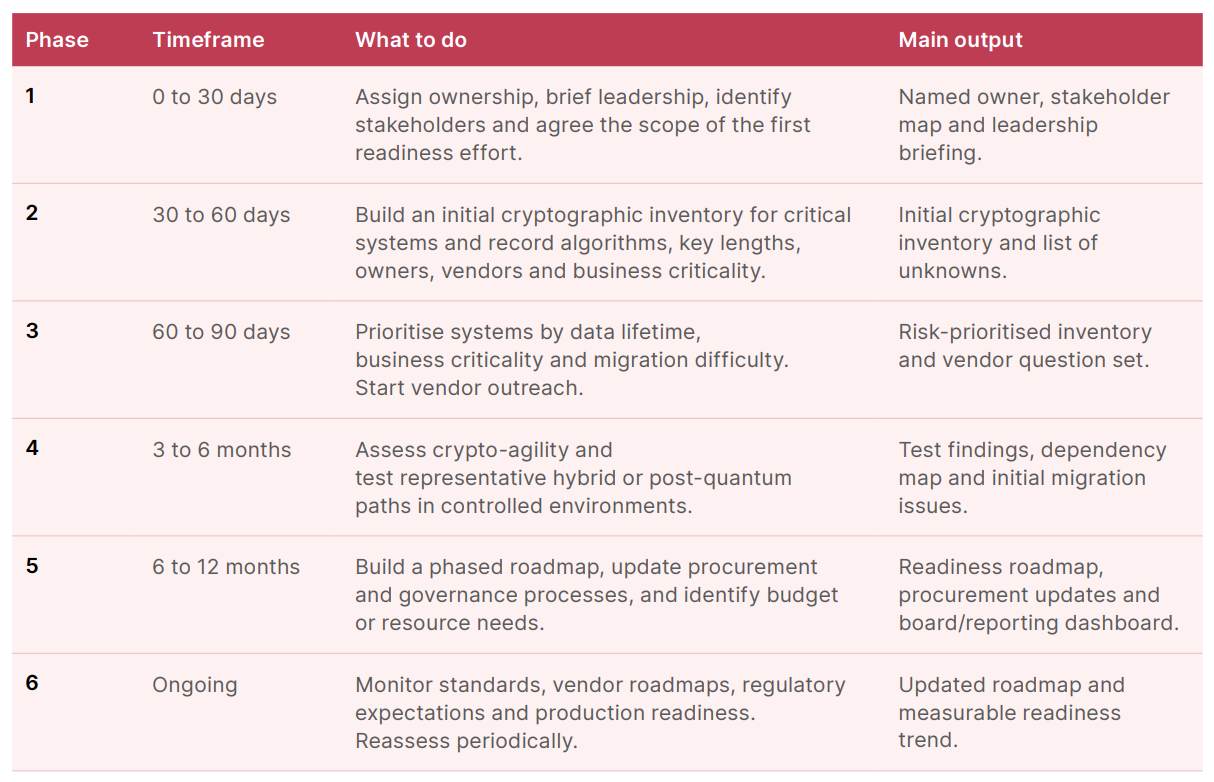
The SFA recommends putting someone in charge and briefing senior management in the first month.
Firms can then check which cryptographic methods their most important systems use and ask cloud providers and payment processors when they plan to upgrade.
That can help firms work out which changes their suppliers will make and which ones they need to handle themselves.
The report recommends testing upgrades in a controlled environment.
Some post-quantum methods use larger digital keys and signatures, which can affect how quickly systems respond and whether they still work with systems run by partners.
MAS Proposes a 2034 Target for Financial Firms to Go Quantum-Safe
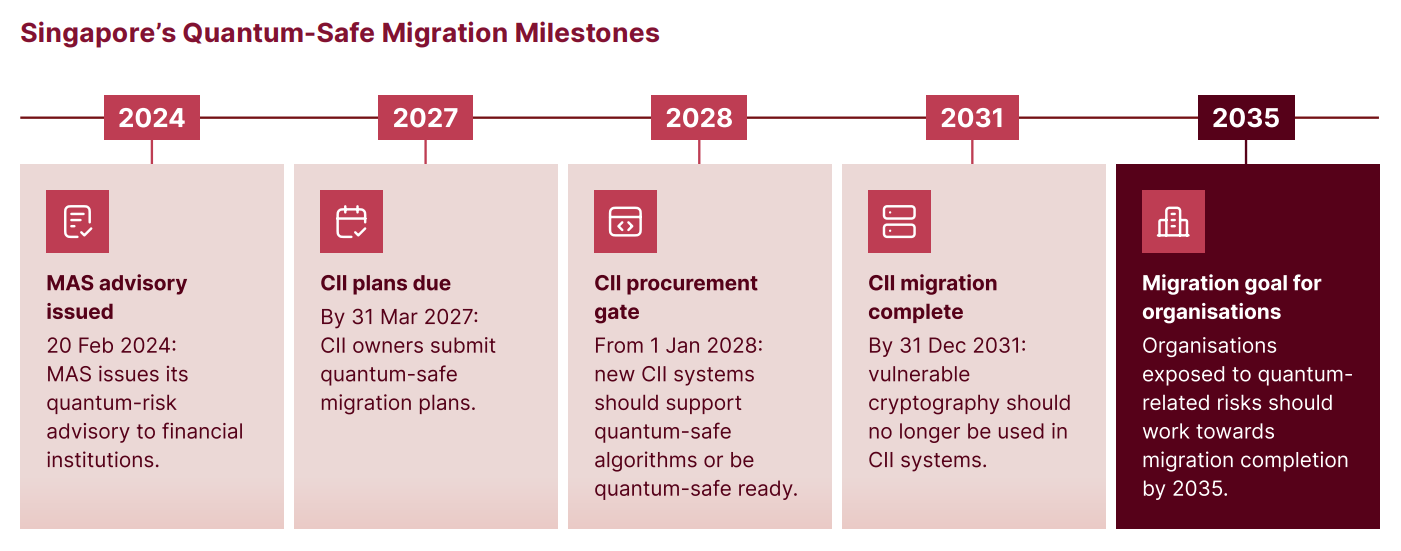
The Monetary Authority of Singapore (MAS) is consulting on a proposal for most financial institutions to have a migration plan by the end of 2027 and complete the switch for critical systems by the end of 2030.
The proposed target for all remaining systems is the end of 2034.
The Cyber Security Agency of Singapore has encouraged other organisations exposed to quantum risks to prepare a plan by the end of 2027 and aim to complete migration by 2035.

Pramodh Rai, Chairman of the SFA Cyber Security & Quantum Computing Subcommittee and Co-founder and CEO of Cyber Sierra, said,
“Every fintech in Singapore relies on cryptography it did not write and, in most cases, cannot see, from the payment APIs it connects to, to the certificates behind its cloud services. For most of them the first requirement will come in a bank’s vendor questionnaire, well before any regulation.
Start with the basics: know which algorithms you depend on, who owns them, how long the data they protect must stay secret, and what your suppliers plan to do about it. This report gives firms a practical place to start.”

Featured image: Edited by Fintech News Singapore, based on image by dit26978 via Magnific
