




Sumsub, a full-cycle verification platform, warns that APAC has entered a new phase of industrialised fraud driven by synthetic data, AI tools and the growing professionalisation of fraud-as-a-service networks.
The fifth annual Identity Fraud Report 2025–2026 by Sumsub describes a global “Sophistication Shift”, where overall fraud volumes are stabilising but high-quality attacks have risen 180 percent year on year.
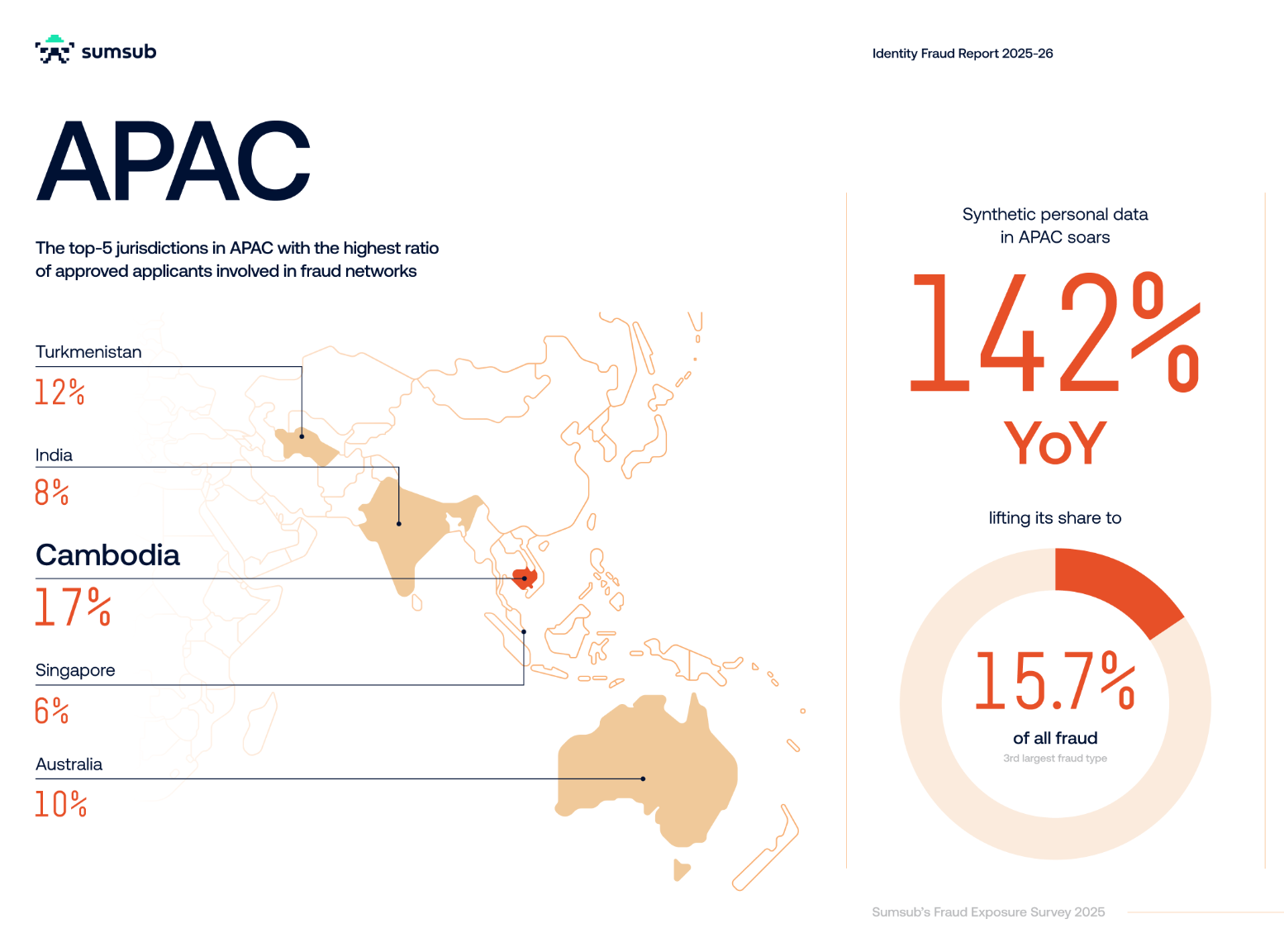
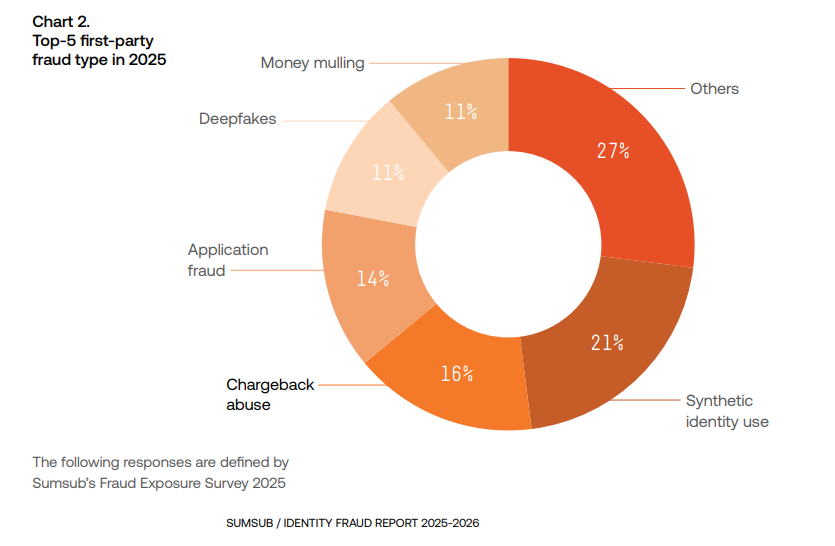
In APAC, synthetic personal data fraud jumped 142 percent and now makes up 15.7 percent of all regional fraud attempts, the region’s third-largest category.
The report draws on millions of verification checks and more than four million fraud attempts, supported by responses from over 300 risk professionals and 1,200 end users.

APAC Becomes a Testing Ground for Advanced Fraud Techniques
Tougher enforcement is changing how fraud is handled in the region.
Sixty percent of companies reported cases to police, more than double Europe’s 29 percent.
Increased reporting has exposed extensive criminal networks, and one in four individuals has been targeted for mule recruitment, one of the highest rates globally.
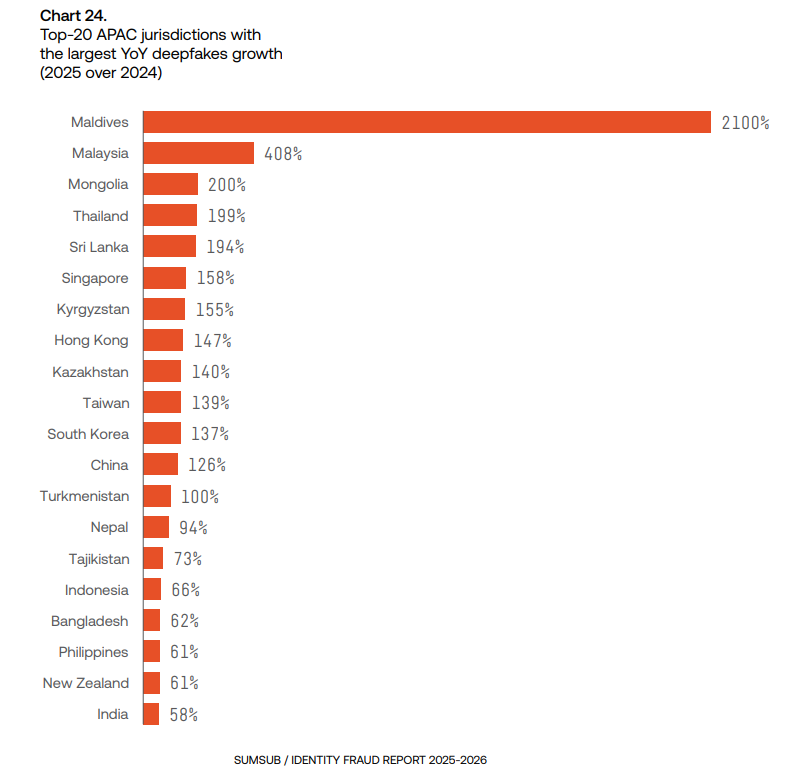
Hong Kong’s fraud rate fell to 1.4 percent after a 43 percent annual decline, below the global average of 2.2 percent, yet deepfake cases rose 147 percent.
Across APAC, the fastest deepfake growth rates were recorded in the Maldives at 2,100%, Malaysia at 408%, Mongolia at 200%, Thailand at 199%, Sri Lanka at 194%, Singapore at 158%, Kyrgyzstan at 155%, Hong Kong at 147%, Kazakhstan at 140% and Taiwan at 139%.
In 2025, 69 percent of businesses and 53 percent of consumers reported falling victim to fraud.
Survey results show that 47 percent of consumers believe protection should be shared equally between companies and governments.
Fraud trajectories remain uneven. Malaysia and Pakistan are seeing rapid increases tied to rising digital adoption.
Indonesia and the Philippines remain high-risk markets with growing exploitation of digital platforms and deepfake-enabled schemes.
Hong Kong, Singapore, India and Australia have recorded declines supported by stronger regulation, although attacks in these jurisdictions are becoming more sophisticated.
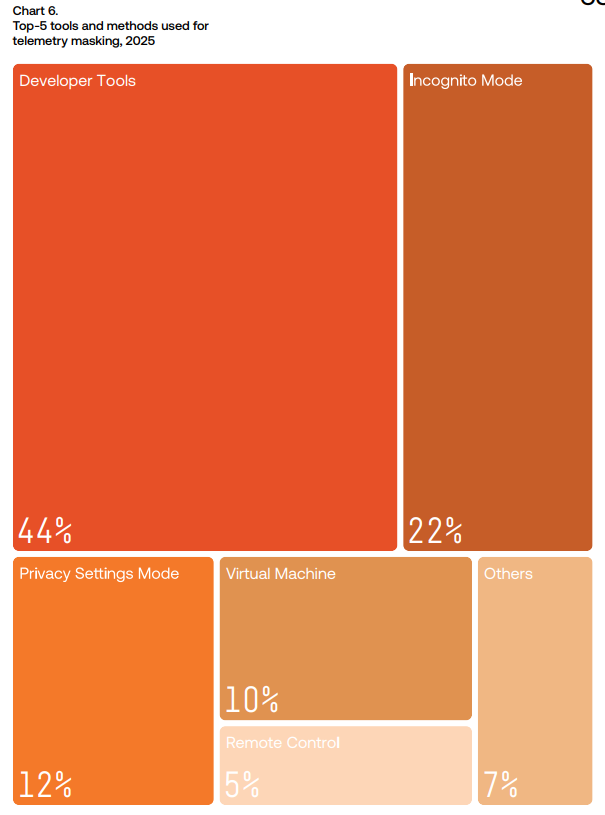
The report identifies new attack techniques involving manipulation of the infrastructure behind verification.
Telemetry tampering is rising as fraudsters interfere with SDKs, APIs and device signals to bypass checks.
Sumsub also notes the emergence of AI fraud agents capable of automating full verification flows, generating synthetic documents, submitting deepfake videos and mimicking user behaviour.
These systems are expected to accelerate further in 2026.
The findings point to the need for continuous, multi-layered verification systems that analyse device patterns, contextual signals and non-human activity in real time.
Sumsub says organisations must shift from static checks to adaptive systems that evolve as threats change.

“The fraud landscape in APAC has changed faster in the past twelve months than in the previous five years combined.
In 2025, we saw fraud rates decline across mature economies, including Hong Kong, Singapore, and South Korea — yet deepfakes and synthetic identities are rising faster than anywhere else in the world. This shift indicates that the region’s success in combating basic scams has prompted attackers to adapt their tactics.”
said Penny Chai, Vice President, APAC at Sumsub.
Featured image: Edited by Fintech News Singapore, based on image by Freepik
