




A decade ago, a lot of day-to-day spending in Asia-Pacific still meant cash and paper slips. Today, most of that value is moving over real-time systems that sit quietly in the background.
The real question for 2026 is whether those rails are simply fast, or whether they actually leave people safer, better protected and more in control.
In India, for instance, the Unified Payments Interface (UPI) handled a record 20.7 billion transactions in October 2025, worth around ₹27.28 lakh crore.
In Thailand, PromptPay has become the standard route for real-time transfers, and the Ministry of Finance has signed off on the first three virtual banks, which are expected to go live by mid-2026.
In the Philippines, Bangko Sentral ng Pilipinas (BSP) reports that digital retail payments have crossed the halfway mark by volume, reaching around 57.4% of monthly retail transactions, powered by account-to-account rails and the QR Ph standard.
Singapore’s PayNow and FAST now underpin much of day-to-day retail and corporate payments, as the Monetary Authority of Singapore presses ahead with a new national payments company and a Shared Responsibility Framework for scam losses.
Further south, Australia’s Consumer Data Right (CDR) is moving beyond banking and energy into non-bank lenders, with fresh data-sharing duties due from mid-2026. Hong Kong is deepening use of its Faster Payment System and piloting e-HKD in retail and tokenised-deposit trials.
The headline is simple: in much of Asia-Pacific, instant digital payments have quietly become the default. The argument for 2026 is that the story now moves away from rails and towards results.
When infrastructure is assumed, accountability isn’t
Much of the regulatory effort in the past decade has gone into creating new payment schemes and licensing regimes. The emphasis now is moving towards whether those choices deliver what was promised.
Singapore offers one early test. Its new scam regulations and Shared Responsibility Framework forces banks, telcos and platforms to answer more detailed questions about detection times, loss allocation and the treatment of victims.
In the Philippines and Thailand, digital and virtual bank licences were initially framed around competition and innovation; the next test asks whether these new players are actually handling hardship better, supporting small businesses through inconsistent cashflows, and bringing new groups into the formal system for the long term.
Australia’s widening of the CDR into non-bank lenders tells a similar story. What matters now is not how much data can be collected, but whether it improves underwriting, lowers the cost of credit and catches problems earlier – or simply speeds approvals until the next downturn.
Across the region, real-time rails and modern infrastructure are now largely assumed. The harder questions are about how products behave on top of those systems, and who is accountable when things go wrong.
Inclusion is about staying in, not just getting in
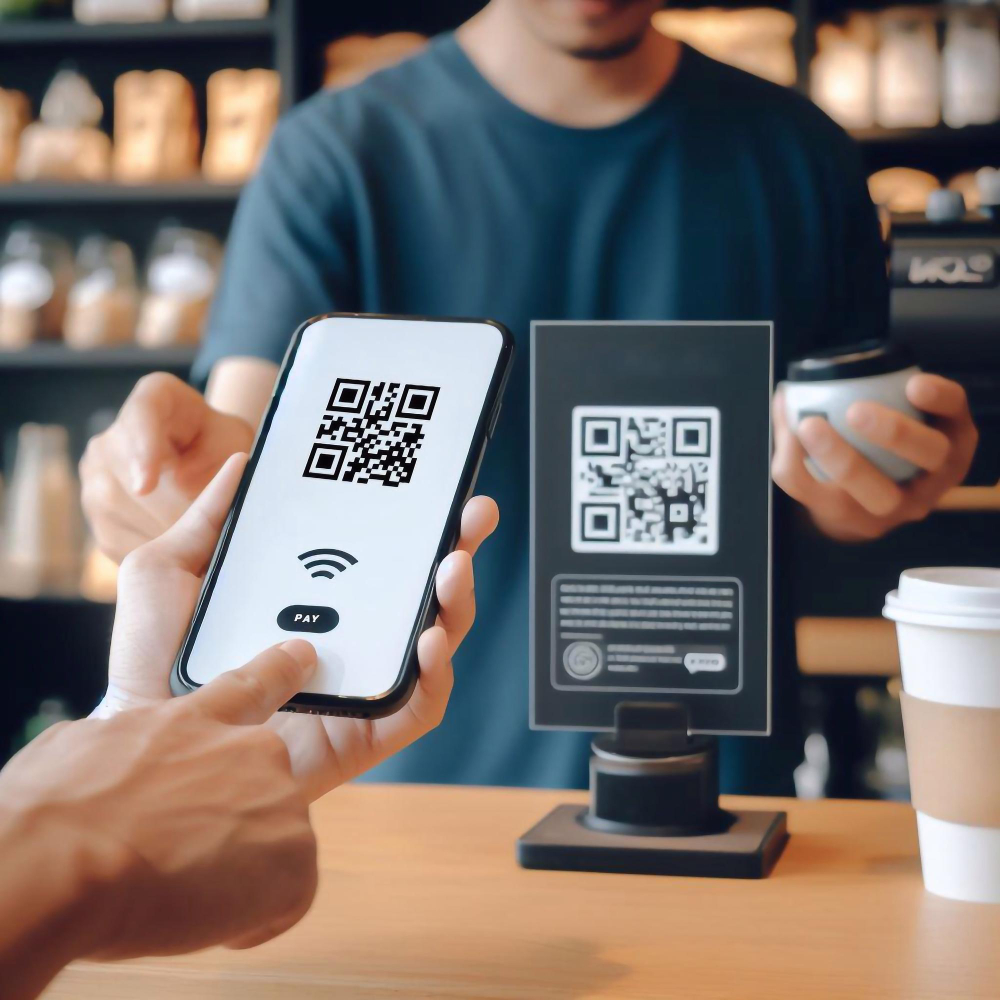
Asia-Pacific has been rightly praised for the way wallets, QR codes and fast-payment schemes have opened the door to millions of people who once relied on cash, providing a foothold in the digital economy for the previously excluded.
In 2026, that early success will be tested in tougher conditions. Inflation, income volatility and climate-related disruption will expose whether ‘inclusion’ is a one-off onboarding metric or a durable outcome.
The uncomfortable truth is that being able to open an account quickly means little if customers are nudged into products that fail them when income drops or expenses spike.
This is where the smallest products matter most. Overdrafts, microcredit lines and BNPL-style instalments will be judged not only on slick onboarding journeys, but on how they behave when payments are missed, when limits are breached, or when a customer suddenly loses work.
Do limits tighten abruptly, or is there a graduated response? Is support proactive and easy to reach, or buried behind hotlines and forms?
New digital and virtual banks will feel that scrutiny first. Their early success has often been measured in app downloads and new-to-bank customers.
In 2026, the more meaningful question is whether they are helping people and small businesses stay on their feet through swings in incomes and costs.
Control, not novelty, will decide the wallet and card battle

Even in markets where account-to-account rails are strong, cards and wallets still carry a large share of everyday spend. For many first-time users, a wallet linked to a prepaid or debit card remains the practical bridge between local balances and global acceptance.
The real competition in 2026 will not be over who offers the ‘coolest’ wallet design or metal card. It will be over who gives users the most usable control.
That means configurable limits that can be changed in seconds, travel and merchant controls that genuinely protect consumers, and timely prompts when behaviour looks unusual.
In a world where scams and disputed transactions are front-page news, the product that stands out will be the one that lets a customer tighten or loosen how they pay – in-app, on their own terms – rather than waiting in a call-centre queue.
Issuers that treat controls as core to the experience, leveraging tokenisation to bring personalisation to payment experiences, will build the kind of trust that glossy branding cannot buy.
Cross-border will be judged against the domestic benchmark

International payment flows are finally starting to benefit from the same innovation that transformed domestic rails. UPI links, QR corridors in ASEAN, Hong Kong’s FPS connections and Nexus-style pilots are all attempts to make moving money between markets feel less like sending it into a black box.
Yet expectations have changed. Once consumers and businesses are used to domestic transfers clearing in seconds with clear confirmations, a remittance that disappears for hours or hides FX until the final screen feels increasingly out of line.
In 2026, users will care less about which scheme or corridor sits underneath and more about whether the experience reflects the standard set for domestic transactions.
Providers that treat a cross-border payment as just another flow through their main journey – same interfaces, clear amounts in both currencies, transparent fees, simple recourse when something goes wrong – will quietly pull ahead. Those that still treat it as an exception will stand out, but for the wrong reasons.
AI will have to show its working
LLMs and machine learning algorithms already sit behind fraud checks, onboarding flows and credit decisions across APAC. The models are not new. What is new is the pressure to explain them.
Every blocked or delayed payment is now a potential customer-service incident and, in some markets, a potential regulatory issue. ‘The system flagged it’ is no longer an acceptable answer.
Customers will expect a reason they can understand on-screen. Risk teams and supervisors will expect the ability to replay why a decision was made and to see that similar customers are treated consistently over time.
This is where investment will subtly pivot in 2026. Money will still be spent on model performance, but more will go into the audit trails, override paths and messaging that make those models usable and defensible in the real world. In other words, the intelligence around the AI will matter as much as the AI itself.
Asia-Pacific has already shown it can build fast, inclusive payment infrastructure. The harder work now is turning that foundation into products and protections that give people more control, more clarity and more confidence, at home and across borders.
In 2026, the firms that stand out will be the ones that treat real-time rails as the starting line, not the finish, and compete instead on how well they use those rails to improve lives in the moments that matter.
Featured image: Edited by Fintech News Singapore, based on image by Frolopiaton Palm via Freepik
