Gaming’s Growth Story Is Increasingly Written in Payments
The conversation during the Singapore Fintech Festival 2025 highlighted why credit cards alone no longer meet the needs of global gaming audiences, and how friction in checkout flows can quietly erode revenue even as companies expand into new markets.
Get the hottest Fintech Singapore News once a month in your Inbox
At first glance, gaming and payments do not always feel like natural companions. One is driven by storytelling, competition and immersion.
The other is supposed to be invisible, something users only notice when it fails.
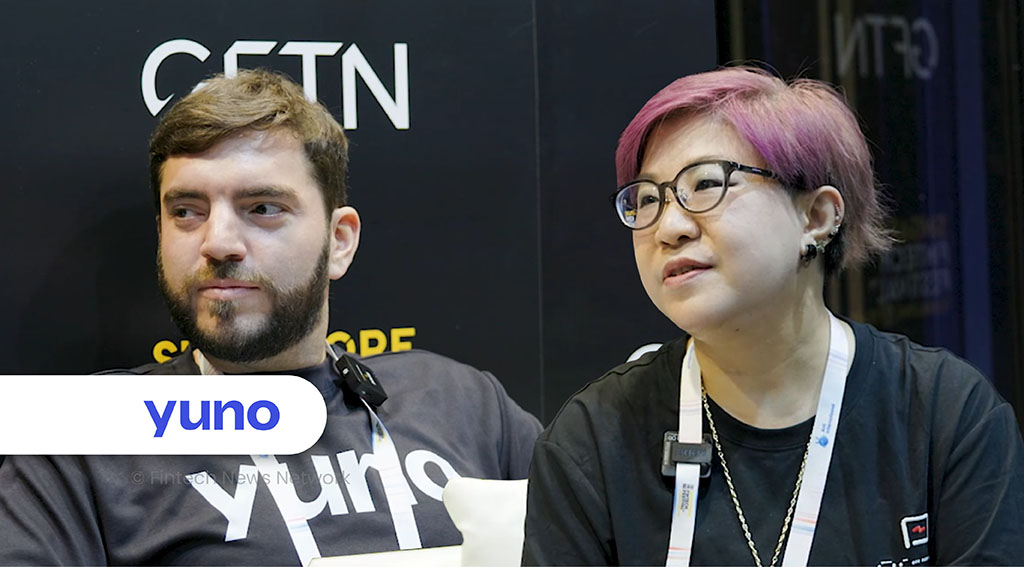
Yet at Singapore Fintech Festival, the conversation between Juan Pablo Ortega, CEO and Co-Founder of Yuno, and Livia Ang, Global Business Development Director at NetEase Games, made one thing clear.
Few industries expose the strengths and weaknesses of payment infrastructure as quickly, or as brutally, as gaming.
For global game publishers, payments are no longer a back-office function. They sit directly on the front line of user experience, revenue performance and international expansion.
When a transaction fails, a player does not calmly retry later. They complain, abandon the purchase, or walk away altogether.
In a market where digital friction is rarely tolerated, payments can quietly decide whether growth accelerates or stalls.
Gamers, as Juan Pablo observed during the discussion, tend to hold far higher expectations than the average consumer, leaving little room for error when it comes to checkout experiences.
Gaming Raising the Bar for Payments
Gaming audiences are not only global, they are deeply accustomed to seamless digital experiences. Whether it is matchmaking, content downloads or in-game purchases, everything is expected to work instantly.
Payments are no exception.
From NetEase Games’ perspective, the challenge is not about enabling payments in general, but enabling the right payments, in the right way, across dozens of markets.
“We serve our gamers globally, across many geographies, and in each country or region that we are in, there are so much diverse payment method preferences,” Livia explained. “When you are unable to provide that, it causes a lot of friction [which will affect the overall gaming experience].”
1.8 Billion Gamers. 1 Major Problem Payments are just not built for today’s modern gamers, here’s how Yuno and Netease Games is trying to fix it. #fintech#AI#gaming#BNPL#payments
That friction has a direct commercial impact. In gaming, purchases are often impulsive, with players buying a new skin, character upgrade or seasonal pass in the moment.
If the checkout fails or feels clunky, that moment passes, and the revenue opportunity often disappears with it.
This is why payments in gaming tend to surface problems that other industries can afford to tolerate for longer.
A failed airline booking is frustrating, but users may try again later.
A failed in-game purchase rarely gets a second chance.
Global Expansion and the Myth of a Single Payment Solution
As gaming companies expand internationally, the complexity of payments scales far faster than most teams expect. The fragmentation of payment methods is not unique to Southeast Asia or Latin America. It is global.
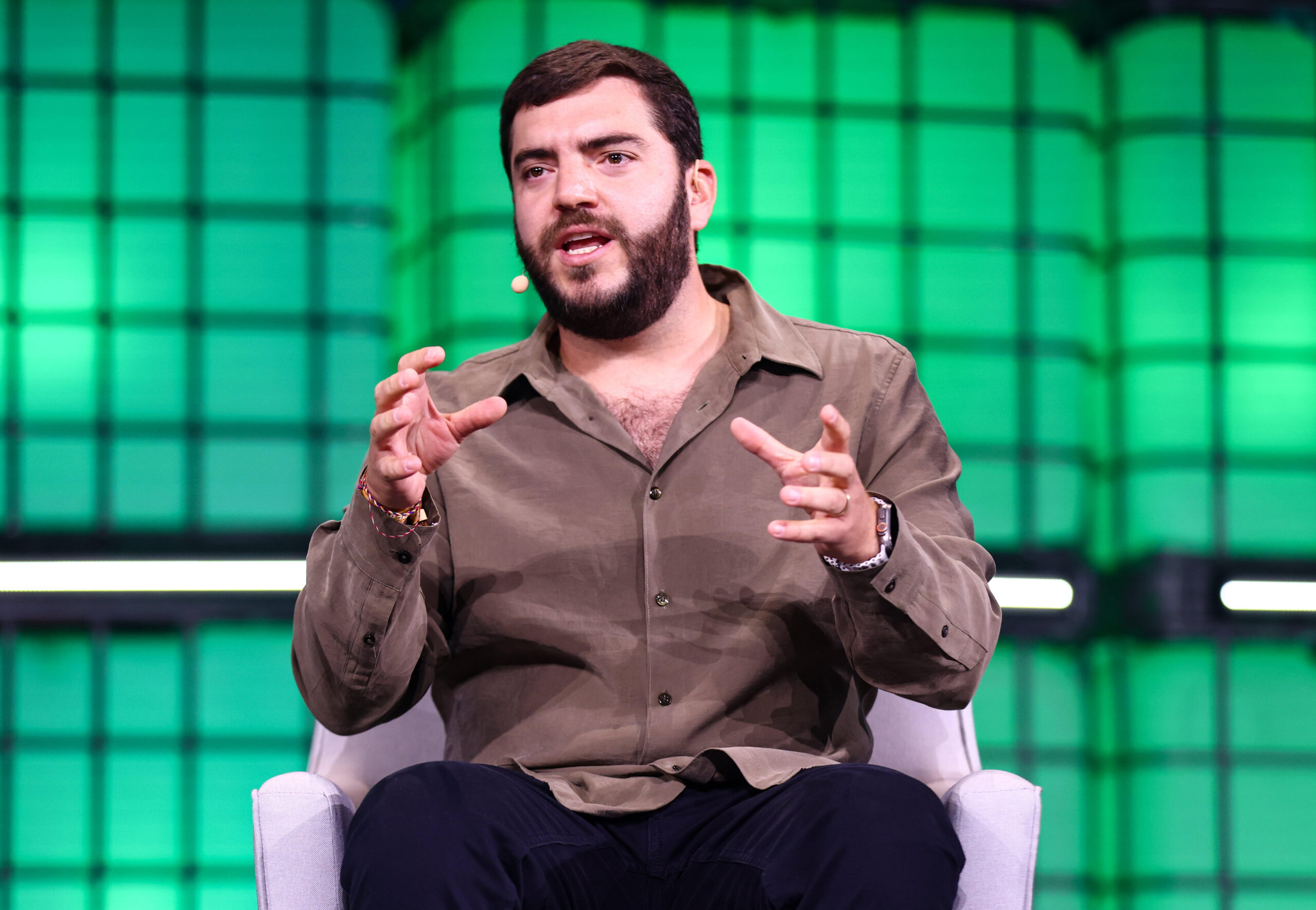
Juan Pablo Ortega
“Each consumer in each different geography has their own expectation and their own preferred method,” Juan Pablo said. “This is [not] only [happening] in Asia or Latin America. This is [happening] worldwide.”
Even within Europe, payment preferences vary significantly. Wallets dominate in some markets, bank transfers in others, and cards are not always the default.
Yet many global companies still approach payments with a card-first mindset, assuming that credit and debit cards will cover most use cases.
“Because you accept credit cards and debit cards, you’re basically under coding [under-serving] and you’re only going to a part of the operation.”
For gaming companies, this gap is especially visible because their audiences skew younger, more mobile-first and more comfortable with alternative payment methods.
In some markets, players may not have access to traditional banking at all.
“Our gamers are everywhere in the world, and they are very diverse,” Livia said. “There are unbanked gamers among them as well.”
Despite their financial status, these users still want to play, and they still want to spend.
But they do so through different rails, whether that is wallets, cash-based top-ups, gift cards or buy now, pay later options.
The Operational Reality Behind the Scenes
Supporting this level of diversity is easier said than done. Regulatory constraints, local licensing requirements and technical differences mean that no single payment provider can realistically offer full global coverage.
Livia Ang
“There isn’t a single provider who can provide you with every single method in the world,” Livia said.
As a result, large merchants often end up working with multiple providers across regions, adding complexity on the commercial side and creating a growing integration burden on the technical side.
For game publishers, that core business is content, community and live operations. Payments are critical, but they are not where companies want to spend disproportionate engineering resources.
This is where orchestration and abstraction layers have become increasingly important, even if they are rarely discussed outside fintech circles, not just for access to more payment methods, but for managing them without constant reintegration.
From Yuno’s perspective, this is less about adding logos and more about simplifying experience.
Juan Pablo pointed out that their focus has shifted beyond the number of integrations to what happens inside the checkout flow.
“We have been focusing more than [just] growing the number of integrations. We [try to] improve the experience,” he said, pointing to ongoing efforts to streamline checkout journeys so users can complete payments with fewer steps and less friction.
Conversion Rate Beats Cost Savings
One of the most revealing moments in the conversation came when the discussion turned to direct-to-consumer gaming models.
Sparked by high-profile platform disputes and rising commission costs, many publishers are exploring ways to sell directly to players.
On paper, the economics look attractive. Avoiding platform fees can mean significant savings. In practice, the equation is far more delicate.
“[If] you’re saving 30% but your conversion rate drops 40%, [then], you’re actually not doing anything,” Juan Pablo said.
This cuts to the heart of the D2C debate. App stores, for all their costs, offer highly optimised checkout experiences.
Payments are trusted, familiar and frictionless. Replicating that experience independently is far harder than many publishers anticipate.
Checkout abandonment remains a major risk.
Studies consistently show that more than half of users will abandon a transaction if the process feels complicated or unfamiliar, a risk that is amplified in gaming, where purchases are often emotional and impulse-driven.
For D2C strategies to work, payment experiences must not just match app stores. In many cases, they need to be better.
That means supporting local payment methods, optimising mobile flows and building trust quickly with users.
Inclusion, Not Just Optimisation
Beyond conversion and cost, the shift toward direct engagement also highlights a quieter issue: access. Not all gamers can pay through app stores or traditional in-app mechanisms.
“There are unbanked gamers that cannot [simply] top up,” Livia noted. “They have to go to a convenience store, get a gift card, and try ways and means in order to continue playing the game.”
Direct channels give publishers more flexibility to serve these users, but only if payments are designed with inclusion in mind.
This is not about charity or corporate messaging. It is about recognising that a global audience does not fit into a single financial profile.
In emerging markets especially, alternative payment methods are not edge cases.
They are often the primary way users transact, making participation, not expansion, the real goal.
BNPL and Evolving Player Expectations
Buy now, pay later has also started to find its place within gaming payments, particularly in markets where instalment-based spending is already familiar.
“We do have that enabled in some of the markets, and they’ve proved to be very popular with the gamers,” Livia said.
BNPL in gaming remains a nuanced topic.
While it can increase accessibility and basket size, it also raises questions around responsible spending, especially for younger audiences.
Most publishers are approaching it cautiously, enabling it selectively rather than universally.
What is clear is that players increasingly expect payment flexibility to mirror what they experience in other digital services. Gaming does not exist in isolation.
It competes for attention and spending alongside streaming, e-commerce and social platforms, all of which are raising the bar for checkout experience.
Payments as Invisible Infrastructure
By the end of the conversation, one theme kept resurfacing. Payments work best when players barely notice them.
“They focus on the gaming and payment,” Livia said. “It’s seamless and working in the background.”
For global game publishers, achieving that invisibility is becoming harder, not easier. Fragmentation, regulation and evolving consumer expectations continue to add layers of complexity.
Yet the stakes are rising alongside the size of the gaming market, which now counts close to two billion players worldwide.
As gaming continues to expand across borders, payments are quietly shifting from a technical necessity to a strategic capability.
They influence who can play, how easily players can spend, and whether new business models can succeed.
Most players will never think about payment orchestration, conversion rates or authentication protocols. They will simply expect things to work.
For companies operating at global scale, meeting that expectation has become one of the most important challenges in the business.
In gaming, payments may be invisible to players, but they are increasingly impossible for publishers to ignore.
Juan Pablo and Livia expand more on all of this in our full conversation, which you can watch right down below.