



Mention Euronet, and you’re likely to picture its iconic blue and yellow ATMs. They’re a global staple, found anywhere, from transport hubs to high-traffic retail locations.
But in the high-stakes world of modern finance, these machines are the tip of a much larger spear. ATMs actually account for less than a fifth of Euronet’s revenues. The bulk of the business runs in the background, powering the infrastructure that moves money at scale.
Euronet provides the connective tissue of modern finance. It powers modern payments and money movement, from national payment switches and point of sale services to cross-border transfers, currency exchange, and branded payment solutions.
In 2025, Euronet processed 16 billion transactions and moved more than US$200 billion through its network, operating across 200 countries. And as payments have become increasingly fluid across borders, this kind of infrastructure has become a necessity.
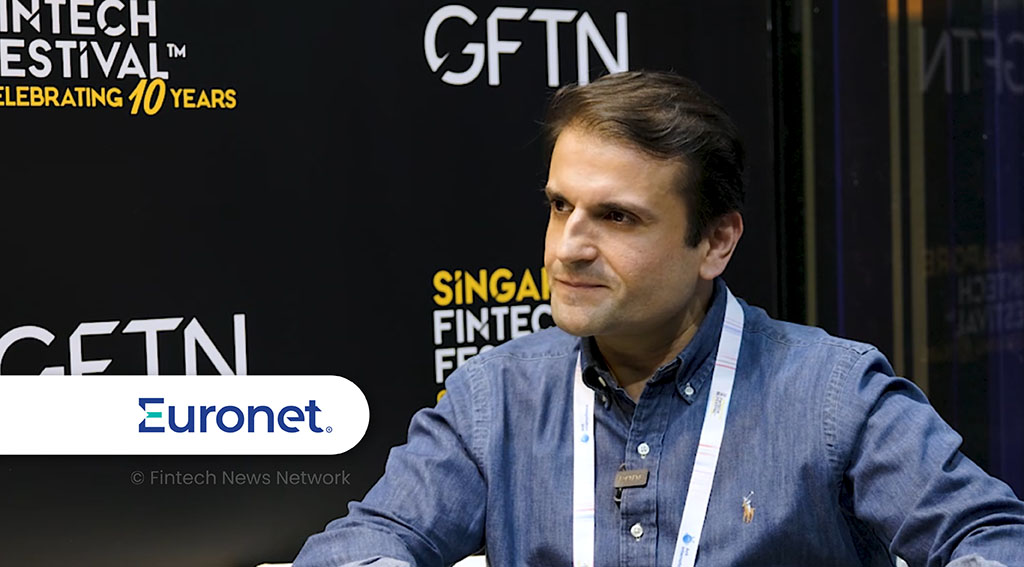
To explore how Euronet’s infrastructure is evolving across the Asia Pacific, Fintech News Network’s Chief Editor, Vincent Fong, spoke with Himanshu Pujara, Managing Director for Asia Pacific at Euronet.
The discussion examined how the company is modernising payments, expanding into issuing and unsecured lending, and positioning itself for the next phase of financial inclusion in the region.
Why Euronet Spent US$248M on Its CoreCard Acquisition Deal
“The acquisition of the CoreCard platform is aligned with the firm’s ambition of becoming a global leader in integrated issuing and processing solutions.”
According to Himanshu, its CoreCard acquisition serves as a prime opportunity to disrupt the legacy lending and credit card tech used by traditional banks and fintechs.
By integrating CoreCard, Euronet gains a strong referential footprint in the lucrative US market, backed by high-profile clients like Goldman Sachs and Apple.
For context, CoreCard is a “modern card issuer processor with end-to-end solutions across credit, prepaid, and debit that are digital-first and API-centric”. It has been the engine under the hood for the Apple Card, as it provides the software architecture that makes the card itself function.
@fintechnewsnetwork Euronet is leveraging CoreCard for its tech behind the Apple Card. The aim? To allow banks to offer instant, unsecured credit lines via QR codes. #fintech#Euronet#Applecard#payment#digitalbanking
♬ original sound – Fintech News Network – Fintech News Network
Himanshu dives in, sharing that this technological edge is relevant closer to home in the Asia Pacific region, where many emerging Southeast Asian markets still grapple with no credit card penetration.
Moreover, as regional GDPs grow and a “new-to-credit” demographic emerges, the platform enables banks and financial institutions to move beyond traditional credit cards and into a broader range of unsecured lending models.
The hurdle in these markets is often the “clunky” user experience, which hinders adoption from the consumer as it tends to be dictated by older back-end stacks. The CoreCard acquisition addresses this by replacing legacy technology with a modern architectural core, removing the friction and allowing a truly digital-first experience.
“This modernisation also opens the door for fintechs to play a more significant role in the lending ecosystem. While many currently participate by providing lending stacks to banks, there is a growing opportunity for these players to become direct issuers as regional regulations evolve.”
Whether these fintechs continue to partner with established banks or eventually transition into independent issuers, the platform provides the agility needed to deliver a superior, seamless experience that meets the demands of the modern consumer.
Euronet’s Dandelion Powers 4 Billion Bank Accounts
Before Euronet ever turned Dandelion into a product, Euronet was already internally, or as Himanshu put it, Euronet was “eating its own dog food”.
Yet over time, the team realised that they had effectively built a global payments highway where money could move quickly, reliably, and directly into bank accounts across borders.
The only kicker was that Euronet was the only one using it. The obvious question followed. If this worked so well internally, why not open it up to others?

The idea came to launch cross-border payments as a service proposition with clean APIs, offered to banks and licensed financial institutions to solve their consumer and business payment needs. The goal? To send money into a bank account on a real-time basis.
@fintechnewsnetwork Most people never see it, but Euronet is the infrastructure that’s powering national payment switches to traditional and digital banks. #fintech#Euronet#payment#digitalbanking
♬ original sound – Fintech News Network – Fintech News Network
Today, Dandelion connects to around four billion bank accounts globally. To extend its reach even further, especially in emerging markets, it also connects directly to digital wallets. Himanshu closes in, saying,
“We believe we are the largest cross-border payments network in the world that is able to land monies both into a bank account and a wallet. “
The Hard Truth About Modernising National Payment Rails
Beyond issuing and lending, Euronet is also positioning itself as a long-term partner to national payment infrastructures seeking to modernise their core systems and expand financial inclusion.
Himanshu points out that across emerging markets, from Southeast Asia to Africa and Latin America, the challenge is all about enabling central payment systems to launch new use cases, reach underserved populations, and do so at a cost structure that makes mass adoption viable.
“The real goal of a lot of these central infrastructures is the ability to launch newer use cases, to bring their populations into the formal banking economy. If you run on legacy tech with very expensive databases, hardware, and mainframe systems, it’s not possible to lower your costs and drive adoption into the remotest corners of the country.”
While that sounds like a tall order, in markets like Malaysia and Indonesia, this approach is already taking shape. Central to this is Ren, Euronet’s modern end-to-end payments platform that’s built to address the structural limitations of aging national infrastructure.
Rather than forcing central switches and financial institutions to adapt to rigid, vendor locked systems, Ren enables a move toward a cloud-native, modular environment designed for growth and agility.

This transition allows national payment systems to rapidly deploy real time payment rails and expand cross-border connectivity efficiently, without the prohibitive overhead that has traditionally slowed national-scale upgrades.
In Indonesia, Euronet works closely with PT Jalin Pembayaran Nusantara (Jalin) to support the national switching infrastructure with Ren.
Partnerships like these extend to markets like Mozambique, too, where a five-year collaboration has evolved from basic interbank ATM switching to launching sophisticated local use cases. Himanshu elaborates,
“We’ve launched very innovative use cases that are relevant for that particular economy, and that’s possible because of the flexibility of the platform and just the fact that it’s not really dependent on these proprietary systems, and it’s fully open-source.”
Aside from these developments, Euronet has acquired PayNet’s ATM network, making it the largest non-bank ATM operator in Malaysia.
Payments Infrastructures Cannot Ignore Stablecoins Anymore
Looking ahead, the company is exploring how stablecoins could fit into the next phase of the Euronet digital payment infrastructure. Himanshu shares that the company is currently running internal proof of concepts and pilots, as it evaluates where stablecoins can add value.
One of the most immediate opportunities lies in cross-border payments. Given stablecoins’ growing role in this space, Euronet is assessing whether they can be integrated into its existing cross-border services through a multi-rail approach.
With a large global ATM network and an extensive base of physical agents supporting cash payouts and remittances, Euronet sees potential to enable physical on-ramps and off-ramps for stablecoins, bridging digital assets with real-world access.
Euronet has recently announced a partnership with Fireblocks, with several initiatives underway. While still in the experimental phase, Himanshu notes that the company is excited by the potential.
“With the emergence of acquiring and mobile wallets and instant payment schemes and now stablecoins, and then potentially the convergence between stablecoin and AI, I think it’s going to get more and more interesting.”
For a deeper look at how Euronet is shaping payments infrastructure, issuing, and cross-border money movement at scale, watch the full conversation with Vincent Fong and Himanshu Pujara below.
Featured image by Fintech News Singapore
