



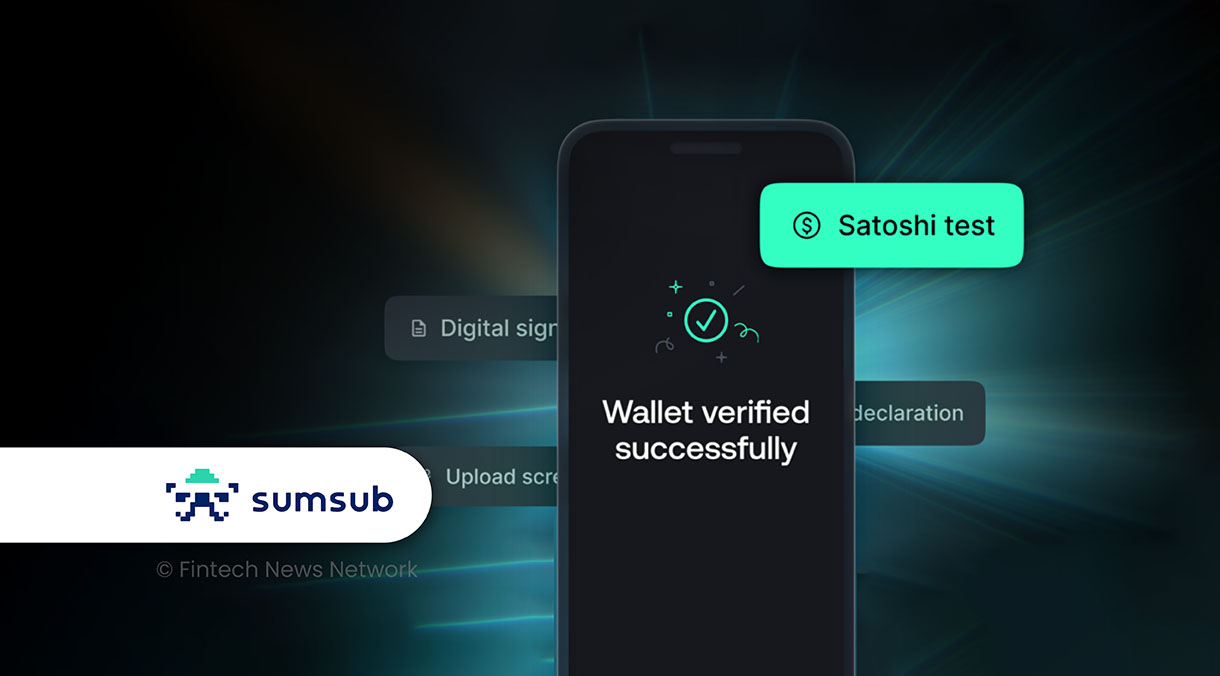
Sumsub has introduced an automated Satoshi Test to help virtual asset service providers verify unhosted wallet ownership as regulatory scrutiny increases.
The feature has been added to its Unhosted Wallet Verification solution, allowing users to prove control of a self-hosted wallet by sending a small preset amount within a set timeframe.
Sumsub then verifies the transaction on-chain and confirms the originating wallet before allowing the deposit or withdrawal to proceed.
With the addition, Sumsub now supports four commonly accepted methods for proving ownership of unhosted wallets.
The others are digital signature, self-declaration and screenshots. The company said this gives firms more flexibility to apply risk-based checks across markets.
The move comes as the Financial Action Task Force has warned that unhosted wallets and stablecoins can increase exposure to money laundering, sanctions evasion and other illicit activity because transfers often take place peer-to-peer without the oversight of intermediaries such as exchanges.
The Satoshi Test can also be integrated into Travel Rule workflows.
Sumsub said the solution supports any wallet and more than 100 blockchain networks.

“Crypto has entered an era of regulated maturity. Firms now need to demonstrate that their control frameworks stand up to real scrutiny, without sacrificing conversion or scalability.
That’s why we support all four commonly accepted unhosted wallet verification methods for VASPs—fully automated and embedded into transaction flows keeping the user journey fast and intuitive.”
said Andrew Novoselsky, Chief Product Officer at Sumsub.
Featured image: Edited by Fintech News Singapore, based on image by Sumsub
