


The Bank of the Lao PDR (BOL) has approved Star Fintech, operator of the Umoney digital financial services platform, to participate in Laos’ regulatory sandbox for digital lending, making it the first company in the country authorised to test digital lending under the framework.
The approval, granted in June 2026, comes as Laos continues to develop its digital financial ecosystem beyond payments.
While mobile connectivity and smartphone adoption have expanded rapidly, access to formal credit remains comparatively limited, creating an opportunity for regulated digital lending models to address customers who have traditionally been underserved by conventional financial institutions.
Bridging Laos’ Financial Inclusion Gap
Laos has made significant progress in digital connectivity, with mobile coverage reaching approximately 93% and smartphone penetration estimated at around 85%.
According to the latest World Bank Global Findex data, only 7% of adults in Laos borrowed from a formal financial institution or through a mobile money account, down from 9% in 2017 and 2021.
The contrast highlights an important challenge for the country’s digital economy: while a large share of the population is already digitally connected, many consumers remain outside the formal credit system.
The issue is not simply a lack of financial service providers. Laos has more than 280 banks, microfinance institutions, leasing companies, pawn shops and payment service providers operating across the market.
Yet conventional credit assessment remains heavily dependent on documentation, traditional credit histories and, in many cases, collateral.
For consumers with limited financial records, these requirements can make even relatively small loans difficult to access.
Digital lending offers a potential alternative by combining digital onboarding, transaction data and technology-enabled credit assessment.
Under a controlled regulatory framework, these tools could allow financial service providers to assess eligible customers more efficiently while giving regulators an opportunity to evaluate new lending models before they are deployed more widely.

From Digital Payments to Digital Credit
Umoney was launched in 2018 as Laos’ first licensed mobile money service and has since expanded into a nationwide digital financial services platform.
According to Star Fintech, the platform now serves more than 1.8 million active digital customers, supported by more than 15,000 QR merchant and acceptance points and over 5,000 cash-in and cash-out agents across all 18 provinces of Laos.
That existing footprint provides Star Fintech with a foundation for exploring digital credit.
Rather than relying exclusively on traditional collateral or conventional credit histories, the company plans to progressively assess whether transaction behaviour within the Umoney ecosystem and other permitted data sources can provide additional inputs into credit decisions.
The company views this as a progression from payments rather than a separate business.
Digital transactions create customer relationships and behavioural data; lending adds another layer in which that information can potentially be translated into responsible credit decisions.
Repayment behaviour can then feed back into the model, allowing lending policies and credit assessment to improve over time.
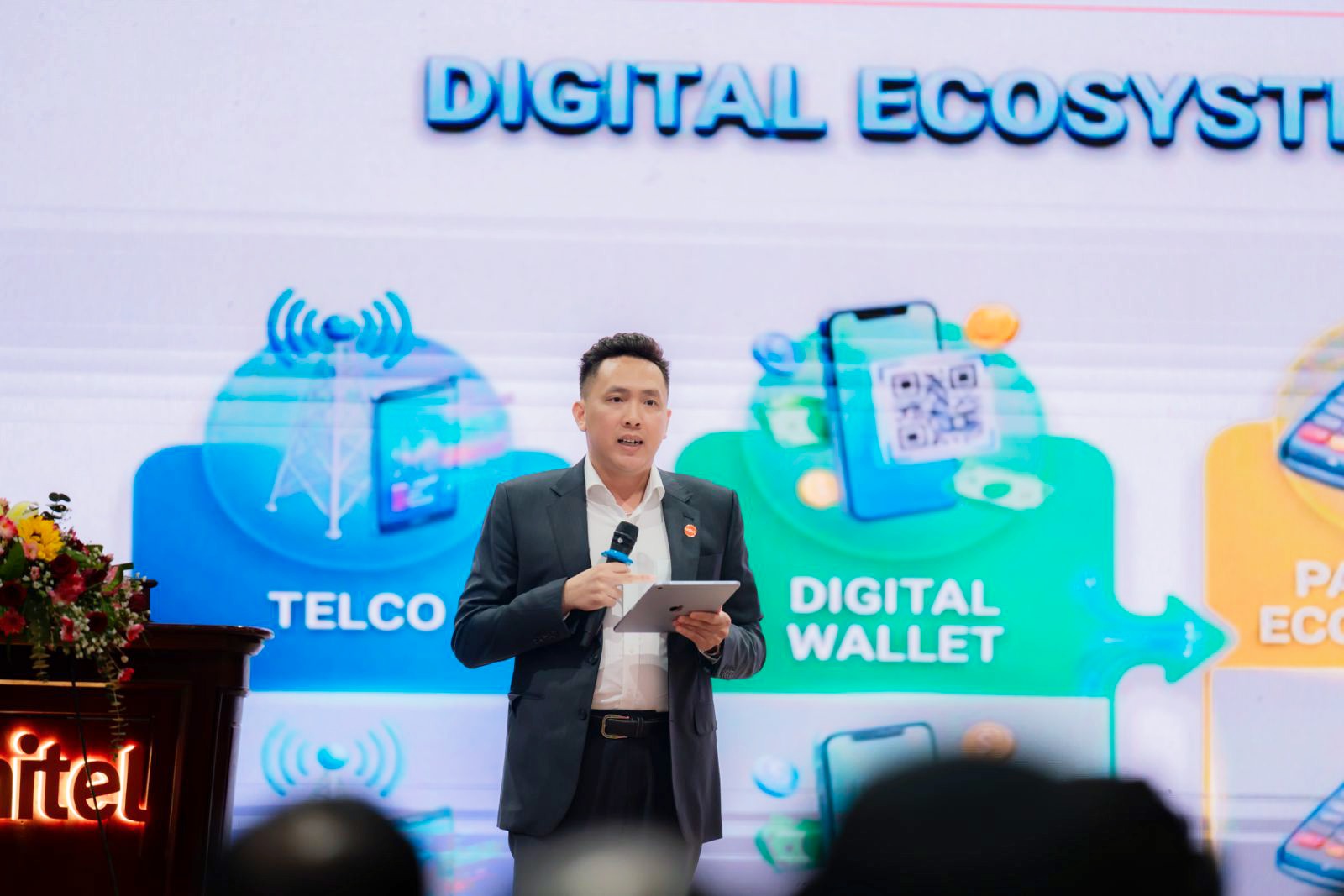
“Digital lending does not start with the loan itself. It starts with understanding customers, using data responsibly and building the capability to make better credit decisions.
For customers with limited conventional credit histories, their digital financial behaviour may gradually provide another way to demonstrate financial reliability.”
said Ha Chien Thang, CEO of Star Fintech.
A Sandbox-First Approach to Growth
Star Fintech plans to take a deliberately controlled approach during the sandbox period.
The initial programme will test selected use cases including salary advances, small-value cash loans and installment financing, with the early stages focused on selected customer segments and enhanced verification rather than rapid portfolio expansion.
The lending framework combines customer whitelisting and segmentation, eKYC and identity verification, credit scoring, fraud prevention, portfolio monitoring, early-warning indicators and collection processes.
Manual review will also remain part of the initial phase while the company accumulates sufficient repayment data to evaluate and refine its scoring models.
This approach reflects a key principle of the programme: lending volume is not the primary measure of success during the first stage.
Instead, Star Fintech intends to evaluate customer behaviour, repayment performance, fraud risk, collection effectiveness and portfolio quality before increasing lending limits or expanding to wider customer segments.
“For us, the sandbox is not a licence to grow fast. It is an opportunity to learn responsibly — to understand customer behaviour, validate our credit models and build the risk-management capabilities required for sustainable digital lending. Growth will only make sense when the data demonstrates that the portfolio can grow safely.”
Thang said.
The company said any expansion of the lending portfolio will be subject to risk thresholds, portfolio performance and its capital capacity.
This includes monitoring indicators across the lending lifecycle, from customer assessment and first-payment defaults to delinquency, collection performance, fraud and customer complaints.
A Regulatory Milestone for Laos’ Fintech Sector
The significance of the sandbox extends beyond Star Fintech.
For the Bank of the Lao PDR, controlled testing provides an opportunity to observe how digital lending operates in the local market and gather practical evidence on areas such as customer protection, credit assessment, data usage, technology, fraud prevention and portfolio risk.
This makes the sandbox a learning mechanism for both the industry and the regulator.
Instead of allowing new lending models to expand before their risks are fully understood, the framework enables technology, operating practices and regulatory requirements to evolve based on actual market experience.
For Laos, this could be particularly important as its fintech sector enters a new stage of development.
The first phase of digital finance was largely about enabling electronic payments and connecting consumers to basic financial services.
Digital lending introduces a more complex challenge because it requires providers to combine technology and customer experience with credit risk management, responsible lending and consumer protection.
If the sandbox proves successful, the lessons generated from the pilot could contribute to the development of a broader framework for digital lending in Laos, while providing a model for how alternative data and digital distribution can complement the country’s existing financial system.
From Connectivity to Financial Inclusion
The development also represents a continuation of a much broader digital transformation in Laos.
Over the past two decades, telecommunications and digital infrastructure have dramatically expanded connectivity across the country.
Mobile phones and internet access have become part of everyday life for an increasing share of the population.
The next challenge is turning that connectivity into broader economic participation.
Digital payments have been an important first step. Digital credit, if developed responsibly, could become another.
For consumers, it could reduce dependence on physical branches, extensive documentation and traditional collateral when accessing small amounts of formal credit.
For the financial sector, it could create new ways to assess customers using digital behaviour and transaction histories.
And for regulators, the sandbox provides an opportunity to develop rules based on evidence generated in the Lao market itself.
“The bigger opportunity is not simply to digitise a loan application.
It is to build an ecosystem where every successful financial interaction helps us understand customers better and serve them more responsibly over time.”
Thang added.
Star Fintech expects to use the sandbox period to evaluate customer behaviour, repayment performance, credit-scoring effectiveness, fraud risk, collection performance and customer experience before considering broader expansion.
Any subsequent scale-up would remain subject to the results of the sandbox and relevant regulatory requirements.
For Laos, the milestone could signal the beginning of a new chapter in fintech development.
One where the country’s increasingly widespread digital infrastructure becomes a foundation not only for connectivity and payments, but also for broader access to responsible financial services.
