Get the hottest Fintech Singapore News once a month in your Inbox
Embedded finance has settled well into the Asia Pacific region’s everyday digital life. Users now comfortably gain access to payments, credit, and wallets inside the platforms they once used for something else altogether.
What’s not settled is who captures the value.
The platform may own the journey and the data, but someone further back supplies the licence, the balance sheet, and the underlying infrastructure, even carrying the risk should something go awry.
While both sides claim to own the customer, the lines have started to blur.
Some platforms have stopped partnering for banking capabilities and started acquiring them. Similarly, there are some fintechs out there that are applying for licences rather than renting them out.
As banks and fintechs both figure out which side of the coin is worth holding and what it takes to win from there, the question of who captures the value of embedded finance arises.
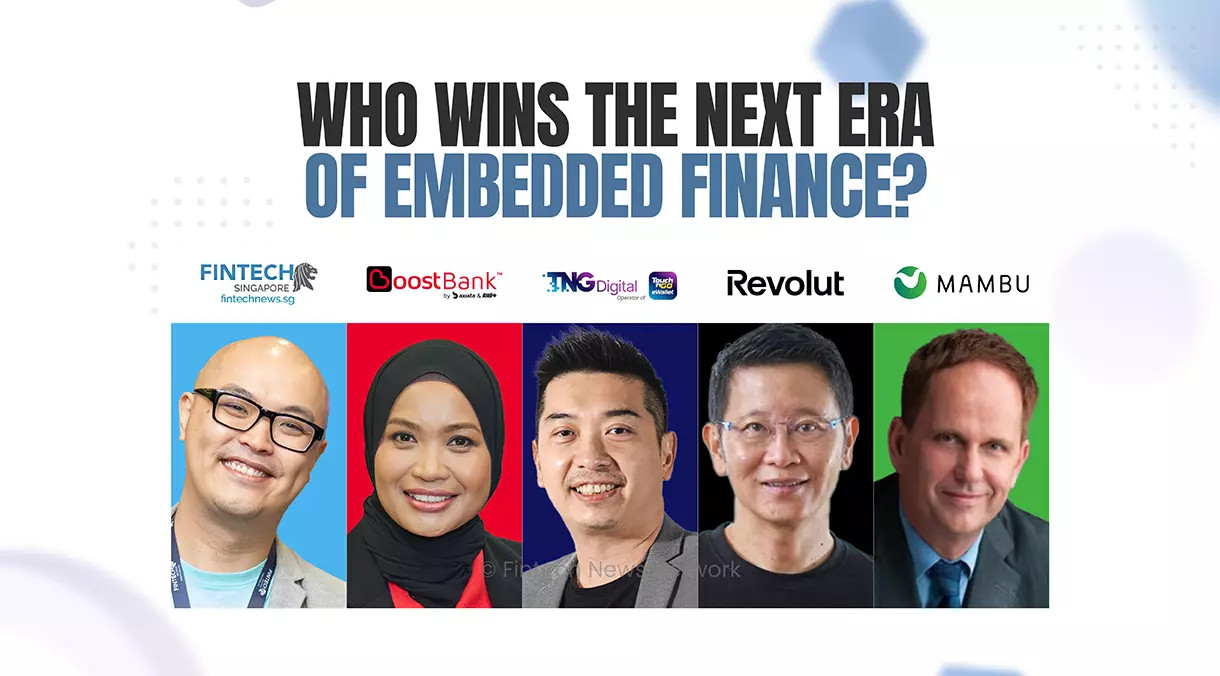
David Becker, the Managing Director and the Head of APAC Sales at Mambu; YM Ungku Norliza Syazwan, the Deputy CEO of Boost Bank; Desmond Teoh, the Chief Financial Services Officer of TNG Digital; and Raymond Ng, the CEO of Revolut Singapore and Southeast Asia, examined which parts of an embedded journey can still earn a return and effective partnerships in “Who Wins the Next Era of Embedded Finance?”, a recent webinar moderated by Vincent Fong, the Chief Editor for Fintech News Network.
Asia’s Embedded Finance Growth Puts Partnerships to the Test
Embedded finance growth took a huge leap in Asia over the past 12 to 18 months, thriving with new partnerships and the independent activities of multiple partners in fintech and digital banking, shared David Becker, the Managing Director and Head of APAC Sales at Mambu.
Much of that growth is tapping at the underbanked and unbanked in the Philippines, Indonesia, and Thailand, where the sheer size of the populations is driving demand. Among Mambu’s own clients, lending and e-wallets have been key drivers.
On who owns the customer when finance is embedded into someone else’s app, David said that ownership is shared.
“The most important thing around this, though, is to make sure there is the right resilience in the delivery of the service, the right data protection.”
The priority, he said, is ensuring that the organisation has that constant stickiness in features, new products, and innovations being brought into the market.
“It’s a shared responsibility with any embedded finance application by the providers in general, but ultimately you must have the capacity to grow and expand. One of the dynamics we’re seeing in the market right now is the pace and expansion of signing up new users.”
The pace at which new users and account holders are signing up is a welcome dynamic, but it also means that scalability and resilience are needed in the systems, including core banking.
Embedded Finance Is About Playing to Each Partner’s Strengths
For Desmond Teoh, the Chief Financial Services Officer of TNG Digital, partnerships are at the centre.
He framed it in three parts, with partnership as the first part, saying that TNG Digital has always positioned itself as an open platform for partners.
“We (TNG Digital) don’t see banks and financial services providers as our enemy, and that is a testament to what we are doing,” he said. “We have 16-17 partners that are embedded through us. The embedded finance reality has to work with partnerships.”
The second is delivery. At its base, he said, a financial service is a transaction, a service provided, and the question is how it is delivered. TNG Digital brings the services that come out of its partnerships to its users in a different way.
The third, he shared, is knowing where each player’s strengths lie. TNG Digital’s strength is reach, with 27 million users in Malaysia, Desmond shared. It is not a bank, and taking on full compliance with bank guidelines is not where its strength lies.
“So, in that sense, why can’t we let the banks or the FI (financial institution) partners be the ones that are strong in this? We play where we are strong, and when we do, we have a good partnership together.”
Without partnerships, everyone would otherwise be doing their own things and attempting to innovate alone.
Underwriting Risk is a Hidden Challenge in Embedded Finance
From the outside, embedded finance is supposed to feel almost invisible.
But behind that seamless customer experience sits a complex set of challenges, from onboarding and fraud prevention to the far more difficult question of whether financial providers can accurately assess and manage risk.
YM Ungku Norliza Syazwan, the Deputy CEO of Boost Bank, said the seamless experience, which some call invisible banking, rests on factors like robust eKYC onboarding, fraud monitoring, and anti-money laundering transaction monitoring.
The harder test is underwriting.
“It’s really about the quality of your loan book,” she said. “If you have a good engine to underwrite your loans, then you have a good-quality, healthy loan book portfolio, which then can translate into the profitable revenue share that you can have with your partners.”
Partners must first agree on one underwriting model, she said, rather than each insisting on its own. Getting there takes time.
“That proven model doesn’t come overnight. It comes with years of credit cases. It comes with years of analysing data. It comes with losses, potentially, that the service provider would need to learn from. It’s not about making profit for me and then making a loss for the other party.”
Frenemies in One Space, Partners in Another?
When asked how TNG Digital handles a partnership-and-frenemy dynamic among its partners, Desmond explained how TNG Digital always keeps openness at its core on its platform.
Desmond Teoh
“We don’t see banks, financial services providers, as our enemy,” Teoh said. “It’s never about us taking someone’s lunch. The question is, why can’t we share a meal together?
Reminiscing about the past years, Desmond said the early days of TNG Digital’s embedded finance journey were the other way round.
Many partners, he said, kept asking whether TNG Digital could really work with them and whether it was truly open.
Vincent suggested the doubt may have come from TNG Digital’s CIMB parentage, and Desmond agreed, adding that it was no secret.
Five years on, TNG Digital has 17 partners, most recently with a digital bank, which Desmond said shows the platform means what it says about being open.
Referring to GXBank, he added, “GX and us, we are not frenemies.”
The launch publicity for the GXBank project was deliberate, to keep telling the market there is “friendship with everyone”.
The two have since collaborated on a product. In August, TNG Digital added GXBank’s FlexiCredit, a revolving credit line with limits of up to RM150,000, to the CashLoan feature in its e-wallet.
Next, recalling Boost’s experience with the same frenemies dynamic, Ungku Norliza said Malaysia’s e-wallet market was once “brutal” and “all about land grabbing” when QR payments launched, with every player trying to acquire customers and be at the front of the race.
The players later put their differences aside and shared costs on projects to help the government expand digital adoption through initiatives like e-Tunai Rakyat.
She also credited TNG Digital for its open, partnership-led approach.
Ungku Norliza
“You don’t have the typical egos of huge players that think you can do things alone,” Ungku Norliza said.
That mindset does matter more as the lines between the players blur. Ungku Norliza explained that a lifestyle app wants to become a banking app, and a banking app wants to become a lifestyle app.
If each partner is clear about its strength, they can reach a “win-win situation”. She said TNG Digital is demonstrating this now, by letting a digital bank come in with speed.
David said the same layered dynamic runs through the region.
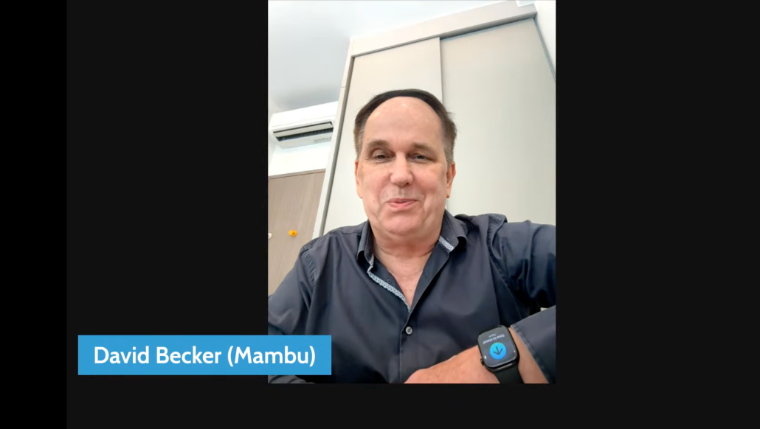
David Becker
“There are so many layers within the value chain right now. You can be competing in one space, but partnering in another. But there’s still enough to go around to encourage each other for growth,” David said.
He elaborated, saying that regulators have been vital to the region’s success by being on board and supportive of this growth.
In doing so, it lowers any barriers to entry while ensuring that growth in the business is sustainable.
Open Finance and AI Could Turbo-Charge Embedded Finance
The next shift is already on the horizon: open finance.
Vincent noted that Malaysia is looking towards its first major open finance milestone in Q1 2027, and asked the panel about the changes it anticipates for embedded finance when it arrives.
For Raymond Ng, the CEO of Revolut Singapore and Southeast Asia, change would first be seen with data.
Open finance, he explained, is about getting access to data held across different organisations. Access to data would enable players to launch new products, run KYC, and do credit scoring swiftly, with everyone participating in the open finance and open banking framework.
“It’s very exciting,” Raymond said. “The whole market will grow together if everyone believes in it. Now, can you imagine adding all these possibilities with AI?”
AI could allow players to make smarter, faster, and more informed transactions on top of the connections they would otherwise have to build from scratch.
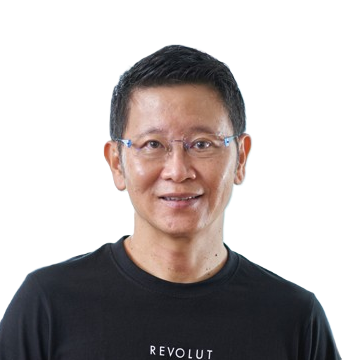
Raymond Ng
“The whole economy, fintech industry, and the digital banking world would change tremendously once these two solutions (open finance and AI) come together and they collide. It is a very exciting moment, which is why we are hoping that we can bring all this value and help all countries fast-track. “
Revolut, he said, has been through this before in the UK and Europe, and it has one tech stack globally.
“We just need to go into the country, and that’s why it’s so exciting.”
To uncover more exclusive insights on the embedded finance scene in Asia, watch the replay below: