



Have you ever wondered what a career in fintech could offer?
Working on the systems behind digital payments and investment services lets you apply technical skills to financial problems, and some of these roles offer attractive pay.
Software engineers in fintech, for example, can earn an estimated S$6,000–S$9,300 a month, according to Singapore’s National Youth Council, which bases its range on public job-portal information updated in 2026.
Preparing for such roles starts with understanding what employers expect and how to develop the relevant skills.
Graduates considering postgraduate study, along with parents helping with that decision, can look at how a programme connects its teaching with work in financial institutions.
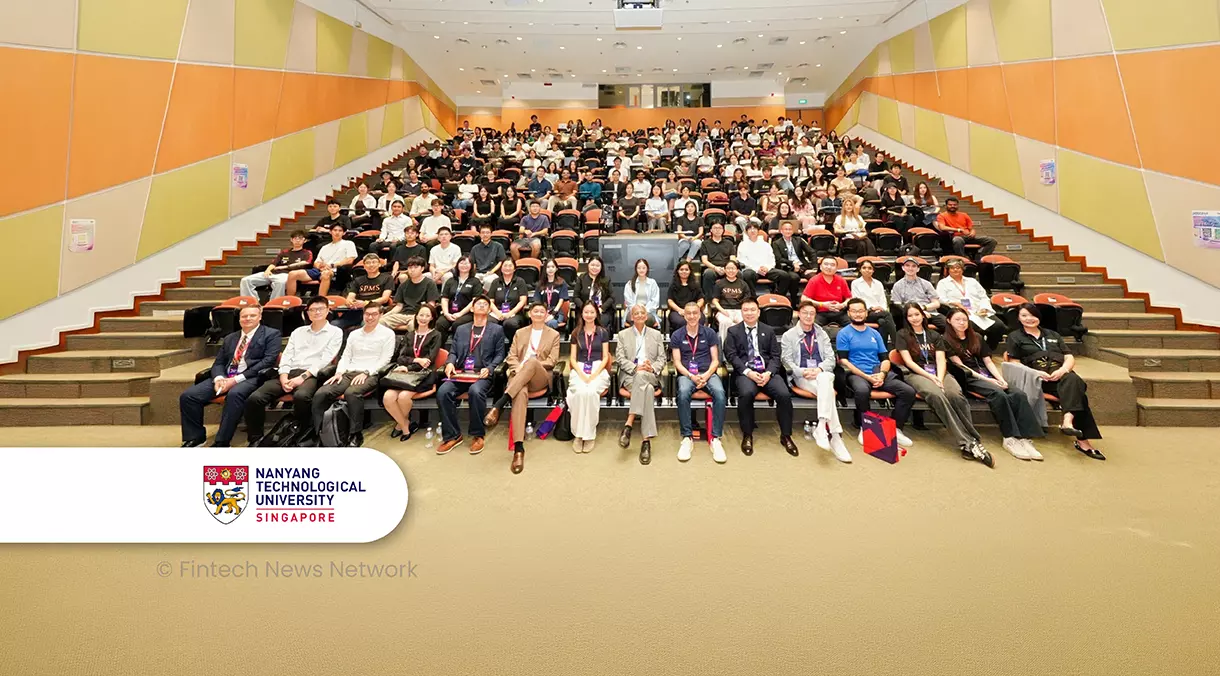
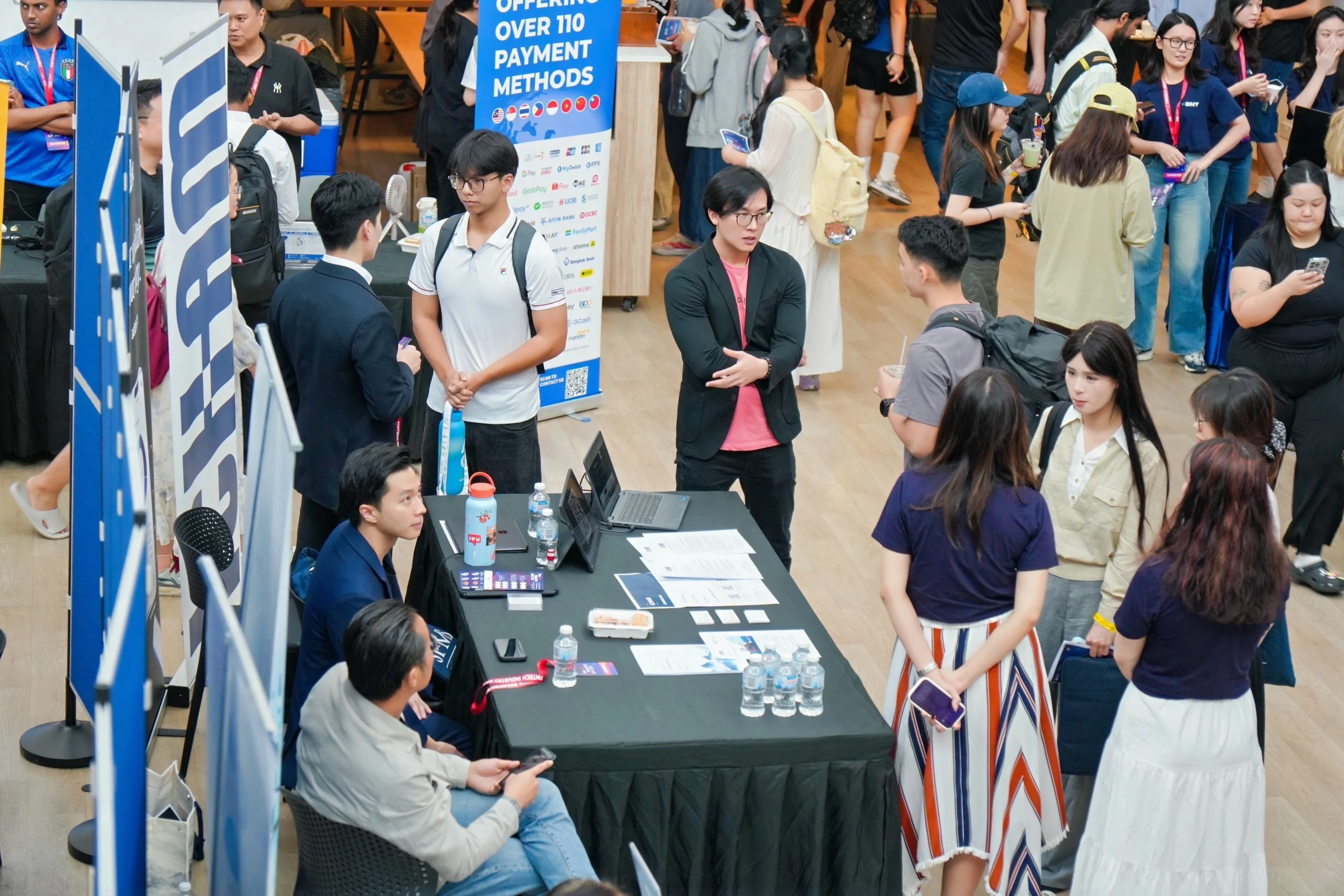
NTU Fintech Industry Day 2026 offered students a chance to hear directly from financial services leaders about emerging technologies and the capabilities new entrants would need.
Among those speakers was Fabian Khoshbakht, Head of APAC, Global Payments & Trade at BNY, who delivered the opening keynote.
Organised by the School of Physical and Mathematical Sciences (SPMS) at Nanyang Technological University, Singapore, the 8 October 2026 event brought together more than 450 participants and 15 organisations, including BNY, GIC, PwC Singapore and Moomoo Singapore.
Two panel discussions explored developments in financial technology, with the second focusing on AI, Web3 and the future of global financial infrastructure.

Learning to Use AI With Judgement
GIC’s Industry Spotlight session on AI and risk analytics gave students a closer look at what applying AI could involve in financial work.
Reuben Lim Yan Wee, Vice President, Enterprise Risk & Performance at GIC, emphasised the need to question the assumptions behind a calculation before relying on its result.
“AI is teaching you how to go beyond the calculation. It’s the assumptions you are allowed to make, what breaks when you are wrong, how you know your answers are nonsense before someone else tells you,” Reuben explained.
Yew Fei Yeow, BNY’s Head of APAC Banks, Global Payments & Trade, made a similar point about the people using AI, urging students entering financial services to bring “critical thinking, creativity and integrity” to their work with AI.
Putting Technical Study in Context
The discussion during Panel I, “Future of Fintech in the Age of AI”, connected AI’s capabilities with the needs of everyday investors.
Jeyson Ng, Chief Executive Officer of Moomoo Singapore, explained how the technology could make sophisticated investment capabilities more widely available.
“I believe AI can be a powerful democratising force when used well. It can put institutional-grade data, tools and insights into the hands of everyday investors, enabling greater access to capabilities that were once available only to professionals,” he said.

NTU alumni such as Jeyson and Yew Fei shared experience from senior industry roles, giving students a view of the work they could pursue.
Seven Industry Spotlight sessions and a career and networking exhibition extended that exposure, with company representatives discussing career paths and industry expectations.
Choosing Where to Deepen Your Expertise
Hearing what employers expect can help prospective students decide what they want from further study.
Recent graduates may want to develop their knowledge before entering the industry, while professionals already working in finance may want a better understanding of the computational methods behind the tools they use.
NTU’s MSc Financial Technology programme combines financial knowledge with computational methods. Its common core covers statistical modelling, machine learning in finance and programming and data analysis with Python.
Students can choose between two specialisations according to the work they want to pursue.
Intelligent Process Automation offers electives such as algorithmic trading and robo-advisors for those interested in automated investment tools.
Digital Financial Services covers areas such as regulatory technology and financial crime compliance, where technical skills support a financial institution’s regulatory responsibilities.
Students can put that knowledge to work in an optional practicum through either a research project or a self-sourced internship focused on a financial problem.
The programme runs for one year full-time or two years part-time, with weekday evening or Saturday classes allowing working professionals to study alongside their jobs.
Applicants need a good bachelor’s degree in a relevant discipline, and NTU lists relevant work experience as preferred.
Applications Now Open
Applications for the August 2027 intake of NTU’s MSc Financial Technology programme are open until 31 March 2027.
Prospective students can explore the curriculum and admission requirements before applying.
Featured image: Edited by Fintech News Singapore based on an image by Nanyang Technological University Singapore.
