




Four payments executives, from TNG Digital, NETS, Thunes and Nexus Global Payments, spent an hour on a Fintech News Network webinar picking apart what still doesn’t work in cross-border payments.
Their verdict was consistent across the panel where the four of them concluded that more rails have arrived over the past decade than ever before, and making them work together, not adding new ones, is what will actually shape the future of cross-border payments.
Cross-border payment flows are projected to reach US$290 trillion by 2030, up from roughly US$190 trillion today.
None of that growth matters much to a migrant worker sending money home, or a small business waiting on an overseas payment, if the transfer itself still takes days to arrive and costs too much along the way.
Cross-Border Payments Have Moved Well Past Cash and Cards
TNG Digital CEO Alan Ni framed how much has changed in under a decade.
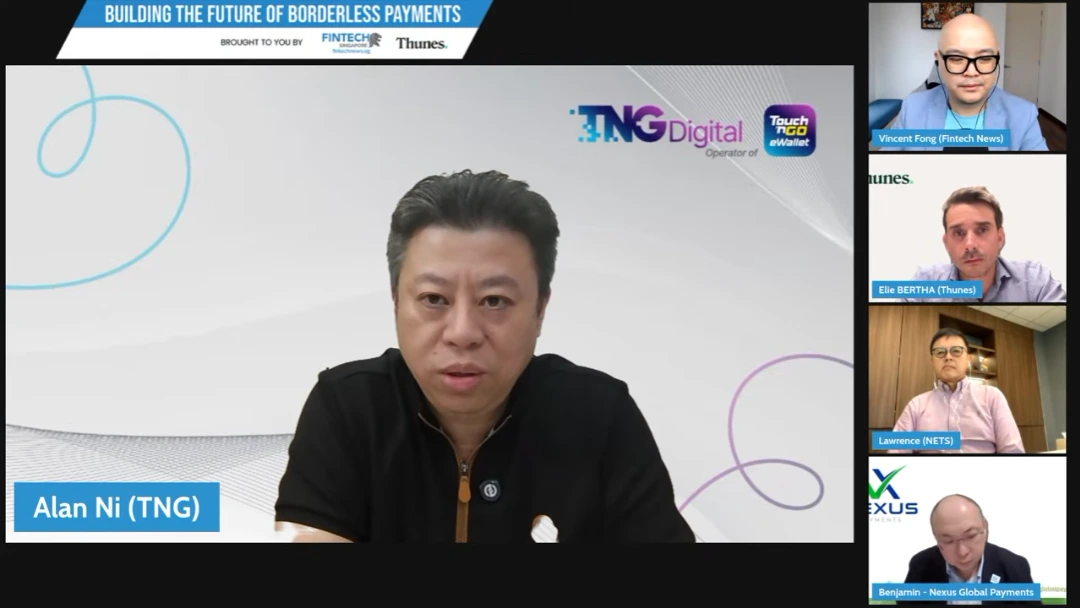
“Ten years ago you basically had two choices, Visa Mastercard or cash. That’s about it,” he explained. “Today the choice has become so much more.”
TNG Digital now moves cross-border payments across three separate rails.
The first is Visa and Mastercard. The second is a government-to-government QR rail, covering schemes such as DuitNow, PayNow and QRIS. The third is a separate cross-border network, which Alan called “RDP+” in the transcript, that he says now reaches more than 30 countries.
International visitors spent more than RM1 billion through TNG eWallet in the first half of 2026, according to Fintech News Malaysia’s own reporting.
Remittances make up around 11% of the company’s revenue, and Alan credits that entirely to having an international rail sitting behind the domestic one.
Elie Bertha, Thunes‘ Chief Product Officer, traced the same shift to two parallel forces.
Mobile wallets, first built to serve unbanked populations, have since spread into markets with high existing bank penetration, bringing a focus on ease of use that traditional banks hadn’t prioritised.
Real-time domestic payment schemes did something similar on the banking side.
Together, they built the domestic plumbing that cross-border payments now have to plug into.
Domestic Trust Comes Before Cross-Border Relevance
NETS group CEO Lawrence Chan framed this almost as a rule.
A payment method has to be trusted at home before it stands any chance of working across a border, he argued, pointing to Singapore’s own numbers, where close to 90% of the adult population already uses real-time payments day to day, split between bank apps and wallets.
Domestic penetration has to come first, Lawrence said.
Strong domestic usage of a payment product, whether person-to-merchant or account-to-account, is a prerequisite for cross-border relevance, not something that follows automatically once a product works at home.
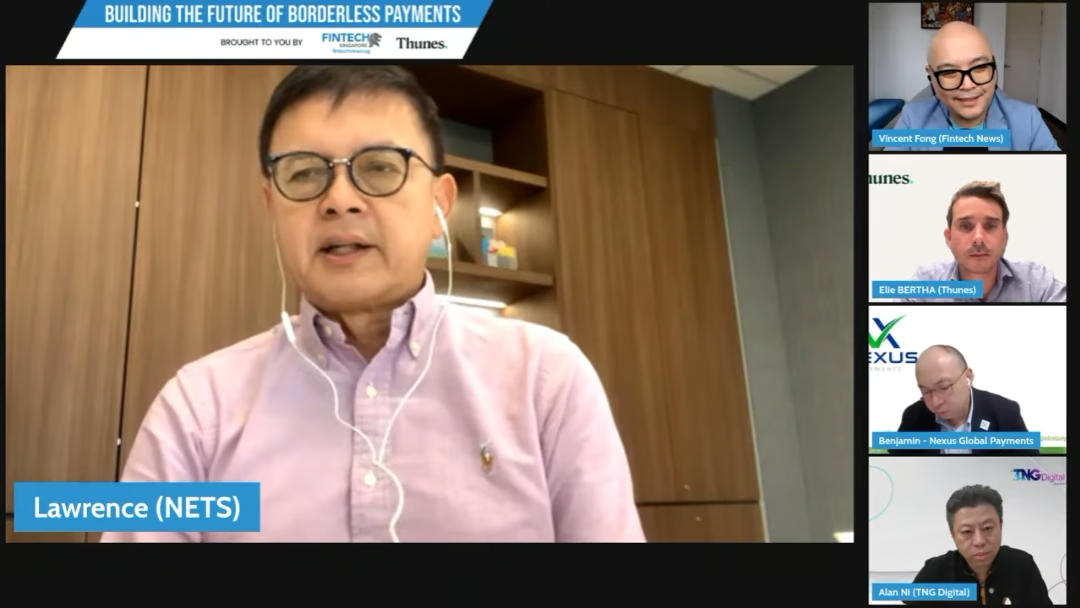
“You don’t need to be inconvenienced by holding local currency if you didn’t change enough, and you can still taste the best durian, or the best coconut water,” he added.
Singapore’s PayNow works as what Lawrence calls a lookup system, letting people send money using a phone number instead of a bank account number.
That familiarity at home is why Singapore already has three cross-border corridors live on a bilateral basis, and why NETS sees multilateral connectivity as the next logical step rather than a leap.
Nexus Is Trying to Replace Thousands of Bilateral Links With One Switch
Nexus is the name behind that multilateral step.
Benjamin Lee, interim COO of Nexus Global Payments, described it as the bridge connector between countries’ domestic instant payment systems. It isn’t live yet, but the team is working toward launching it in specific markets soon.
The case for Nexus comes down to arithmetic.
Roughly 80 domestic instant payment systems are live or emerging worldwide, Benjamin said, a number in the same ballpark as the World Bank’s own tracking of fast payment systems globally.
Linking any two of them bilaterally takes one connection.
Linking all 80 to each other would take 3,160 separate connections, a scale of coordination Nexus previously estimated would take around 180 years to build one corridor at a time.
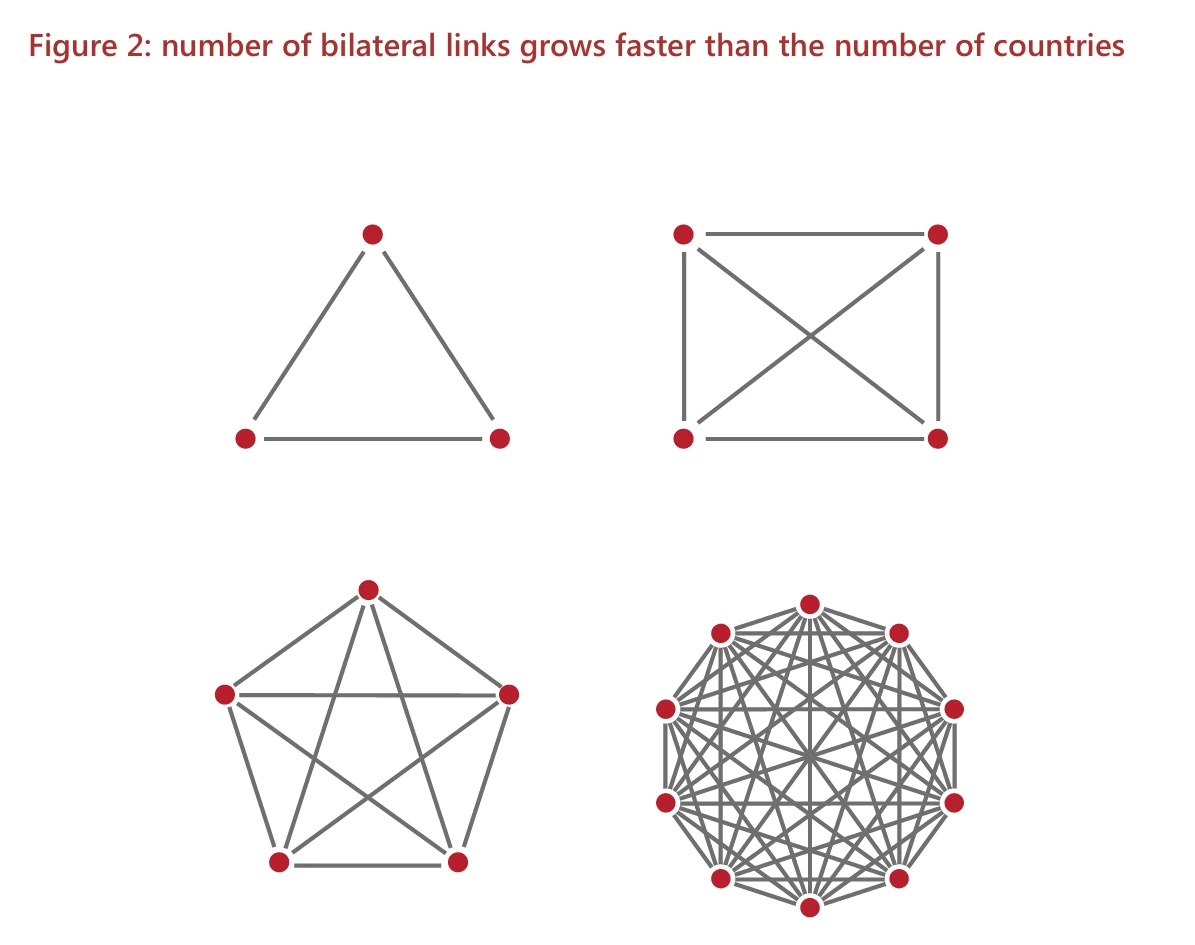
Nexus offers a single connection point instead, one that reaches every other country already on the network.
Nexus began inside the Bank for International Settlements’ Innovation Hub, with Singapore as one of its earliest test sites.
Eight years of prototyping and testing followed the initial blueprint work.
Five central banks, from India, Malaysia, the Philippines, Singapore and Thailand, then formally incorporated Nexus Global Payments to run the scheme.
Indonesia joined as a sixth member in 2026, and the European Central Bank has taken part as an observer without becoming a full member.
Benjamin’s own definition of success for the project is a personal one.

“We know we’ve reached success when one day everybody just travels with their mobile phone and nothing else, confident that wherever they go, they can make payments natively, as they would in their home country,” he reflected.
Liquidity, Standardisation and QR Fragmentation Are Still Unresolved
Even with instant messaging between systems, cross-border payments still depend on a bank somewhere pre-funding local currency before a transaction can land, a practice known as pre-funding.
Elie called this the industry’s last unsolved leg, particularly complex around public holidays that close banks in different countries at different times.
Standardisation runs into a similar wall.

“In Spain, we have a first name, middle name, last name and a second last name. In Indonesia, some people only have a single name,” Elie explained. “How do you connect a Spanish system that requires four name fields with an Indonesian one where that doesn’t exist?”
His conclusion was that one universal global standard isn’t realistic, and the industry instead needs systems that can translate between different national requirements.
Alan raised a more visible version of the same fragmentation.
A merchant QR code and a personal peer-to-peer QR code often look identical to a traveller, but carry different rules for cross-border use, with P2P transfers frequently restricted.
He estimated that more than half of the QR codes visible on the street in Thailand are personal codes rather than merchant codes, and more than a third in Malaysia, meaning a meaningful share of scans fail for a foreign visitor with no way of knowing why.
Lawrence sees a deeper cost to that confusion than a failed transaction.
“The biggest danger, if we don’t solve this, is suppression of payments, which leads to self-suppression,” he warned. “I try once, it doesn’t work, I don’t try again, because I don’t know whether it will work.”
Benjamin’s answer for Nexus is a shared baseline rather than one rulebook for everyone.
Each transaction still follows the rules of its two corridors, but every participant has to meet a minimum uplift, such as real-time sanctions screening, so the network stays safe even as local requirements differ.
Stablecoins Are Filling Specific Gaps, Not Replacing Rails
Elie doesn’t see stablecoins as a winner-take-all replacement for existing rails.
Most countries still don’t accept them for everyday spending, so a last-mile payout in local currency is often still required behind the scenes.
Where stablecoins do help, he noted, is in markets with tight FX controls or high inflation.
Thunes has seen strong demand for stablecoin payouts in Argentina and Nigeria, where recipients want to protect savings and get easier access to US dollars.
The company now funds network partners directly in stablecoin in markets such as South Africa, moving liquidity outside normal banking hours.
Lawrence expects newer currency types, including central bank digital currencies and tokenised deposits, to move over existing fiat rails first, before purpose-built rails for those currencies become relevant on their own.
Benjamin described Nexus’s own position as settlement agnostic.
It settles cross-border payments through correspondent banking today because that’s what’s available, and would be open to alternative settlement assets once they mature, as long as both sides of a transaction can still settle.
Trust, Cost and Convenience Decide Who Wins
Alan’s framework for what actually matters to users cuts through most of the technical debate.
“As a user or a merchant, you probably care less about the technology behind it,” he said. “You ask three questions. Can I trust it, is it safe? What’s the cost? Is it convenient? Whoever can address these three questions will win the hearts of users and businesses.”
A Near-Term Outlook, Not Just a 50-Year One
Elie’s ideal outcome sounds closer to how messaging already works than how banking does.
“Why should you care which rail is being used?” he said. “Sending and receiving money should be as easy as sending a WhatsApp message.”
Alan expects cross-border payments to eventually follow the same path domestic ones already took, toward something cheaper and simpler, even if it’s hard to say which specific rail ends up ahead.
Benjamin isn’t willing to wait five decades to find out. Asked what the next 50 years of payments might look like, he predicted that scale will take time, but meaningful progress shouldn’t.
“We don’t need to wait 50 years for that,” he added. “Maybe 20 months.”
Want to watch the full conversation? Catch the webinar replay on YouTube.
Featured image: Edited by Fintech News Singapore based on an image by rawintanpin via Magnific.
