



Artificial intelligence (AI) is emerging as a growing threat to personal security, with public confidence in online authenticity continuing to erode amid rising fears of manipulated content and AI-friend deception.
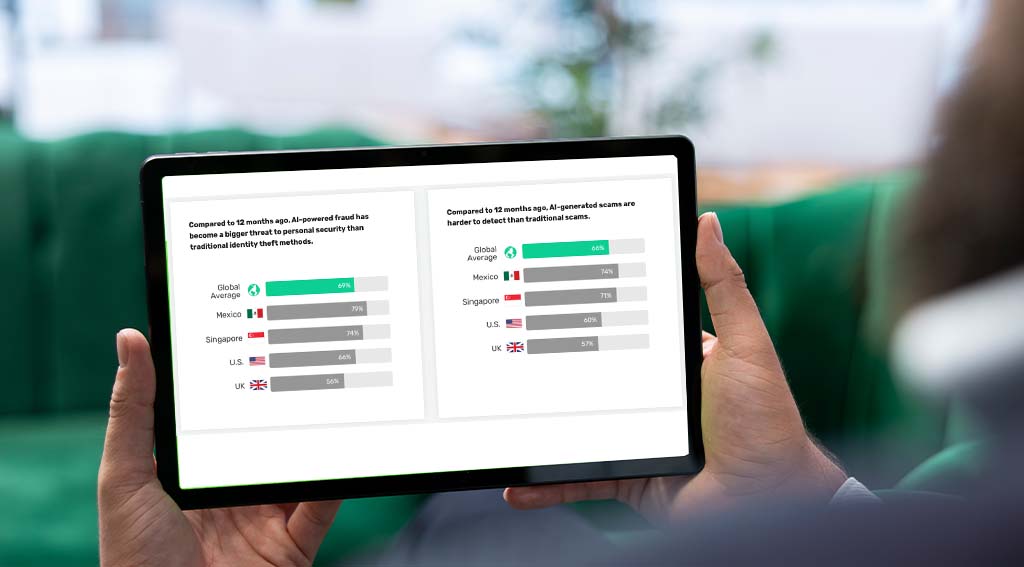
A new study by Jumio found that 74% of consumers in Singapore believe AI-powered fraud now poses a greater threat to personal security than traditional forms of identity theft, underscoring the rapid proliferation of AI tools to commit fraud.
The Jumio 2025 Online Identity Study polled more than 8,000 adult consumers in the US, the UK, Singapore and Mexico, to assess consumer awareness around issues involving online identity, fraud risks, and current methods used to protect consumer data.
Findings highlight not only rising awareness of AI-driven fraud, but also the increasing sophistication of such attacks. Compared to 12 months ago, 71% of Singapore consumers said AI-generated scams are harder to detect than traditional scams, reflecting this growing complexity.


Rising concerns in Singapore
Consumers are also becoming more aware of the risks of conducting life and business online, with Singaporean consumers expressing above-average concern compared with global respondents: 84% of Singaporean respondents worry about fake digital identification documents created using AI, 8 points above the global average; 82% worry about scam emails or messages that use AI to trick people into giving away passwords or money, also above the global average of 75%; 83% worry about videos or voice recordings that look or sound real, compared to the global average of 74%; and 81% worry about being fooled by manipulated social content, versus 72% globally.

Higher levels of concern in Singapore can be attributed in part to the city state’s high digital penetration and cashless economy. Singapore is one of the most digitally connected societies in the world, boasting near-universal smartphone use, strong e-commerce use, and a government push toward a cashless economy. This strong reliance on digital platforms makes the country’s population more exposed to fraud risks, with criminals having taking notice.
According to a study by Sumsub, Singapore registered the highest year-on-year (YoY) rise in identity fraud among countries in Asia-Pacific (APAC) in 2024, with cases surging by 207% from 2023. This was significantly higher than the 121% increase reported for the whole region.
In particular, deepfakes, which use AI to manipulate images, videos or voices to impersonate individuals, are surging, accounting for 7% of global fraud attempts in 2024, marking a fourfold YoY increase.
In APAC, Singapore came in joint second with Cambodia for a staggering 240% increase in deepfake attacks.
High-profile cases underscore the threat of deepfakes. In March, Singapore Prime Minister Lawrence Wong warned that deepfakes of him were being used to sell cryptocurrencies, money-making schemes, and permanent residency application services.
Last year, over 100 government officials and agencies received extortion emails containing deepfake images, demanding the equivalent of US$50,000 in cryptocurrencies in return for not releasing the visuals.
The emails contained an image purporting to be a screenshot from the video in question. Manipulated images of political office holders and public officers’ faces were clearly identifiable in the image. The images of the political office holders and public officers appeared to have been sourced from open sources such as LinkedIn, according to the Ministry of Digital Devqelopment and Information (MDDI).
Accountability and regulation
As concerns rise, consumers are calling for greater accountability from technology companies. The Jumio study found that 43% of global respondents believe bigtechs should be responsible for stopping AI-powered fraud, compared to just 18% who said individuals should be responsible.
In Singapore, regulators have already started acting. Recently, authorities ordered Meta, the parent company of Facebook, to implement stronger safeguards to protect users from scams. The firm could be fined up to S$1 million (US$776,000) if it fails to comply, Reuters reports.
In August, Singapore’s home affairs ministry found that 37.6% of all e-commerce scams reported in 2024 were perpetrated on Facebook. These scams generally involved the sale of goods and services online, which were not delivered after payment was made.
It also rated Facebook Marketplace as the weakest platform among six e-commerce marketplaces in terms of anti-scam features deployed. This is despite the platform having implemented measures such as enhanced user verification, as well as in-product safety notices and marketplace messenger anti-scam notices.
AI Fraud Webinar Tomorrow
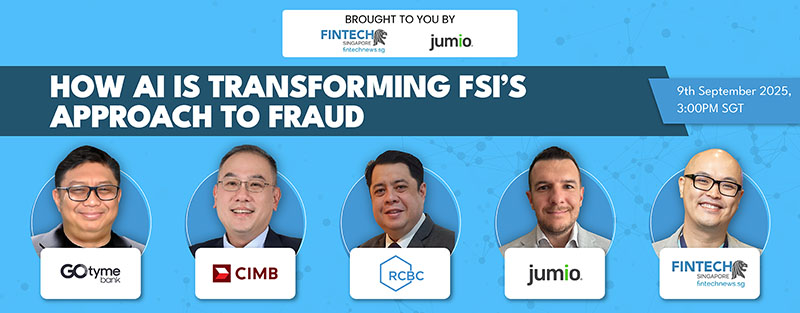
With tech companies facing mounting pressure to respond to increasingly sophisticated fraud tactics, Fintech News Singapore will be hosting a webinar on September 09, 2025, 3:00PM SGT.
This event will explore the new face of financial crime, focusing on emerging trends including deepfakes, voice cloning, and fraud-as-a-service. It will also examine Singapore’s evolving regulatory response, and discuss best practices for keeping fraud controls effective without undermining user experience. Featured speakers include fraud and risk leaders from GoTyme Bank, CIMB Singapore, Rizal Commercial Banking Corporation (RCBC), and Jumio.
Featured image: Edited by Fintech News Switzerland, based on image by DC Studio via Freepik
