



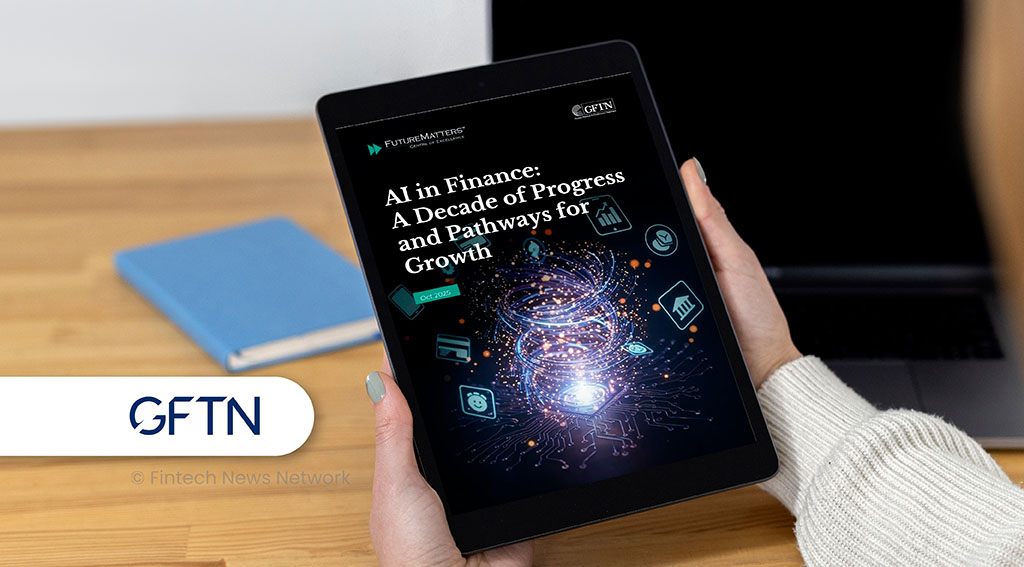
One theme has been persistently dominating most fintech conversations this year, and it involves AI and its growing influence over how finance operates, regulates, and evolves. What began as automation in back offices has become the invisible engine of credit, compliance, and capital flow.
Yet as AI accelerates, a new challenge also emerges: how do we govern technology this widespread across borders and different systems? As AI is embedded across almost every layer of finance, regulators worldwide are shifting gears quickly to establish their guardrails.
Yet, as the GFTN AI in Finance report shows, what has emerged is a mix of governance philosophies rather than a united front.

How Major Jurisdictions Are Governing AI in Finance

The European Union’s AI Act takes on a comprehensive, legally binding approach. It risk-based regulation classifies AI use cases into tiers. Many financial ones which fall into the high-risk tier, such as credit scoring, require strict compliance on data quality, risk management, and human oversight.

The Monetary Authority of Singapore (MAS) has pioneered a more collaborative testing-to-trust model through initiatives like FEAT, Veritas, and PathFin.ai, which comprise guidance on the responsible use of AI and data analytics, multi-phased collaborative projects, and an AI knowledge hub, respectively.
Meanwhile, in the United Kingdom, the Financial Conduct Authority (FCA) has taken a distinctly pro-innovation stance, one that emphasises explainability and proportionality. Rather than imposing prescriptive rules, the FCA empowers firms to apply a set of cross-cutting principles, supported by practical experimentation.
It was among the first regulators to introduce regulatory sandboxes and AI live testing environments, enabling companies to trial new AI solutions safely and responsibly before broader deployment.
The US takes on a more decentralised approach. Its AI Action Plan, which kicked off in July 2025, prioritises strengthening American AI innovation. This is done through deregulation, promoting ideologically neutral AI systems and infrastructure investment.
At the same time, the US aims to extend its global influence by exporting its American AI technology stack. Complementing these efforts are a series of Executive Orders on AI safety and trustworthiness, signalling a preference for market-driven innovation under broad federal oversight.
Each approach reveals a deeper philosophical divide: between regulation by rule and regulation by design.
Fragmentation Risks Through The Rise of AI Model Borders
The divergence in AI governance could indirectly reshape global financial competition. The report warns that “disparate AI rules could limit innovation, encourage regulatory arbitrage, or create compliance barriers for cross-border fintechs,” effectively creating AI model borders.
What passes compliance in one jurisdiction might still face restrictions in another, highlighting how regulatory divergence can fragment innovation that was meant to be global.
For multinational financial institutions deploying models across multiple jurisdictions, this lack of interoperability translates to rising compliance costs, fractured development pipelines, and delayed time-to-market for AI-enabled services.
Such fragmentation could also deepen systemic risks. An over-reliance on a handful of approved or “jurisdiction-safe” AI models may lead to model concentration risk, too.
Aligning the Future of AI Regulation
The next frontier in AI governance will depend more on who can make them work together. A practical starting point lies in mutual recognition frameworks, agreements that could allow AI audits, assurance tests, and risk assessments to be accepted across jurisdictions.
Such reciprocity could reduce compliance duplication, accelerate cross-border deployments, and strengthen trust between regulators and industry.
As the GFTN AI in Finance report shows, financial innovation increasingly operates in global code but national rulebooks. The task ahead is to bridge that divide, turning today’s sandboxes into tomorrow’s standards, and today’s experiments into tomorrow’s common trust frameworks.
If regulators, institutions, and innovators can align on that vision, AI in finance will not only be smarter and faster, but also safer and more connected across the world.

Featured image: Edited by Fintech News Singapore based on image by freepik on Freepik
