


Endava, a provider of next-gen technology services, is helping design the architecture behind Nexus cross-border payments as Asia moves to link domestic real-time payment systems.
The word “Nexus” comes from the latin noun nexus – meaning binding together, or a connection.
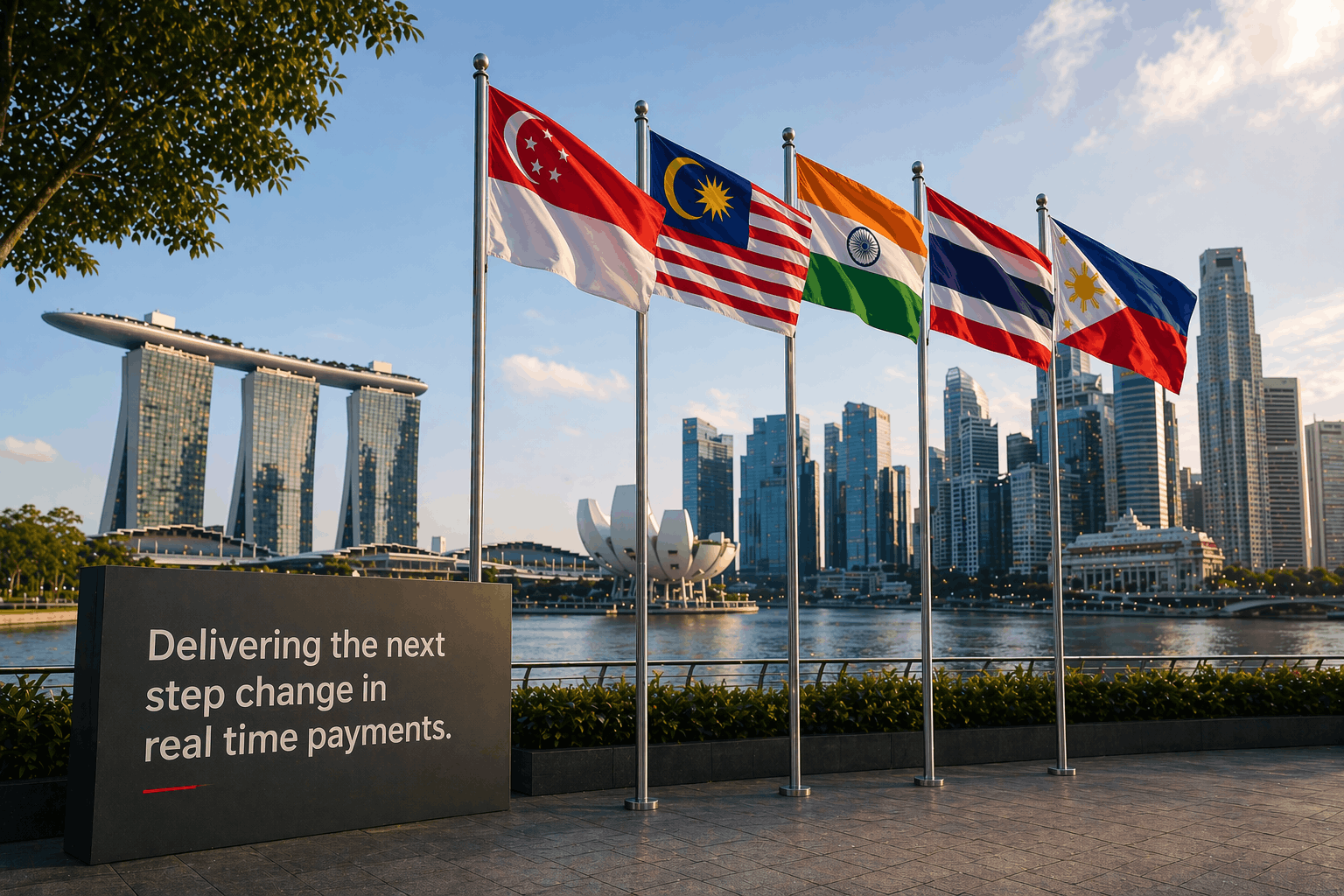
It was a particularly apt name for the Bank for International Settlements initiative that sought to connect the real time payment systems of Singapore, Malaysia, Thailand, the Philippines and India.
But it wasn’t until recently that it quite struck us just how appropriate that image of the bringing together of disparate things actually is.
Interoperability is Key to Payment Adoption at Scale
Successful payment systems have always shared a common theme: interoperability. Medieval gold and silver achieved this through intrinsic value.
In the 15th century, bills of exchange enabled merchants to settle trade across Europe, while more recently, domestic account-to-account transfers and card networks have defined interoperable convenience.
Throughout history, technical innovation has driven step changes in payments.
From the printing press to the EMV chip, technology has consistently enabled greater convenience for consumers and merchants.
Endava’s Role in the Evolution of Payments
In recent decades, Endava has played a key role in the rapid evolution in payments technology, supporting initiatives such as cheque image clearing and open banking in the UK, Romania’s first NFC wallet, connections to The Clearing House and FedNow in the US, and payment gateway development in MENA.
This year, working in close collaboration with NETS in Singapore and PayNet in Malaysia, Endava has been tasked with designing the architecture and delivering the next step-change in account-to-account payments.
Nexus Global Payments – the interlinking of domestic real time payment systems, will make cross border payments as convenient as domestic account to account transfers.
Endava’s work on Nexus focuses on designing the architecture and building the cross-border switch software that connects domestic rails.
Why Nexus Is Reaching Its Moment Now in Cross Border Payments
In a recent conversation on this topic, I was asked “Why now? What makes this the right moment for such a step change?”
The answer lies not in a single breakthrough, but in the convergence of several developments.
Harmonisation of ISO20022 Messaging
The first of these is progress on the harmonisation of ISO20022 messaging.
In recent years, the payments industry has made a huge effort to minimise implementation specific inconsistencies in the message format used to communicate payment related data.
Globally, banks, payment companies and corporates are gravitating towards the global financial message standard.
Despite this progress, a recent report published by the Payment Interoperability and Extension (PIE) Taskforce found that adoption remained uneven.
The report also highlights that ISO20022 will remain a living standard, subject to regular updates – so some complexity remains.
Scale and Infrastructure Are Changing the Economics
The second is speed to value. A common challenge for new payment infrastructure is reaching a sustainable critical mass of transactions needed to cover the up-front investment.
Nexus bridges the gap thanks to three underlying developments:
Organic growth of existing real-time payment systems
Collectively, PayNow (Singapore), DuitNow (Malaysia), PromptPay (Thailand), UPI (India) and InstaPay (Philippines) have amassed over 700 million prospective Nexus users, with the potential to expand on this through the addition of other countries like Indonesia.
Advancements in Software Engineering Techniques and Artificial Intelligence
Endava has developed Dava Flow – an AI native engagement and delivery lifecycle that leverages the power of AI whilst maintaining human oversight.
Whilst the complexity of delivering a project of this nature remains, skilled technicians, who understand the domain, working with proven tools and techniques, are able to iterate faster, providing improved time to value while maintaining appropriate levels of governance.
Increasing Confidence in Cloud-based Financial Infrastructure
Banks and payment operators, traditionally risk-averse, are now running mission-critical workloads in the cloud.
This shift enables faster innovation without the upfront cost of physical infrastructure. (Noting that Nexus Global Payments retains the ability to support on-prem where required).
Political Will Has Helped Set the Stage
The final ingredient that makes Nexus Global Payments timely is political will.
Back in 2020 the G20 launched a roadmap to make cross-border payments faster, cheaper, more transparent and inclusive.
The Bank for International Settlements explored the possibilities with a proof of concept that connected TIPS (Europe), DuitNow (Malaysia) and PayNow/Fast (Singapore).
Thailand, the Philippines, Indonesia and India became involved later.
The shared ambition of these countries has set the scene for the next step change in payments evolution under Nexus Global Payments.
What Nexus Could Mean for Everyday Users
Perhaps more important than how we got here is the benefit the 700+ million prospective users will reap.

Andrew McCormack, CEO, Nexus Global Payments explains this succinctly:
“Countries like India, Malaysia, Singapore, the Philippines and Thailand have enthusiastically embraced real time payments – including various bilateral links with each other.
The multi-lateral architecture implemented by Nexus not only removes the complexity associated with managing multiple bilateral links, but it also provides an extensible platform that will give real-time payment users greater reach than they have ever had before.”
So, in the future, when you make that payment to a friend’s mobile number overseas using your everyday payment app, or you find yourself on holiday, wanting to try the local delicacies at a hawker market that only accepts payments via the local account to account rails, you might pause for a moment to reflect on Nexus Global Payments.
A project that not only connects domestic payment systems, but also represents a moment in time where the convergence of messaging standards, AI accelerated software engineering and the collective ambition of a group of nations came together to make your payment experience more convenient.
Featured image: Edited by Fintech News Singapore, based on image by noob via Freepik
