


As the automotive industry becomes more digital, the way vehicles are discovered, purchased and financed is changing.
For customers, the expectation is increasingly straightforward: a smoother journey, clearer choices and financing that works with, rather than against, the buying experience.
For businesses, meeting those expectations requires more than faster technology. It calls for closer coordination across the wider mobility ecosystem.
That was a central theme at AIMCONNECT 2026, held on 11 October at Shangri-La Rasa Sentosa, Singapore.
X Star Technology and Aimotion organised the forum under the theme “Where Mobility Meets the Future”.
The event brought together representatives from more than 100 automotive organisations, including OEMs and dealerships, over 60 financial institutions and more than 20 technology organisations.
The breadth of participation reflected the growing convergence of mobility, finance, and technology.

The programme opened with welcome addresses by Tin Pei Ling, Member of Parliament, and Datuk Tony Khor Chong Boon, President of the Federation of Motor and Credit Companies Associations of Malaysia.
It also featured two keynote presentations, three industry panels and live technology showcases.
An industry that needs to work together
Vehicle ownership sits at the intersection of multiple industries, yet the customer’s journey is often managed through separate systems and organisations.
Dealers, carmakers, lenders and technology providers each hold important parts of the process.
The challenge is to connect those parts in ways that improve efficiency without compromising accountability or customer experience.

At the forum, demonstrations by X Star Technology (Xport and AI capabilities), Aimotion, MStar, MK.X and AI Wingman offered examples of technology being applied across dealership operations, financing, marketing, mobility and customer engagement.
Beyond the individual applications, the wider discussion pointed to the value of more connected workflows and better information sharing between industry participants.
Why trust matters as technology takes on more responsibility
In his keynote, “The Next Mobility Economy: Intelligence, Connection, Trust”, Shawn Yang, Chief Executive Officer of X Star Technology, outlined three priorities for a more connected automotive ecosystem: intelligent engagement and financing, closer links between industry participants, and trust built into the systems they use.
As AI takes on more complex responsibilities, Yang argued that governance and human oversight will be essential to wider adoption.

“AI can transform every moment of this journey, but only if customers and institutions alike can rely on its integrity. In auto finance, a single flawed decision risks customer harm and regulatory non-compliance.
For AI to operate across the customer journey with true autonomy, trust cannot be an afterthought; it must be engineered into the architecture from day one.”
Yang said.
He also highlighted the friction that arises as customers move between discovery, dealership engagement and financing.
“Customers are not lost in one stage. They are lost to the friction between the stages,”
he said.
The observation points to a wider industry challenge: making progress within individual businesses will have limited effect if the overall customer journey remains fragmented.
Responsible innovation by design
Yang described X Star Technology’s Harness framework as one approach to governing more autonomous systems.
Its three elements address human collaboration and intervention, boundaries and escalation for AI agents, and data traceability and compliance.
The framework illustrates how technology providers are seeking to reconcile greater operational capability with accountability.
Michael Jia, Chief Technology Officer of X Star Technology, summarised the principle:
“The more autonomy you give an AI agent, the clearer its boundaries need to be.”
Beyond any individual platform, the implication for automotive businesses and financial institutions is clear.
More sophisticated systems will need to be accompanied by defined responsibilities, information that can be traced, and decisions that remain subject to appropriate human scrutiny.
Better information, better financing experiences
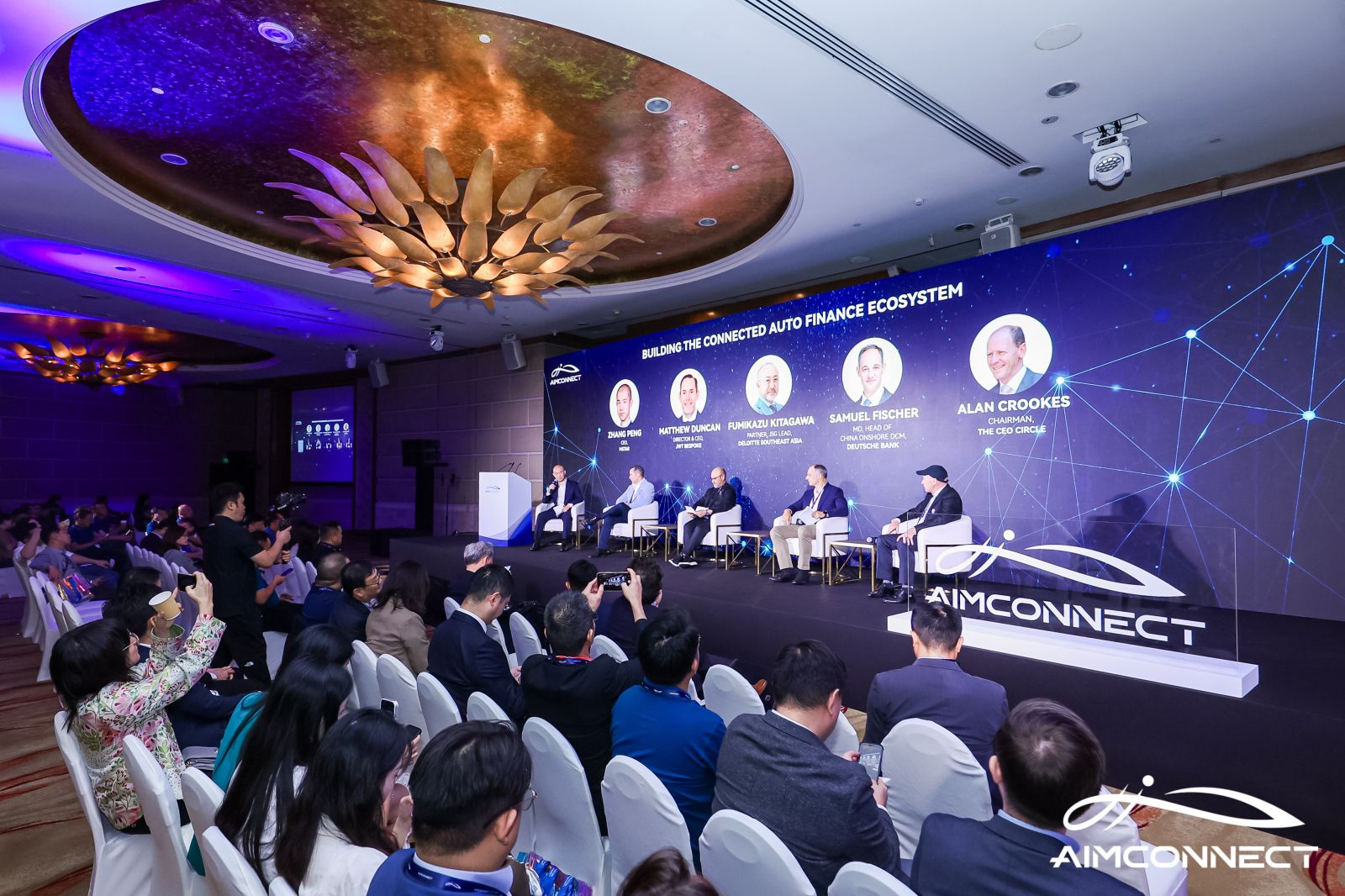
These considerations were returned to the panel “Building a Connected Auto Finance Ecosystem”, moderated by Zhang Peng, Founder and Chief Executive Officer of MStar.
Panelists included Matthew Duncan of JWT Bespoke, Samuel Fischer of Deutsche Bank, Fumikazu Kitagawa of Deloitte Southeast Asia and Alan Crookes, Chairman of The CEO Circle and former Chief Executive Officer of BMW Group Financial Services for Asia Pacific.
The discussion explored the balance between using richer information to assess creditworthiness and giving customers a financing process that is straightforward and transparent.
More data may support better decisions, but its value depends on how responsibly it is used and how clearly the process is explained to customers.
“Customers increasingly expect financing to be as seamless and straightforward as the digital services they use every day. Meeting these expectations while maintaining sound risk management requires closer collaboration between dealers, financial institutions and technology providers, supported by effective data sharing and transparency in how customer information is used. AIMCONNECT provided a platform for these stakeholders to exchange perspectives and explore how the industry can move forward together.”
said Matthew Duncan.
A live poll at the forum echoed the importance of stronger industry coordination.
Asked what would most improve the automotive financing journey, 38% of respondents selected better connectivity across institutions, followed by stronger infrastructure for capturing and analysing data (28%).
Client centricity accounted for 18%, while 16% prioritised greater consumer protection without stifling innovation.
BYD Looks Beyond Electrification Towards AI and Integration
James Ng, Managing Director of BYD Singapore and President of BYD Philippines, spoke during the panel discussion, The Future of Owning a Car.
He outlined BYD’s shift from electrification towards AI-driven intelligence and greater integration.
“BYD’s first phase was electrification, delivering performance. The second phase is intelligence, using AI to enhance the customer experience. The third phase will focus on integration.”
Ng also highlighted BYD’s broader role as a technology and engineering company.
He pointed to opportunities for its technologies to support other industries, including data centres and renewable energy infrastructure.
From conversation to collaboration

AIMCONNECT 2026 brought these perspectives together around a shared challenge: improving how customers move through vehicle purchasing and financing while preserving the safeguards that make financial decisions trustworthy.
Yang’s keynote placed intelligence, connection and trust at the center of that discussion, while the forum’s cross-sector format reflected the need for dealers, manufacturers, financial institutions and technology providers to work more closely.
A separate live poll highlighted the uncertainty surrounding longer-term mobility preferences.
When asked whether car ownership would remain consumers’ preferred choice in ten years, 54% of respondents anticipated a preference for flexible mobility options, while 46% expected ownership to remain the preferred choice.
The results pointed to a future in which automotive businesses may need to serve different approaches to mobility, rather than assume a single model will prevail.
For businesses involved in mobility and financing, the opportunity is to build a more connected experience without losing sight of the people and institutions that rely on it.
Visit the official event website for more information about AIMCONNECT 2026.
Featured image: Edited by Fintech News Singapore, based on image by X Star
