



Small and medium-sized enterprises (SMEs) in Asia-Pacific (APAC) are embracing digital tools, new payments methods, and artificial intelligence (AI) to grow their businesses.
Yet, as the use of technology increases, many are looking for simpler, more flexible and more connected ways to manage their operations, according to new research by Mastercard.
Mastercard’s Dreamonomics Report, based on a 2026 survey of more than 6,000 respondents across 18 markets, including 1,027 respondents across Australia, China, India and Indonesia, found that APAC SMEs are big adopters of business tools, averaging five per firm.
With greater adoption comes a stronger need for effective oversight. 74% of the SMEs polled in APAC said they view integrated tools as essential and request digital options that aid daily decisions. Additionally, 51% prefer bundled technology solutions.

Complexity also affects payments as available options grow. APAC SMEs currently use four payment methods on average for business expenses, including electronic bank transfers (59%), instant payments (55%), debit cards (52%), credit cards (47%). While variety offers flexibility, handling multiple accounts and funding sources calls for smooth management tools and reconciliation features.
India illustrates how fast business expectations are shifting. Among SMEs surveyed there, 63% are interested in real-time payments, compared with 51% regionally; 45% are open to flexible digital payment solutions; and 39% are interested in a combined credit and debit business card with controls.
SMEs embrace AI
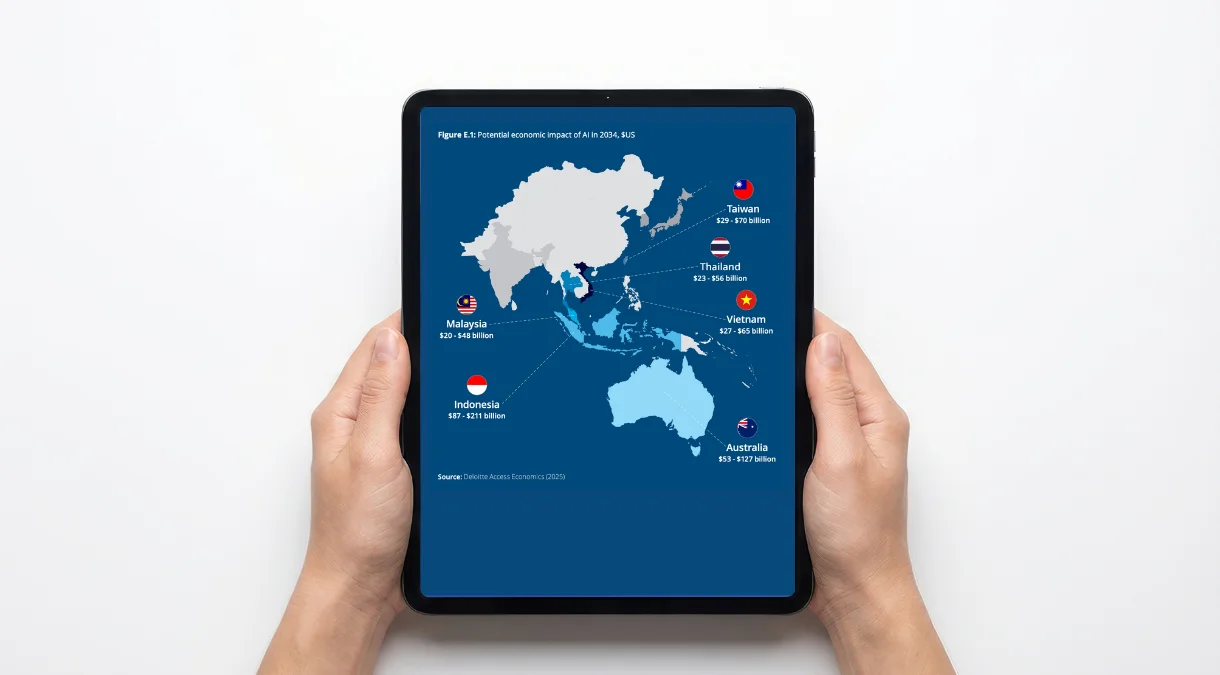
AI is also moving into businesses’ day-to-day operations. A 2025 Deloitte survey polled 1,100 SMEs across Australia, Indonesia, Malaysia, Taiwan, Thailand and Vietnam, and found that 78% used at least one AI-enabled tool. 82% were planning to adopt at least one additional tool in the future.
These AI-enabled digital tools are helping APAC SMEs reach new customers, scale faster and expand into new markets. Notably, 80% of SMEs said these tools help them cut business costs, and 73% agreed they balance competition between small and large firms.

Increased use of AI is set to translate into better outcomes. Nine out of ten SMEs expect AI-enabled digital tools to be important for their business within the next five years. SMEs reported that almost US$7 in every US$10 of revenue is projected to be dependent on digital platforms in five years’ time, a 21% increase from current levels.
AI’s potential impact could be substantial with an estimated US$211-512 billion in economic benefits across the six markets covered by the Deloitte research. When it comes to productivity, the research indicates that AI could raise total factor productivity (TFP) growth by between 0.1 and 2.3 points annually.

In APAC, investment in AI is booming with spending expected to increase almost five-fold between 2022 and 2030. This pace puts AI on track to have one of the fastest deployment rates of any new technology.
Security takes center stage
As digital tools and payments gain traction among APAC SMEs, security is increasingly seen as a core business need. Although 70% of the APAC SMEs polled by Mastercard ranked protecting their business from cyber threats as a high priority, only 39% used cybersecurity tools. Additionally, 47% said that fraud and security protection was the AI-powered capability they most wanted from a financial provider.
Across APAC, enterprises are navigating an increasingly complex fraud environment, and are embracing advanced tools to address new risks.
Infobip’s 2026 Fraud & Security Report, which analyzed billions of interactions globally, found that APAC is among the most technologically advanced regions. Operator firewalls are highly automated, while mature AI-powered detection models can identify and block most threats without human intervention. At the enterprise level, however, OTP-based fraud remains a significant challenge in several key markets, with certain territories continuing to record elevated suspicious authentication rates.
Fraud has grown significantly in APAC over the past years. LSEG Risk Intelligence’s 2026 consumer fraud report in APAC polled 7,000 consumers across the region and found that almost six in ten adults have been exposed to scams directly or indirectly in the past two years, with 23% personally targeted.
Of those targeted, 42% lost money, meaning that around 1 in 10 adults overall became scam victims.
The research also found that AI-driven scams are accelerating, with around one in five consumers encountering AI generated scam content in the past year, including voice clones, deepfakes and fake customer service chatbots.
Featured image: Edited by Fintech News Singapore, based on image by wealthwells via Magnific
